Arab merchants

Definition and stakes

John R. Raphael,  Through unknown Nigeria (1914)

“ These plans have been accompanied by other advantages, for the continental goods previously brought by the Arabs from the Mediterranean ports have to a considerable extent been replaced by British manufactures. Moreover, several of the Arab merchants are establishing branches in Manchester and Liverpool. If they can obtain in England the articles wanted the men will not incur the expense of going to the Continent to buy.
The Arabs from North and from Central Africa form a very small proportion of the crowds in Kano market.
”
Source: Gutenberg

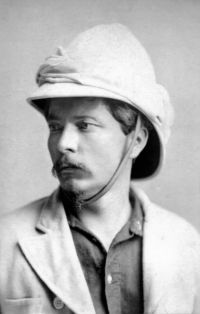
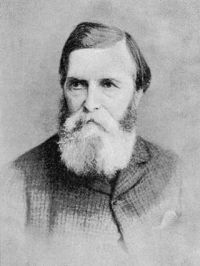
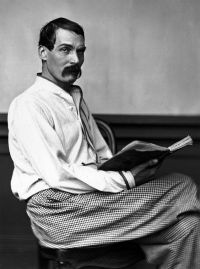
Portrait of Sir Richard Francis Burton Sir Richard Francis Burton,  The Lake Regions of Central Africa…

“ The Arabs seek in ivory six qualities: it must be white, heavy, soft, thick—especially at the point—gently curved—when too much curved it loses from 10 to 14 per cent.—and it must be marked with dark surface-lines, like cracks, running longitudinally towards the point. It is evident from the preceding details that [411] the Arab merchants gain but little beyond a livelihood in plenty and dignity by their expeditions to the interior. An investment of 1,000 dollars rarely yields more than 70 farasilah (2450 lbs.) ”
Source: Gutenberg

Anonymous,  The Periplus of the Erythræan Sea (1912)

“ The peoples of that region, the various Arab tribes and more especially those ancestors of the Phoenicians, the mysterious Red Men, were the active carries or intermediaries. The growth of civilization in India created an active merchange marine, trading to the Euphrates and Africa, and eastward we know not whither. The Arab merchants, apparently, tolerated the presence of Indian traders in Africa, but reserved for themselves the commerce within the Red Sea; that lucrative commerce which supplied precious stones and spices and incense to the ever-increasing service of the gods of Egypt. ”
Source: Wikisource

Get perspective with Kwize: daily news enlightened by great literature