“ Therefore Kambira had reached the coast alive.Little had the simple chief imagined what awaited him on that coast, and on his way to it, when, in the fulness of his heart, he had stated to Harold Seadrift his determination to proceed thither in search of Azinté. Experience had now crushed hope, and taught him to despair. There was but one gleam of light in his otherwise black sky, and that was the presence of his boy. Life had still one charm in it as long as he could lay hold of Obo’s little hand and hoist him, not quite so easily as of yore, on his broad shoulders. ”
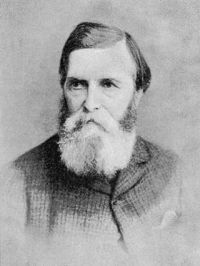
R. M. Ballantyne
Summary
"Black Ivory," authored by R. M. Ballantyne, is a narrative set in equatorial Africa, focusing on the intertwined fates of a noble African chief, Kambira, and an Englishman, Harold Seadrift, as they navigate the moral and cultural tensions of the 19th-century slave trade. The novel delves into themes of exploitation, resilience, and the clash between colonial ambitions and indigenous traditions, as seen through the struggles of characters like the enslaved Azinté and the trader Marizano.
Set against vivid landscapes of the coast and jungle, the story critiques the dehumanizing systems of bondage while emphasizing the bonds of loyalty and the pursuit of liberty. Ballantyne’s work, echoing contemporary exploratory accounts, underscores the human cost of imperialism and the enduring struggle against oppression.
Quotes from Black Ivory (R. M. Ballantyne)
“ In these circumstances, Marizano came to me with a very tempting offer. But there are plenty of good-looking, amiable, affectionate girls in Africa. I can easily buy you another slave quite as good as Azinté.”“As good as Azinté!” echoed Maraquita wildly, starting up and gazing at her father with eyes that flashed through her tears, “Azinté, who has opened her heart to me—her bursting, bleeding heart—and told me all her former joys and all her present woes, and who loves me as she loves—ay, better than she loves—her own soul, merely because I dropped a few tears of sympathy on her little hand! ”
“ No sound was heard from beast, bird, or insect; no village was near, no rippling stream murmured, or zephyr stirred the leaves; in short, it was a scene which, from its solitude and profound silence, became oppressive.“W’y, sir,” said Disco, whose face was bathed in perspiration, “it do seem to me as if we’d got to the fag-end of the world altogether. There ain’t nothin’ nowhere.”Harold laughed, and said it looked like it. But Disco was wrong. It was only the hour when animals seem to find a siesta indispensable, and vegetables as well as air had followed their example. ”
