Aramon

Definition and stakes

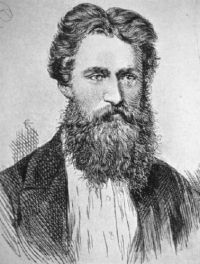
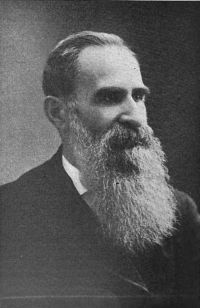
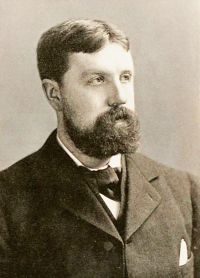
Portrait of S. Levett Yeats S. Levett Yeats,  Orrain: A Romance

“ Twice Simon heard the beat of hoofs as the horses dashed over the hard ground, and after that all was still.
"If Aramon would but come!" he groaned; and then, through the moonlit haze on the left, where the moorland stretched long and brown, came the sound of hoarse voices, and a loud laugh, and upon this a line of about half-a-dozen horsemen appeared riding slowly towards the house.
"Aramon! Aramon! Here! To me!"
At his call they put spurs to their beasts, and were soon beside him—an evil-looking set of knaves, mounted on horses foam-flecked and weary with hard going.
”
Source: Gutenberg

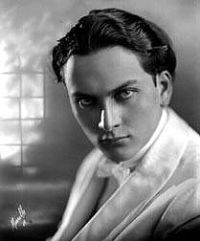
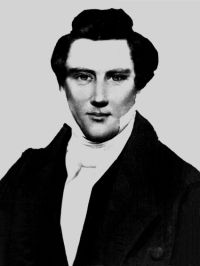
Portrait of S. R. Crockett S. R. Crockett,  A Tatter of Scarlet: Adventurous Episodes of the Commune in the Midi 1871

“ There was not much to distinguish Aramon the Old from Aramon the New, that is, from a distance. Both glowed out startingly white and delicately creamy between the burnished river and the flawless sapphire of the Provençal sky. It was still winter time by the calendar, but the sun beat on our bowed shoulders as we bent over the solid masonry of the breastwork, and the stones were hotter than in English dog-days as we plucked away our hands from it. ”
Source: Gutenberg

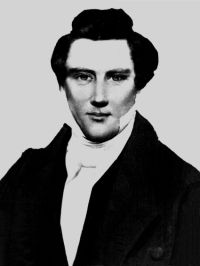
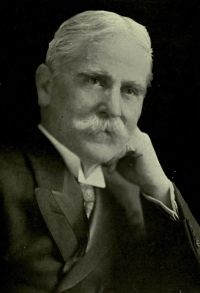
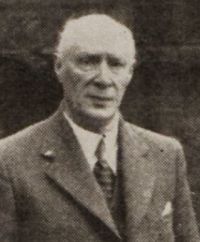
Portrait of George Smith George Smith,  The Chaldean Account of Genesis

“ Anu and Anatu had a numerous family; among their sons are numbered Lugal-edin, “the king of the desert,” Latarak, Ab-gula, Kusu, and the air-god, whose name was Ramman or Rimmon, in Accadian Mirmir. Rimmon is god of the region of the atmosphere, or space between the heaven and earth, he is the god of rain, of storms and whirlwind, of thunder and lightning, of floods and watercourses. He was in high esteem in Syria and Arabia, where he bore the name of Dadda; in Armenia he was called Teiseba. Rimmon is always considered an active deity, and was extensively worshipped. ”
Source: Gutenberg

Get perspective with Kwize: daily news enlightened by great literature