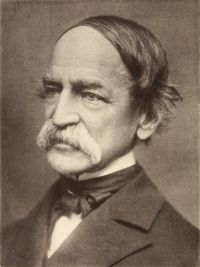
Archibald Douglas

Definition and stakes

John G. Edgar Cressy and Poictiers: The Story of the Black Prince's Page

Accordingly, Lord Douglas, when he saw that the engagement must end in the discomfiture of the French, lost no time in attempting to save himself by flight, and, with many of his companions, succeeded in escaping. But some of his friends had no such good fortune. Both Sir Archibald Douglas and Sir William Ramsay were taken prisoners; and the former being in magnificent armour, was naturally supposed by his captors to be some great lord who could pay an immense ransom.
Source: Gutenberg

William Platt Stories of the Scottish Border

These warlike nobles did not like to be spoken of as if they were mice, and it roused them to deeper rage.
Then out spoke Archibald Douglas, Earl of Angus, the head of the younger branch of the Douglas family. "Trust me, I'll bell the cat!"
There was a knock at the door; Cochrane, the architect, whom the nobles said had been a mason, but was now the king's chief favourite, entered, dressed in black velvet, with a heavy chain of gold round his neck, a horn of gold tipped with precious stones, and all his attire of the costliest.
Source: Gutenberg

1911 Encyclopædia Britannica, Volume 8… (1911)

The earldom and entailed estates of Douglas reverted by the patent of 1358 to Archibald Douglas, 3rd Earl of Douglas, called “The Grim” (c. 1328–c. 1400) , a natural son of the “good” Sir James. With his cousin, the 1st earl of Douglas, he had fought at Poitiers, where he was taken prisoner, but was released through ignorance of his real rank. On his return to Scotland he became constable and sheriff of Edinburgh, and, later, warden of the western marches, where his position was strengthened by his becoming lord of Galloway in 1369 and by his purchase of the earldom of Wigtown in 1372.
Source: Wikisource

Get perspective with Kwize: daily news enlightened by great literature