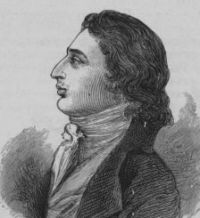
Bouchard de Froissart

Definition and stakes

Jean Froissart,  The boy's Froissart

“ He was surrounded by the enemy, and made prisoner, as were two esquires of the names of Mondrop and Jacquelot de Thiaulx. The French galloped after them, but the Germans escaped; and, being scarcely more than half an acre separated from them, they could plainly hear them crying out, “Ha, gentlemen! you shall not return as easy as you came.” Then one of his party rode up to the Lord of Rauderondenc, and said, “Sir, consider what you are about, or the French will cut us off from the bridge.” The Lord of Rauderondenc replied, “If they know one road to it, I know another;” ”
Source: Gutenberg

Jean Froissart,  The boy's Froissart

“ The king replied, “My good people, do not be afraid: the English will not approach you nearer than they have done.” He thus spoke in answer to what they had said,—that “our enemies are only two leagues off: as soon as they shall know you have quitted us, they will come hither directly; and we are not able to resist them ourselves, nor shall we find any to defend us. Have the kindness, therefore, sire, to remain in your good city of Paris to take care of us.” The king replied, “I am going to St. Denis, to my army ”
Source: Gutenberg

Portrait of Walter Besant Walter Besant,  1911 Encyclopædia Britannica, Volume 11… (1911)

“ The personality of the man, independently of his adventures, may be arrived at by the same process. It will be found that Froissart, without meaning it, has portrayed himself in clear and well-defined outline. His forefathers were jurés (aldermen) of the little town of Beaumont, lying near the river Sambre, to the west of the forest of Ardennes. Early in the 14th century the castle and seigneurie of Beaumont fell into the hands of Jean, younger son of the count of Hainaut. ”
Source: Wikisource

Get perspective with Kwize: daily news enlightened by great literature