Arctic hare

Definition and stakes

Ontario. Department of Education,  The Ontario Readers: Fourth Book

“ The arctic hare, white as snow but for the great bulging black eye, bounds over the boulders. Snow buntings, whistling swans, snow geese, ducks in myriads—flacker and clacker and hold solemn conclave on the adjoining rocks, as though this were their realm from the beginning and for all time.
Of a tremendous depth are the waters of the straits. Not for nothing has the ice world been grinding through this narrow channel for billions of years. No fear of shoals to the mariner. Fear is of another sort.
”
Source: Gutenberg

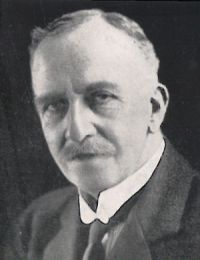
Portrait of R. F. Scharff R. F. Scharff,  The History of the European Fauna

“ The Arctic Hare presents us with a very similar case of distribution. Like the Reindeer, it inhabits, as we have learned, the Polar Regions and the northerly parts of the Old World and the New; but while we have only fossil evidence of the former, more southerly, extension of the range of the Reindeer, the Arctic Hare furnishes us with a still stronger proof of its past southward range in the survival of small isolated colonies in some of the southern mountain ranges of Europe and Asia. ”
Source: Gutenberg

Portrait of R. F. Scharff R. F. Scharff,  The History of the European Fauna

“ The Arctic Hare (Lepus variabilis) is almost the only one of the typical Arctic mammals which still inhabits the British Islands, and for that reason it is to most of us more familiar than any of the preceding species. Hares have been described from Greenland by the name of Lepus glacialis, from the European Alps as Lepus alpinus, and under other names from Arctic North America ”
Source: Gutenberg

Get perspective with Kwize: daily news enlightened by great literature