“ The people of Rome were, however, not prepared to receive her very cordially. It was an age in which vice of every kind was regarded with great indulgence, but the moral instincts of mankind were too strong to be wholly blinded to the true character of so conspicuous an example of wickedness as this. Arsinoe was at Rome, too, during this period of Caesar's life. He had brought her there, it will be recollected, on his return from Egypt, as a prisoner, and as a trophy of his victory. His design was, in fact, to reserve her as a captive to grace his triumph. ”
Arsinoe II
Definition and stakes
Quotes about “Arsinoe II”
Leigh North, Predecessors of Cleopatra
“ In the fifteenth year of Ptolemy’s reign Arsinoe II was made goddess of Mende, in the nineteenth at Thebes and in the twentieth or twenty-first, as Isis-Arsinoe, she was worshipped at Sais, and the king claimed these honors for her in all the temples of Egypt. There had been a city, the centre of the Egyptian worship of the crocodile, this Ptolemy re-named after the queen; it was enlarged, embellished and Hellenised to a great extent by the introduction of the Greek language and the erection of temples to the Greek gods and institutions on a Greek pattern. ”
E. M. Forster,
Alexandria: A History and a Guide
“ And as the men soften, the women harden. The dynasty is interwoven with terrific queens. There is the Arsinoe whom Philadelphus married; there is Arsinoe III who faced the Syrian army at Rafa; there is Cleopatra III who murdered her son; and there is the last and greatest Cleopatra, with whom the tangled race expires.In contrast to this confusion there rises the solid but unattractive figure of Rome (first embassy B.C. 273, first intervention B.C. 200) . Her advance was postponed until she had gained the Western Mediterranean by defeating Carthage. ”
Georg Ebers,
The Historical Romances of Georg Ebers
“ Althea eagerly interrupted; "nothing else was talked of for weeks in the royal palace. Queen Arsinoe—you might be jealous, Lady Thyone—has been fairly in love with your hero ever since her last stay in your house on her way home from Thrace, and she has not yet given up her desire to see him in the capital as priest of Alexander. It seems to her just and fair that the old companion of the greatest of the great should have the highest place, next to her husband's, in the city whose foundation he witnessed. Arsinoe speaks of you also with all the affection natural to her feeling heart." ”
Ellen C. Clayton, Female Warriors, Vol. 1 (of 2)
“ Arsinoe, Queen of Egypt, was the wife of Ptolemy Philopater. She was a brave as well as prudent woman, and accompanied her husband when he invaded Syria, B.C. 217. In the battle of Raphia [46] she rode up and down through the ranks, exhorting the soldiers to behave manfully during the fight. She remained beside her husband during the heat of the action; and by her presence she greatly contributed to the victory gained by the Egyptians. ”
Georg Ebers,
The Emperor — Complete
“ As she spoke Mastor entered the room, sent by his master. Yesterday had he not heard from the overseer of the pavement-workers the comforting tidings that after our grief and suffering here on earth there would be another, beautiful, blissful and eternal life? He went kindly up to Arsinoe and said: “No, no, my children; when we are dead we become beautiful angels with colored wings, and all who have loved each other here on earth will meet again in the presence of the good God.” Arsinoe looked at the slave with disapproval. ”
Georg Ebers,
The Emperor — Volume 08
“ Arsinoe."Do you think not?" asked Keraunus smiling. "We are of as good family, nay of a better than Plutarch, and the fairest is a match for the wealthiest. What would you say child to a long flowing purple robe and a chariot with white horses, and runners in front?"At breakfast Keraunus drank two cups of strong wine, in which he allowed Arsinoe to mix only a few drops of water. While his daughter was curling his hair a swallow flew into the room; this was a good omen and raised the steward's spirits. ”
Georg Ebers,
The Emperor — Volume 05
“ Arsinoe started, the blood left her cheeks, and all satisfaction fled from her heart when the old man came to a stand-still in front of her, and said kindly:"Ah! ah! a bud out of the papyrus factory among all these proud roses and lilies. Ah! ah! out of my work-rooms to join my assembly! Never mind- never mind, beauty is everywhere welcome. I do not ask how you got here. I am only glad that you are here."Arsinoe covered part of her face with her hand, but he tapped her white arm three times with his middle finger, and then tottered on laughing to himself. ”
“ For of money there is plenty in the land, and if more be wanted thou, Harmachis, knowest where it is stored against the need of Khem, and outside the Roman’s reach of arm. Who is there to harm us? There is none. Perchance, in this turbulent city, there may be struggle, and a counter-plot to bring Arsinoë to Egypt and set her on the throne. Therefore Alexandria must be severely dealt with—ay, even to destruction, if need be. As for Arsinoë, those go forth to-morrow on the news of the Queen’s death who shall slay her secretly. ”
“ Arsinoe, the widow of Lysimachus, still lived. It was Arsinoe, it will be recollected, whose jealousy of her half-sister, Lysandra, had caused the death of Agathocles and the flight of Lysandra, and which had led to the expedition of Seleucus, and the subsequent revolution in Macedon. When her husband was killed, she, instead of submitting at once to the change of government, shut herself up in Cassandria, a rich and well-defended city. She had her sons with her, who, as the children of Lysimachus, were heirs to the throne. ”
Charles Bucke, Ruins of Ancient Cities (Vol. 1 of 2…
“ Many huge masses of rock had lately fallen during earthquakes; and the whole country round bespeaks some ancient and tremendous commotion of nature [42] ." NO. XIII.—ARSINOE.Arsinoe was situated near the lake of Mœris, on the west shore of the Nile, where the inhabitants paid the highest veneration to crocodiles. They nourished them in a splendid manner, embalmed them after they were dead, and buried them in the subterranean cells of the Labyrinth; thence the city was called, in ancient times, Crocodilopolis [43] . When the [Pg 67] Greeks conquered Egypt they altered its name to Arsinoe. ”
Georg Ebers,
The Emperor — Volume 08
“ Then he set him down again, gave Arsinoe a little bag of gold pieces in Caesar's name, and begged her—for so his master desired—to find a new abode and, after the deceased was burned on the morrow, to quit Lochias with the children. When Mastor was gone Arsinoe opened the chest, in which lay her father's papyri and the money that Plutarch had paid for the ivory cup, put in the heavy purse sent by the Emperor, comforting herself while her tears flowed, with the reflection that she and the children were provided at any rate against immediate want. ”
“ Every thing was now prepared for a desperate and determined contest for the crown between Cleopatra, with Caesar for her minister and general, on the one side, and Arsinoe, with Ganymede and Achillas for her chief officers, on the other. The young Ptolemy, in the mean time, remained Caesar's prisoner, confused with the intricacies in which the quarrel had become involved, and scarcely knowing now what to wish in respect to the issue of the contest. It was very difficult to foresee whether it would be best for him that Cleopatra or that Arsinoe should succeed. ”
Georg Ebers,
The Emperor — Volume 09
“ Arsinoe had grown up a heathen, she clung with affection to the gods of her fathers and hoped for happier days after the first bitterness of the loss of her father and the separation from her brothers and sisters was past. She was little disposed to sacrifice her young love and all her earthly happiness for spiritual advantages of which she scarcely comprehended the value. Her father had always spoken of the Christians with hatred and contempt. ”
Georg Ebers,
The Emperor — Volume 06
“ The nosegay which had been given to Arsinoe by Verus gave her much pleasure, for a girl is always pleased with beautiful flowers—nay, they have something in common. As she and her father approached the prefect's house Arsinoe grew frightened, and her father could not conceal his vexation at being obliged to take her to the lady Julia in so modest a garb. ”
1911 Encyclopædia Britannica, Volume 2… (1911)
“ Born about 316 B.C., she married Lysimachus, king of Thrace, who made over to her the territories of his divorced wife, Amastris. To secure the succession for her own children she brought about the murder of her stepson Agathocles. Lysandra, the wife of Agathocles, took refuge with Seleucus, king of Syria, who made war upon Lysimachus and defeated him (281) . After her husband’s death Arsinoë fled to Ephesus and afterwards to Cassandreia in Macedonia. ”
Leigh North, Predecessors of Cleopatra
“ In the region called the Fayum, the former Lake Moeris was drained and turned into a fertile plain and this work was attributed to Arsinoe and it was now called the Arsinoe nome, and from it the queen derived part of her revenues. Old records show that it was settled by veteran soldiers who brought wives from Greek lands, and that it was an orderly and well managed society, with few crimes laid to its account. ”
E. M. Forster,
Alexandria: A History and a Guide
“ It was the pride of race carried to an extreme degree. The royalties of to-day, for fear of debasing their stock, marry first cousins; the Ptolemies, more 15logical, tried to propagate within even narrower limits. In flesh, as in spirit, the dynasty claimed to be apart from common men, and to appear as successive emanations of the Deity, in pairs of male and female. Arsinoe—to come back to earth—was a domineering and sinister woman. She was seven years older than her brother, and when they married he had already a wife, whom she drove from Alexandria by her intrigues. ”
Georg Ebers,
The Emperor — Volume 05
“ Arsinoe looked compassionately on the poor old man who could not buy back his youth with all his money and all his art.In the supercilious man who at once came up to Plutarch she recognized the art-dealer Gabinius to whom her father had shown the door, on account of the mosaic picture in their sitting-room, but their conversation was interrupted, for the distribution of the women's part for the group of Alexander's entry into Babylon, was now about to take place; about fifty girls and young women were sent away from the stage and went down into the orchestra. ”
Arthur E. P. Brome Weigall, The Life and Times of Cleopatra…
“ The gaiety of the life in the besieged Palace, and the progress of the romance which was there being enacted, were rudely disturbed by two consecutive events which led at once to the outbreak of really serious hostilities.104 The little Princess Arsinoe, who, like all the women of this family, must have been endowed with great spirit and pluck, suddenly made her escape from the Roman lines, accompanied by her nutritius Ganymedes,30 and joined the Egyptian forces under Achillas. ”
Achilles Tatius, The Greek Romances of Heliodorus…
“ She [6] now received more favour from the public than Arsinoë, who grew careless in practising her talents; while Thisbe shewed greater perfection, both in voice and execution. But she was not aware that by this she had excited the inextinguishable envy of a courtezan. This was increased by her having seduced Nausicles, a rich merchant of Naucratium, formerly a lover of Arsinoë; but who had left her on pretence of being disgusted with the distortions of her eyes and countenance, while she was playing on the flute. ”
Georg Ebers,
The Historical Romances of Georg Ebers
“ Proclus and Althea were among the conspirators who supported Arsinoe, and the Queen thought it would be an easy matter to win over to her cause and herself the handsome sculptor, whom she remembered at the last Dionysia.The wealthy blind artist, so highly esteemed among the members of his profession, might become valuable to the conspiracy, for she knew what enthusiastic devotion the Alexandrian artists felt for the King, and everything depended upon forming a party in her own favour among them. ”
Georg Ebers,
The Emperor — Complete
“ Is Arsinoe as pretty as she promised to become? It is two years since I last saw her; at our place we never have time to leave work till it is dark. For eight months I had to work for the master at Ptolemais, and often saw the old folks but once in the month. ”
E. M. Berens, Myths and Legends of Ancient Greece and Rome
“ To them he excused his absence by the fact of his having suffered from a fresh attack of madness, and added that an oracle had foretold to him that his malady would only be cured when he had deposited the necklace and veil of Harmonia in the temple of Apollo at Delphi. Arsinoë, deceived by his artful representations, unhesitatingly restored to him his bridal gifts, whereupon Alcmæon set out on his homeward journey, well satisfied with the successful issue of his expedition. ”
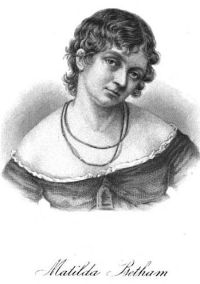
Mary Matilda Betham,
A Biographical Dictionary of the Celebrated Women of Every Age and Country
(1804)
“ The younger sister, named Arsinoe, siding in the war with her brother Ptolemy, was taken prisoner by Cæsar, and carried to Rome, in order to grace his triumph. He afterwards dismissed her, but would not suffer her to return to Egypt, lest she should disturb Cleopatra's government; so she settled in Asia. There Antony found her after the battle of Philippi; and, at the request of her sister, caused her to be put to death. ”
1911 Encyclopædia Britannica, Volume 2… (1911)
“ To obtain possession of Cassandreia, he offered his hand in marriage to Arsinoë, and being admitted into the town, killed her two younger sons and banished her to Samothrace. Escaping to Egypt, she became the wife of her full brother Ptolemy II., the first instance of the practice (afterwards common) of the Greek kings of Egypt marrying their sisters. She was a woman of a masterful character and won great influence. Her husband, though she bore him no children, was devoted to her and paid her all possible honour after her death in 271. ”
Georg Ebers,
The Historical Romances of Georg Ebers
“ Finally he felt himself led away, placed his feet as his Uncle Archias whispered directions, and as they gropingly obeyed them ascended the temple steps and stood in utter darkness upon the platform listening to the speeches which so many had prepared.All the distinguished men in the city expressed their sympathy, their pity, their admiration, their hopes, or sent assurances of them to him. The Rhodian Chrysippus, despatched by the Queen, delivered the wreath which the monarch bestowed, and informed Hermon, with her greetings, that Arsinoe deemed his Demeter worthy of the laurel. ”
Georg Ebers,
The Emperor — Volume 05
“ A poor rascal who had many mouths to fill, and was no more than two fingers of his master's hand. This must be altered. He would not reduce his sister's comforts in any way but he must break with Papias, and stand henceforth on his own feet. His courage mounted fast, and when at last, Arsinoe returned from her sister, he had resolved that he must first finish Balbilla's bust with all diligence in his own workshop, and that then he would model his beloved; these two female heads he could not fail in. ”
Charles Bucke, Ruins of Ancient Cities (Vol. 1 of 2…
“ This name it retained in the time of Adrian, and Greek medals were struck here in honour of that emperor as well as of Trajan. Its ruins are thus described by Belzoni:—"On the morning of the 7th I went to see the ruins of the ancient Arsinoe; it had been a very large city, but nothing of it remains except high mounds of all sorts of rubbish. The chief materials appear to have been burnt bricks. There were many stone edifices, and a great quantity of wrought granite. ”
Georg Ebers,
The Emperor — Complete
“ We are cobbling up a robe for the Emperor out of mere rags; we are upholsterers and not artists. If it were only for Hadrian, and not for Diotima and her children, not another finger would I stir in the place.” The path from the steward’s residence led through some passages and up a few steps to the rotunda, on which the sculptor was standing, but in little more than a minute from Arsinoe’s disappearance from the balcony she was by his side. ”