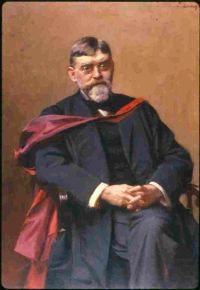
 Sir Mungo William MacCallum,
Shakespeare's Roman plays and their background
(1910)
Sir Mungo William MacCallum,
Shakespeare's Roman plays and their background
(1910)
“ Truly their love, which at first seemed to justify Aristophanes against Diotima, just because it is true love, turns out to answer Diotima’s description after all. Or perhaps it rather suggests the conclusion in the Phaedrus: “I have shown this of all inspirations to be the noblest and the highest, and the offspring of the highest; and that he who loves the beautiful, is called a lover, because he partakes of it.” Antony and Cleopatra, with all their errors, are lovers and partake of beauty, which we cannot say of the arid respectability of Octavius. ”