
“ There is the smell of roast meats hanging about the courtyards of the inns. There is a continual calling for the drawers, there is a clinking of hanaps and a murmur of voices.The strepitus, however, of the High Street is not like that of Bankside. There is no tinkling of guitars: no singing before noon or after noon: no laughing: the country folk do not laugh: they do not understand the wit of the poets and the players. High Street has nothing to do with Bankside: the merchants and the squires know nothing about the Show Folk. ”
Bankside
Definition and stakes
The theme of “Bankside” has been addressed by authors such as Walter Besant, Joseph Quincy Adams and Samuel Pepys. It is often associated with terms like bank, England, banking, London and banker.
Quotes about “Bankside”
“ Beside all these people Southwark contained the Show Folk of Bankside. When the Show Folk began to live in Bankside I know not: their settlement originally was in Westminster outside the King's Palace, where there was always a great demand for music, dancing, tumbling, mumming and such recreative performances; they were also, however, in great request in London by City Church, city company, and city tavern. Now there was no place for them within the walls: they had no company: there was neither a Musicians'; nor a Dancers'; nor a Singers'; nor a Mummers';{207} nor a Tumblers' Company. ”
“ Every summer evening the river was crowded with the boats taking the people across to the stairs upon the Bank between St. Mary Overies and Old Barge House Stairs: innumerable were the boats. As for the watermen, John Taylor, the water poet, says that there were 40,000 of them plying between Windsor and Gravesend, while the number of people who were carried over every day to the plays on Bankside was three or four thousand. ”
 Joseph Quincy Adams,
Shakespearean Playhouses
Joseph Quincy Adams,
Shakespearean Playhouses
“ Thither the citizens were accustomed to go to witness bear-baiting29 and bull-baiting, to practice archery, and to engage in various athletic sports. Thither, too, for many years the actors had gone to present their plays. In 1545 King Henry VIII had issued a proclamation against vagabonds, ruffians, idle persons, and common players, [32] in which he referred to their "fashions commonly used at the Bank." The Bankside, however, was associated with the lowest and most vicious pleasures of London, for here were situated the stews, bordering the river's edge. ”
Samuel Pepys, Diary of Samuel Pepys — Volume 45…
“ we to a little ale-house on the Bankside, over against the 'Three Cranes, and there staid till it was dark almost, and saw the fire grow; and, as it grew darker, appeared more and more, and in corners and upon steeples, and between churches and houses, as far as we could see up the hill of the City, in a most horrid malicious bloody flame, not like the fine flame of an ordinary fire. Barbary and her husband away before us. ”
 Sir C. H. Reilly,
Some architectural problems of to-day
(1924)
Sir C. H. Reilly,
Some architectural problems of to-day
(1924)
“ BANK BUILDINGS IN ENGLAND AND AMERICA. Why does a New York, a Montreal, or a Toronto bank differ so much in the character and quality of its architecture from a London or Liverpool one? All appear to the average man to serve the same needs. Money may be more powerful on the other side of the Atlantic than it is with us, but it is hardly more respected. Yet there the banks provide temples for their customers while we provide saloon bars, mahogany partitions and all. ”
Charles Hemstreet, Nooks and Corners of Old London
“ Child's Bank close by the Temple Bar Griffin on the south side of Fleet Street, is the oldest of England's banking houses dating from the time of Charles I. when the first Francis Child, an apprentice to William Wheeler the goldsmith, married his master's daughter and by thrift and industry founded the fortunes of the great institution. The present bank stands on the site of the old Devil Tavern that for two hundred years was the haunt of men of letters. ”
 Arnold Bennett,
Teresa of Watling Street: A Fantasia on Modern Themes
Arnold Bennett,
Teresa of Watling Street: A Fantasia on Modern Themes
“ And if the City, as a whole, is romantic, its banks are doubly and trebly romantic. Nothing is more marvellous than the rapid growth of our banking system, which is twice as great now as it was twenty years ago—and it was great enough then. ”
 Earl Derr Biggers,
The Heart of the Loaf
(1922)
Earl Derr Biggers,
The Heart of the Loaf
(1922)
“ The citizens of Mayfield may be pardoned a keen pride in what they will behold. It is doubtful if any city of similar size between New York and Chicago can boast finer banking-rooms. Pillars, partitions and walls of marble, mahogany paneled rooms for the directors and the president, in the basement safety deposit vaults of the newest design and construction—all in all a revelation in modern banking quarters. To the strains of sweet music discoursed by the Mayfield Silver Clarinet Band the directors and officers will be happy to meet their friends and show them about. ”
Eliezer Edwards, Personal Recollections of Birmingham and Birmingham Men
“ The directors built for their offices the substantial edifice on Bennetts Hill, now occupied as the Branch Bank of England, and they prepared for a very large business. They, however, much as they may have been respected, and successful as most of them undoubtedly were in their private affairs, were not men of large capacity, and they had not the quick and sound judgment of character and circumstances necessary in banking. ”
Eliezer Edwards, Personal Recollections of Birmingham and Birmingham Men
“ Prom Jemmy Wood's shop to the noble hall of the Midland, or the Joint Stock, is indeed a long step in advance.It has often occurred to me that it would be a wise plan for bankers to divide their counters into distinct compartments, so that one customer could see nothing of his next neighbour, and hear nothing of his business. The transactions at a bank are often of as delicate a nature as the matters discussed in a solicitor's office; yet the one is secret and safe, and the other is open to the gaze and the ear of any one who happens to be at the bank at the same time. ”

“ The biggest of 'em is dead. That was George T. Baggin, one of the most daring and unscrupulous operators we have ever had in London. We know every man or woman or corporation likely to jump onto the market with both feet and set it sagging—but there isn't a single known bear who has a hand in this. We've tried to discover his identity, but we've always come up against a blank wall—the bank. The bank can't give away its client, and, even if it did, I doubt very much whether we should be any the wiser, for he's pretty sure to have hidden himself too deep. ”
 Henry Blake Fuller,
The Cliff-Dwellers: A Novel
Henry Blake Fuller,
The Cliff-Dwellers: A Novel
“ The Underground is not one of the old banks, nor is it one of the large ones; if Brainard had no other irons in the fire he would not cut much of a figure in business circles. The Underground is simply one in a batch of banks that have sprung up in the last seven or eight years and that are almost unknown, even by name, to men who, in the clearing-house at that time, have since passed on to other and different affairs. It is spoken of as Brainard's bank, just as other banks are spoken of as Shayne's, or Cutter's, or Patterson's. ”
Anonymous, The London Guide and Stranger's Safeguard (1819)
“ Some swindlers set up their banks in town and country, issuing their notes payable to bearer on demand and otherwise. One of them, very celebrated for advertising "money advanced on annuities," and for his debaucheries, kept a —— bank (so written over his door) for twenty years at Hyde Park wall, at the sight of which any reasonable persons might burst their sides with laughter; but within the low walls whereof, many unthinking persons have been duped of their property. ”
George M. White, From Boniface to Bank Burglar; Or…
“ HARD WORK UNDER GREAT DIFFICULTIES The day following our reconciliation, Shinburn and I went down to look over the Ocean Bank and its surroundings. It was most essential that we should know the habits of the policemen on the beats around and near the bank, and the comings and goings of the janitor and other occupants of the neighborhood, as well as of the general public, day and night. Therefore it was decided to obtain quarters from which all this could be watched, and a front room on the second floor of the building on Fulton Street, opposite the bank, was hired. ”
Various, Blackwood's Edinburgh Magazine…
“ It is the branches alone which make this astonishing increase. Now, as a branch is merely a local agency of the parent bank, established at a distance for the sake of outlying business, the number of parties engaged in banking who are responsible to the public is not thereby increased, nor is the amount in circulation extended. In fact, the multiplication of the branch banks has been of extraordinary benefit to the public, by affording the inhabitants of even the remotest districts a ready, easy, and favourite method of deposit, and by extinguishing all risks of credit. ”
Henry Warren, Banks and Their Customers
“ We are told that London banking is quite different to country banking, but it is a difference of degree rather than of kind, and in London, as in the provinces, the bank-manager has two rates—one for those who, taking him at his word, do not attempt to bate him down, and a second and lower rate for those persons who, knowing that he is of the City, and scenting instinctively a servant of the company, who is in possession of instructions, literally force his hand. ”
Henry Warren, Banks and Their Customers
“ The West-end banker, again, has his peculiarities, and it by no means follows that the rules and regulations of a bank’s head-office in the City are in complete harmony with those of one of its branches within a quarter of an hour’s walk of the seat of government. It is, therefore, impossible to define London banking, because London is vast, and the system eminently elastic and adaptable. ”
Eliezer Edwards, Personal Recollections of Birmingham and Birmingham Men
“ The banking business of the town is now in safe and prudent hands, and there is strong reason for hoping that the several institutions may go on, with increasing usefulness and prosperity, to a time long after the present generation of traders has ceased to draw cheques, or existing shareholders to calculate upon coming dividends.As I stood, not long ago, within the splendid hall in which the Birmingham and Midland Bank carries on its business, my mind reverted to a visit I once paid, to the premises, in the City of Gloucester, of the first county bank established in England. ”
Henry Warren, Banks and Their Customers
“ We next come to the rate a borrower should pay upon a well-secured loan or advance, and here, again, we may touch upon a distinction between London and country banking. A banker, like any other dealer, adapts his business to his surroundings, but in a great city like London he is practically compelled to specialize more or less, and but little money is lent in the City upon mortgage, whereas overdrafts are granted freely in the country against the deeds of house property. ”
 Walter Bagehot,
Lombard Street: A Description of the Money Market
(1917)
Walter Bagehot,
Lombard Street: A Description of the Money Market
(1917)
“ There are a few well-known exceptions, but according to universal belief the deposits of most private bankers in London tend rather to diminish than to increase. As to the smaller banks, this naturally would be so. A large bank always tends to become larger, and a small one tends to become smaller. People naturally choose for their banker the banker who has most present credit, and the one who has most money in hand is the one who possesses such credit. ”
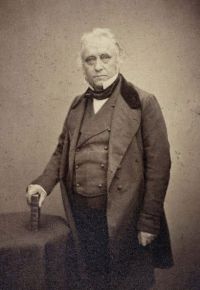 Thomas Babington Macaulay,
The History of England from the Accession of James II…
Thomas Babington Macaulay,
The History of England from the Accession of James II…
“ Even in the terrible crisis of 1672, when the whole Delta of the Rhine was overrun by the French armies, when the white flags were seen from the top of the Stadthouse, there was one place where, amidst the general consternation and confusion, tranquillity and security were still to be found; and that place was the Bank. Why should not the Bank of London be as great and as durable as the Banks of Genoa and of Amsterdam? Before the end of the reign of Charles the Second several plans were proposed, examined, attacked and defended. ”
Modern Eloquence: Vol III, After-Dinner Speeches P-Z
“ In no other wise can one realize how the sterile soil and the bleak winds and the short summer have been the rugged parents of that thrift, that industry, that economy, that regard for the small savings, which have made New England the banker of America. As the population grew beyond the capacity of the soil, her sons from her myriad harbors swarmed out upon the sea, an army of occupation, and annexed the Grand Banks, making them national banks before the days of Secretary Chase. ”
Eliezer Edwards, Personal Recollections of Birmingham and Birmingham Men
“ The bank seems, in the short time it has been established, to have been very successful, for the premises, after having been twice enlarged, are, it is said, now too small; and it is understood that a plot of land in Ann Street, near the corner of Newhall Street, has been secured, and that Mr. F.B. Osborne is engaged upon plans for the erection, on this site, of a new banking house, which will be no mean rival to those already in existence, adding another fine architectural structure to the splendid line of edifices which will soon be complete from the Town Hall to Snow Hill. ”
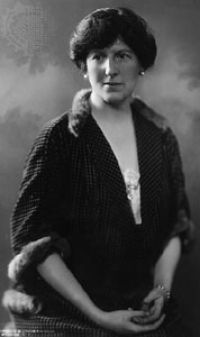 Alice Duer Miller,
Instruments of Darkness (collection…
(1926)
Alice Duer Miller,
Instruments of Darkness (collection…
(1926)
“ He respected Banks more than any man he had ever known, and loved him—had loved him, in the days when he was capable of love. He could ruin Banks; or, rather, Banks' suspicion would ruin Banks himself. A less honest man would never let himself suspect the partner on whose free capital he existed, but that would not influence Banks, or would influence him to action. Yes, Banks would act. How? Bethson sat there a long time with his chin in his hand, gazing out toward the Sound, until, as dusk fell, a smart little black motorboat made its appearance in the cove. ”
Rena I. Halsey, The Liberty Girl
“ Banker, my aunt’s lawyer, met us at the Littleton station with his car. He is a tall, lean man, but his brown eyes have a quizzical gleam in them that makes you feel that you are affording him some amusement. The seven-mile ride up one mountain slope and down another, in the shade of the woods that gloomed dark and weird on each side of the road, with the hush of the gloaming in their moist depths, was most enjoyable. ”
 Mary Jane Holmes,
The Merivale banks
Mary Jane Holmes,
The Merivale banks
“ The words were caught up by those outside, and ran through the crowd like wildfire, gaining strength as they ran, until by the time they reached the outer circle it was affirmed that the bank could pay no more that day.Those who have witnessed a run on a bank know how the excitement grows until people, ordinarily cool and sane, grow wild and mad, and howl sometimes like beasts at the prospect of losing their money. And so it was now at the White Bank, where the excitement was intense, especially among the small depositors—the women, whose little was all in the bank. ”
Robert Grimshaw, Fifty years hence: or, What may be in 1943 (1892)
“ Banking is much more simple and much more safe, both for the banker and for the dealer, than in the old risky days. Panics are impossible. The wise action of the Bank of England, in connection with other monetary institutions, in averting a financial crash in November, 1890, by coming to the rescue of Baring Brothers with $55,000,000, began most auspiciously an eminently successful era of mutual help. ”
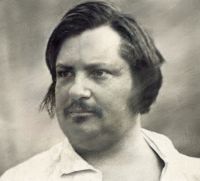 Honoré de Balzac,
Poor Relations
Honoré de Balzac,
Poor Relations
“ These tailors and the landlord and he all scraped the money together among them, and put all their savings into this bank that they are starting. What is a bank for those that begin in these days? Simply a license to ruin themselves. A banker's wife may lie down at night a millionaire and wake up in the morning with nothing but her settlement. At first word, at the very first sight of him, we made up our minds about this gentleman—he is not one of us. You can tell by his gloves, by his waistcoat, that he is a working man, the son of a man that kept a pot-house somewhere in Germany ”
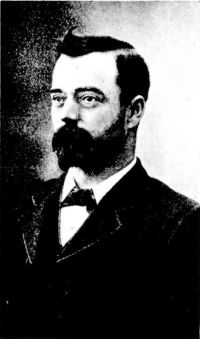 John T. Short,
The North Americans of Antiquity
(1879)
John T. Short,
The North Americans of Antiquity
(1879)
“ A remarkable example of such accumulation is the well-known shell-bank a mile and a half south of New Harmony, Indiana, and situated on a high hill 170 feet above the level of an arm of the Wabash River. The bank covers an area of a quarter of an acre, and has attracted the attention of eminent scientists like Leasure, Say, Lyell and others, but nothing of value was developed that would refer the construction of this and similar banks to any people more ancient than the Mound-builders. ”
