Battle of Buena Vista

Definition and stakes

John Stilwell Jenkins History of the War between the United States and Mexico (1849)

The battle of Buena Vista does not require words of commendation. The facts are of themselves eloquent. The pass of Angostura, the plain upon which the bravery of those volunteers, many of whom had never before been in action, was tested, and the hills which flank it, will be a perpetual monument. Less than five thousand men, not five hundred of whom were regulars, with fourteen pieces of artillery, maintained their position, though the ravines around them streamed with their blood, from early dawn until set of sun.
Source: Wikisource

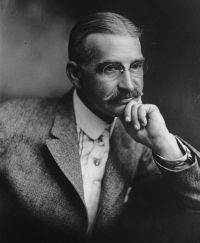
Portrait of Maturin M. Ballou Maturin M. Ballou Aztec Land

The Americans had the most advantageous position, but were at times overwhelmed by numbers. Notwithstanding this, at the end of the second day, February 23, 1847, the American flag waved in triumph over the field, and the Mexicans were utterly routed. It was of this hard-fought battle that Santa Anna said: "We whipped the Americans half a dozen times, and once completely surrounded them; but they would not stay whipped." The battle of Buena Vista was fought at a great altitude, nearly as high above the level of the sea as the summit of Mount Washington in New England.
Source: Gutenberg

Decisive Battles of America

THE BATTLE OF BUENA VISTA (1847) After Taylor’s capture of Monterey, the stronghold of northern Mexico, an armistice terminated hostilities till November 13th, 1846. By that time Santa Anna—who had returned to Mexico—had mustered a powerful army at San Luis Potosi, and was expected to march against Monterey. Taylor, intending to act on the defensive only, proposed to occupy a line stretching from Saltillo to Tampico, which fort had been evacuated by the Mexicans; and, in pursuance of this plan, marched on Saltillo and Victoria, and occupied them without resistance.
Source: Gutenberg

Get perspective with Kwize: daily news enlightened by great literature