“ For the dead above To beat your foul foe or die.Then take me; but when (I charge you this) You have come to the bloody field, That the bell of God, to a cannon grown, You will ne'er to the foeman yield. By the love of the past, Be that hour your last, When the foe has reached this trust; And make him a bed Of patriot dead, And let him sleep in this holy dust. [1] Mortally wounded at the battle of Seven Pines.The Tree, the Serpent, and the Star. By A. P. Gray, of South Carolina. ”
Battle of Seven Pines
Definition and stakes
The theme of “Battle of Seven Pines” has been addressed by authors such as James Longstreet, Annie Randall White, E. Burd Grubb, William Meade Dame and Lady Gregory. It is often associated with terms like pine, artillery, indigenous, forest and enemy.
Quotes about “Battle of Seven Pines”
1911 Encyclopædia Britannica, Volume 13… (1911)
“ At the beginning of the Civil War he resigned to become colonel of the 3rd Maine volunteer regiment, and at the first battle of Bull Run was in command of a brigade. In September he was promoted brigadier-general of volunteers. He served in the Peninsular Campaign, and at the battle of Seven Pines (Fair Oaks) he was twice wounded, losing his right arm. On his return to active service in August 1862 he took part in the Virginian campaigns of 1862–63; at Antietam he succeeded Sedgwick in command of a division, and he became major-general of volunteers in March 1863. ”
 William Sharp,
Pharais; and, The Mountain Lovers
William Sharp,
Pharais; and, The Mountain Lovers
“ Pine after pine would rear a green banner, from which mist-veils would float, or rise and sway like flags of a marching army. Then the ranks would close in again. Flying columns would converge from right and left; the pine-banners would vanish, as though in the smoke of battle: a mighty swaying mass would sweep upward, absorb the sunbeams and splinter their gleaming lances, till boulder after boulder would be captured and the bastioned heights themselves be environed in the assault. ”



Related terms
Authors who wrote about “Battle of Seven Pines”
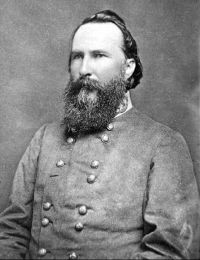 James LongstreetAnnie Randall WhiteE. Burd GrubbWilliam Meade Dame
 Lady GregorySun Tzu
 Nathaniel HawthorneVariousJ. N. Larned
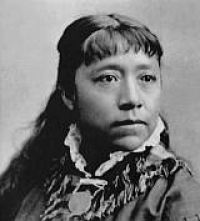 Sarah Winnemucca Hopkins
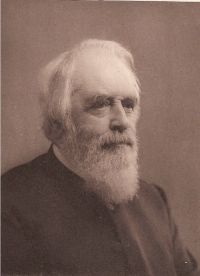 William Garden Blaikie
 William Henry Giles KingstonAnonymousCharles J. HerrJohn W. ThomasonWilliam SharpWilliam Ross KingHenry M. Avery
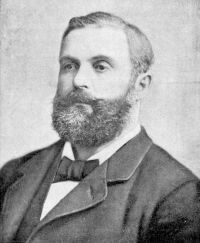 Thomas Wallace Knox
 Harold Edward Bindloss