“ Chapter 20 1 And Ben-Hadad king of Aram gathered all his forces, and thirty-two kings were with him, and horses, and chariots, and he went up and besieged Samaria, and made war against it. 2 And he sent messengers to Ahab king of Israel, to the city, 3 and said to him, Thus says Ben-Hadad. Your silver and your gold are mine, and the best of your wives and children are mine.4 And the king of Israel answered and said, As you say, my lord the king. I am yours, and everything I have. ”
Ben-Hadad
Definition and stakes
The theme of “Ben-Hadad” has been addressed by authors such as Theophilus G. Pinches, Adam Clarke, Josephus, Heinrich Graetz and Donald A. Mackenzie. It is often associated with terms like Israel, David, Damascus, Syrians and Samaria.
Quotes about “Ben-Hadad”
The World English Bible — 1 Kings
“ But Ben Hadad was drinking himself drunk in the pavilions, he and the kings, the thirty-two kings who helped him. 17 The young men of the princes of the provinces went out first; and Ben Hadad sent out, and they told him, saying, "Men are coming out from Samaria."18 He said, "If they have come out for peace, take them alive; or if they have come out for war, take them alive."19 So these went out of the city, the young men of the princes of the provinces, and the army which followed them. 20 They each killed his man. The Syrians fled, and Israel pursued them. ”
Anonymous, Children of the Old Testament
“ Ben-hadad, the dark-eyed King of Syria, could no longer leap into his chariot and drive his swift horses through the fields as he used to do. He could not draw the bow of steel or fling the heavy spear as far or as straight as the young men of his tribe, for he was getting old; and he had given up going with his warriors on their fighting across the Jordan, leaving it to his younger chieftains. ”
Theophilus G. Pinches, The Old Testament in the Light of the Historical Records and Legends of Assyria and Babylonia
“ Apparently “all their days” in ver. 3 is not to be taken literally, as the war of the Israelites against Syria took place before the death of Ben-Hadad III. It may also be conjectured that the reason of there being no more than three defeats of the Syrians was due to the death of Ben-Hadad, and his sceptre passing into younger and more vigorous hands, so that “a saviour” was still needed, and found in the person of the Assyrian king, as suggested by Schrader. ”
G. Maspero, History of Egypt, Chaldæa, Syria…
“ Ben-hadad had sent Hazael to the prophet to ask him if he should recover, and Elisha had wept on seeing the envoy—“Because I know the evil that thou wilt do unto the children of Israel; their strongholds wilt thou set on fire, and their young men wilt thou slay with the sword, and wilt dash in pieces their little ones, and rip up their women with child. And Hazael said, But what is thy servant which is but a dog, that he should do this great thing? And Elisha answered, The Lord hath showed me that thou shalt be king over Syria.” ”
Theophilus G. Pinches, The Old Testament in the Light of the Historical Records and Legends of Assyria and Babylonia
“ In his fourteenth year, 846 b.c., however, he crossed the Euphrates again, and met Ben-Hadad for the last time. As before, the latter was in alliance with Irḫulēni of Hamath and the “twelve kings of the sea-coast above and below.” Again the Assyrian king fought with them and defeated them, destroying their chariots and teams, and capturing, as before, their war-material, and “to save their lives, they fled.” ”
The World English Bible — 1 Kings
“ Go, break your treaty with Baasha king of Israel, that he may depart from me."20 Ben Hadad listened to king Asa, and sent the captains of his armies against the cities of Israel, and struck Ijon, and Dan, and Abel Beth Maacah, and all Chinneroth, with all the land of Naphtali. 21 It happened, when Baasha heard of it, that he left off building Ramah, and lived in Tirzah. 22 Then king Asa made a proclamation to all Judah; none was exempted: and they carried away the stones of Ramah, and its timber, with which Baasha had built; and king Asa built therewith Geba of Benjamin, and Mizpah. ”
Matthew Henry, Commentary on the Whole Bible… (1700s)
“ David in his time had quite subdued the Syrians and made them tributaries to Israel, but Israel's apostasy from God makes them formidable again. Asa had tempted the Syrians to invade Israel once (ch. xv. 18-20) , and now they did it of their own accord. It is dangerous bringing a foreign force into the country: posterity may pay dearly for it. Ben-hadad had with him thirty-two kings, who were either tributaries to him, and bound in duty to attend him, or confederates with him, and bound in interest to assist him. ”
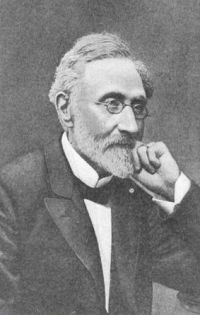 Heinrich Graetz,
History of the Jews, Vol. 1 (of 6…
Heinrich Graetz,
History of the Jews, Vol. 1 (of 6…
“ The land had been so hard pressed by Hazael and his son Ben-hadad, and the Israelites had been so reduced in strength, that their available forces consisted of but 10,000 infantry, fifty horse-soldiers, and ten war-chariots. From time to time the Aramæans made inroads, carried off booty and captured prisoners, whom they treated and sold as slaves. Jehoahaz appears to have concluded a disgraceful peace with the conqueror, to whose troops he granted free passage through his lands. Thereupon Hazael overran the land of the Philistines with his warriors, and besieged and conquered the town of Gath. ”
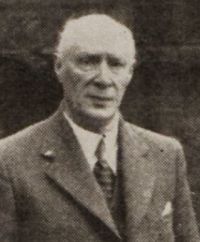 Lewis Spence,
Myths & Legends of Babylonia & Assyria
Lewis Spence,
Myths & Legends of Babylonia & Assyria
“ Professor Sayce indicates resemblances between the name Hadad, Dáda, the abbreviated form of the name of Abd-Hadad, who reigned at Hierapolis in the fourth century, Queen Dido of Carthage, and that of the Biblical David. Speaking of Hadad he says: "He was, as I have said, the supreme Baal or Sun-god; whose worship extended southward from Carchemish to Edom and Palestine. At Damascus he was adored under the Assyrian name of Rimmon, and Zechariah (xii 11) alludes to the cult of the compound Hadad-Rimmon in the close neighbourhood of the great Canaanitish fortress of Megiddo. ”
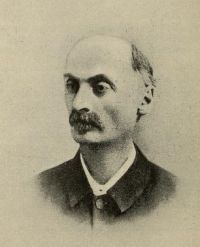 A. H. Sayce,
Early Israel and the Surrounding Nations
A. H. Sayce,
Early Israel and the Surrounding Nations
“ The rulers of Hamath who made alliance with David bear Semitic names. The crown-prince came himself to Jerusalem, bringing with him costly vessels of gold and silver and bronze. His name was Hadoram, "Hadad is exalted;" but out of compliment to the Israelitish king, the name of Hadad was changed into that of the God of Israel, and he became known to history as Joram. A common enmity united Hamath and Israel. The war with Ammon had brought David into conflict with Zobah, an Aramaic kingdom which under Hadad-ezer was aiming at the conquest of the whole of Syria. ”
“ Then he gave each man three dollars for travelling money, about nine shillings English, and out of it the mules were to be fed, the charges of n'zala and fandak to be met, and if there was anything over the men might buy food for themselves. They dared not protest, for El Arbi bel Hadj ben Haida had every man's house in his keeping, and if the muleteers had failed him he would have had compensation in a manner no father of a family would care to think about. ”
 Lew Wallace,
Ben-Hur: A tale of the Christ
(1880)
Lew Wallace,
Ben-Hur: A tale of the Christ
(1880)
“ Ben-Hur stopped, and the tribune went to him. "If thou wert free, what wouldst thou do?" "The noble Arrius mocks me!" Judah said, with trembling lips. "No; by the gods, no!" "Then I will answer gladly. I would give myself to duty the first of life. I would know no other. I would know no rest until my mother and Tirzah were restored to home. I would give every day and hour to their happiness. I would wait upon them; never a slave more faithful. They have lost much, but, by the God of my fathers, I would find them more!" ”
 Arnold Bennett,
Judith, a Play in Three Acts; Founded on the Apocryphal Book of Judith
Arnold Bennett,
Judith, a Play in Three Acts; Founded on the Apocryphal Book of Judith
“ You are valiant men, and women lion-hearted. Without you I am naught, and if I defy Holofernes, my fortitude is yours and my resolve springs from you. Charmis has invoked the holy name of the God of Israel. Let Israel not forget its God, for never has the Most High forsaken Israel. Brethren, be of good courage. Let us yet endure five days. Five short days. And if these days pass and the God of Israel turn not his mercy towards us, then will I do according to the word of Charmis. Such is my oath to you. And so it shall be.Haggith enters from the house of Judith.HAGGITH. My lord Ozias! ”
Lew Wallace,
Ben-Hur: A tale of the Christ
(1880)
“ The Nazarene is not the King; neither has he the spirit of a king. We were with him when he came into Jerusalem; we saw him in the Temple; he failed himself, and us, and Israel; at the Gate Beautiful he turned his back upon God and refused the throne of David. He is not King, and Galilee is not with him. He shall die the death. But hear you, son of Judah. We have your swords, and we are ready now to draw them and strike for freedom! and we will meet you at the tree of the cross." The sovereign moment of his life was upon Ben-Hur. ”
 Josephus,
The Works of Flavius Josephus
(1879)
Josephus,
The Works of Flavius Josephus
(1879)
“ He made war against David, the king of Judea, and tried his fortune in many battles, and particularly in the last battle at Euphrates, wherein he was beaten. He seemed to have been the most excellent of all their kings in strength and manhood," Nay, besides this, he says of his posterity, that "they succeeded one another in his kingdom, and in his name;" where he thus speaks: "When Hadad was dead, his posterity reigned for ten generations, each of his successors receiving from his father that his dominion, and this his name ”
Josephus,
The Works of Flavius Josephus
(1879)
“ Now when Hadad, king of Damascus and of Syria, heard that David fought against Hadadezer, who was his friend, he came to his assistance with a powerful army, in hopes to rescue him; and when he had joined battle with David at the river Euphrates, he failed of his purpose, and lost in the battle a great number of his soldiers; for there were slain of the army of Hadad twenty thousand, and all the rest fled. ”
Ulrich Frank, Simon Eichelkatz; The Patriarch…
“ Benas smilingly said, "that hardly a day passes without the appearance of some one or other who claims to be related to us, either in some remote way through Rabbi Eliezer, or through his father, Rabbi Akiba. Then I always come to the conclusion anew that all Jews are related to one another.""That they are, father, racially; and they have kept the race pure for thousands of years, and have made it capable of resisting the dangers threatening it from the outside, through fire and sword, and all persecutions and attacks. ”
 H. Rider Haggard,
Pearl-Maiden: A Tale of the Fall of Jerusalem
H. Rider Haggard,
Pearl-Maiden: A Tale of the Fall of Jerusalem
“ Benoni is a Jew of the Jews; his granddaughter is a Christian, as I am also. Therefore when her mother died, I brought her here to be taken care of by her uncle Ithiel the Essene, and I do not think Benoni knows even that she lives. Lord, perhaps I have said too much; but you must soon have heard the story from the Essenes, and we trust to you, who chance to be Benoni’s friend, to keep our secret from him.” “You do not trust in vain; yet it seems sad that all the wealth and station which are hers by right should thus be wasted.” ”
“ It was as though we looked at his garden through glasses of different colour. And perhaps neither of us saw the real truth of the problem underlying what we are pleased to call the Moorish Question.A GLIMPSE OF THE ATLAS MOUNTAINS "When the days of the Grand Wazeer were fulfilled," the Hadj continued gravely, "his enemies came into power. His brother the War Minister and his brother the Chamberlain died suddenly, and he followed them within the week. No wise man sought too particularly to know the cause of their death. ”
 John Garstang,
The land of the Hittites
(1910)
John Garstang,
The land of the Hittites
(1910)
“ It is difficult to point to any nearer analogies than those which Mr. Hogarth indicated at the time of his discovery. Though belonging to a different place and later period, the statue of Hadad, found near Sinjerli, seems to us to be a product of the same tradition in art. ”
Arnold Bennett,
Judith, a Play in Three Acts; Founded on the Apocryphal Book of Judith
“ Take the sack and do as my lady hath ordained by me, Haggith.OZIAS (to men, who hesitate) . Take the sack. It is my command. (Exeunt two men, L., with sack.) HAGGITH. Next, ye shall send men for water to the wells beneath the city that all may drink, for already the Assyrians are fled from the wells, knowing that Holofernes is dead. And ye shall send forth all your army into the valley to fall upon the Assyrians, for they are afraid of the judgment of God, and none dare abide in the sight of his neighbour. Neither can they stand against the chosen race of God. ”
Kate Dickinson Sweetser, Ten Boys from History
“ It seems to have been a peculiarity of the Benjamites that they could use either hand with equal skill, and those who joined David were armed with bows, and were very valuable allies because they could use both the right hand and the left at once in hurling stones, and shooting arrows, and never miss their aim. At first David feared treachery from these Benjamites, but when he asked them frankly what their intentions were, they said: "We are thine, David, peace be unto thee and thy helpers, for thy God helpeth thee." ”
Heinrich Graetz,
History of the Jews, Vol. 6 (of 6…
“ Habus, king of Granada, vizir of, patron of Samuel Ibn-Nagrela, 3, 256. makes Samuel Ibn-Nagrela minister, 3, 256–7. poems addressed to, 3, 257. parties formed at the death of, 3, 258. makes Samuel Ibn-Nagrela chief of the Granada Jews, 3, 259. employs Jewish officials, 3, 319. Hadad, prince of Idumæa, allied with Shishak, 1, 176. regains possession of Idumæa, 1, 176–7. Hadadezer, king of Zobah, ally of the Ammonites, defeated by David, 1, 126–7. Hadrian, pope, hostile to the Jews, 3, 142. Hadrian, emperor, hostile to the Jews, 2, 350 ”
Heinrich Graetz,
History of the Jews, Vol. 1 (of 6…
“ Now affairs had changed, and not only the northern tribes, but even Judah was preparing to do him homage. The Benjamites felt no attachment to David, but they could not isolate themselves, for then the king's wrath would fall heavily on them. Shimei, whose insults had caused David such bitter pain during his flight, and who, in consequence, had most cause to fear the king's anger, advised that they should display intense enthusiasm for David's cause, exceeding that of the other tribes, since, by appealing to his generosity, they might incline him favourably towards them. ”
John Lord, Beacon Lights of History, Volume 02…
“ For five years civil war raged between the rivals for the ascendency, but success gradually secured for David the promised throne of united Israel. Abner, seeing how hopeless was the contest, and wishing to prevent further slaughter, made overtures to David and the elders of Judah and Benjamin. The generous monarch received him graciously, and promised his friendship; but, out of jealousy,--or perhaps in revenge for the death of his brother Asahel, whom Abner had slain in battle,--Joab, the captain of the King's chosen band, treacherously murdered him. ”
Arnold Bennett,
Judith, a Play in Three Acts; Founded on the Apocryphal Book of Judith
“ INGUR. Ay! A woman in the camps of the Assyrians—she is undone. She is a lamb in a den of terrible tigers. (Comfortingly.) No, no! I will protect thee, but I warn thee that thou art undone. I am honest. (Caresses her.) HAGGITH (clumsily returning his caress) . Thou wilt not harm me.INGUR. I will not tear thee to pieces, but thou shalt come away with me. (She timidly strokes him) . Thou hast not the habit of this stroking.HAGGITH. My mistress commanded me, when I encountered any noble Assyrian, to use him thus. It is true that I have not the habit. Nevertheless I do what I can. ”
 John Fiske,
The Beginnings of New England
John Fiske,
The Beginnings of New England
“ Thus curiously did this English reverence for precedent, with a sort of grim conscientiousness colouring its gloomy wrath, search for guidance among the ancient records of the children of Israel. Commenting upon the truculent suggestion, Increase Mather, soon to be president of Harvard, observed that, "though David had spared the infant Hadad, yet it might have been better for his people if he had been less merciful." ”
 James Richardson,
Travels in the Great Desert of Sahara…
James Richardson,
Travels in the Great Desert of Sahara…
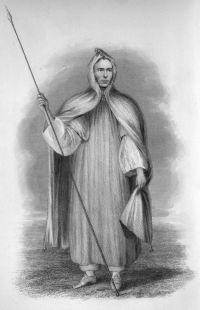
“ They have no idea of people before the Christians. The conversation was suddenly stopped by the appearance of a remarkable personage, the quasi-Sultan of the Ben Weleed. This was the famous rich and powerful Haj Ben Mousa Ettanee. He is a man of a great age, and nearly blind, and the chief of the most numerous and influential family of Ghadames. ”
W. H. Bennett, The Expositor's Bible: The Books of Chronicles
“ Enthusiasm for a benevolent despot is mostly confined to those who have not enjoyed the privilege of living under such autocratic government.On the other hand, there was no temptation to flatter any living Davidic king, so that the semi-Divine character of the kingship of David is not set forth after the gross and almost blasphemous style of Roman emperors or Turkish sultans. It is indeed said that the people worshipped Jehovah and the king; but the essential character of Jewish thought made it impossible that the ideal king should sit “in the temple of God, setting himself forth as God.” ”