Black (chess)

Definition and stakes

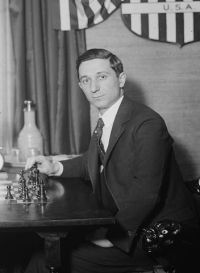
Portrait of José Raúl Capablanca José Raúl Capablanca,  Chess Fundamentals

“ Black's manœuvring for positional advantage is admirable throughout this game, and if he loses it is due entirely to the fact that the sacrifice of the exchange, without even a Pawn for it, could not succeed against sound defensive play.
The position begins to look really dangerous for White. In reality Black's attack is reaching its maximum force.
”
Source: Gutenberg

Charlotte Boardman Rogers,  How to Play Chess (1907)

“ The student must learn to play with both the White and the Black men, thus being able to play a game of defence or attack. In most books on the subject of Chess, it is generally understood that the student plays with the White men, but this is a mistake, for when he comes to lay aside his textbook and play with someone else, he may draw the Black men which puts him at a disadvantage, and he is likely to make moves that are favorable to his opponent with the idea that the White men must win. He is, also, liable to move a White man by mistake and then he must pay the penalty of a false move. ”
Source: Wikisource

Portrait of José Raúl Capablanca José Raúl Capablanca,  Chess Fundamentals

“ To a beginner the position may look like a draw, but the advanced player will realise immediately that there are great possibilities for Black to win, not only because he has the initiative, but because of White's undeveloped Queen's side and the fact that a Bishop in such a position is better than a Knight (see Section 14) . It will take some time for White to bring his Rook and Knight into the fray, and Black can utilise it to obtain an advantage. ”
Source: Gutenberg

Get perspective with Kwize: daily news enlightened by great literature