British ensign

Definition and stakes

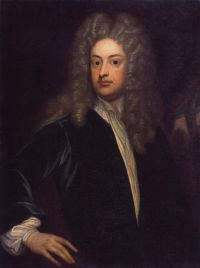
Portrait of Schuyler Hamilton Schuyler Hamilton,  History of the National Flag of the United States of America

“ This ensign, which is called their "old colors," must have been the ensign spoken of and described in Queen Anne's proclamation. (See Fig. 7, Plate I.) Since we have seen one ensign prescribed 1707, for the merchant ships and vessels of Great Britain, and the dominions thereunto belonging, and that no change was made until 1801. This being the case, the ensign of the colonial cruisers, inasmuch as they were armed merchant vessels, must have been the British ensign displayed at the maintopping lift. ”
Source: Gutenberg

1911 Encyclopædia Britannica, Volume 9… (1911)

“ ENSIGN (through the Fr. enseigne from the Latin plural insignia) , a distinguishing token, emblem or badge such as symbols of office, or in heraldry, the ornament or sign, such as the crown, coronet or mitre borne above the charge or arms. The word is more particularly used of a military or naval standard or banner. In the British navy, ensign has a specific meaning, and is the name of a flag having a red, white or blue ground, with the Union Jack in the upper corner next the staff. ”
Source: Wikisource

William Gordon Perrin,  British Flags: Their Early History…

“ No other dominion or colony is at present allowed the privilege of "defacing" the red ensign, but any colonial merchant vessel is at liberty to carry, in addition to the red ensign, a flag containing the badge of the colony, provided that such a flag is not "distinctive national colours" (i.e. does not contain or imitate the Union) .
A merchant ship commanded by a retired officer of the Royal Navy or by an officer of the Royal Naval Reserve may fly the blue ensign under Admiralty Warrant if the crew includes ten officers or men belonging to the Reserve.
”
Source: Gutenberg

Get perspective with Kwize: daily news enlightened by great literature