“ Then He went into Galilee, where He found the truth in the saying: a prophet has no honor in his own country. When He came into Galilee, they received Him after having seen all the things that He did at the Passover feast in Jerusalem because they were there also.Jesus returned to Cana of Galilee where He turned the water into wine. There was a nobleman of Capernaum, whose son was sick. When he heard that Jesus left Judea and was in Galilee, he went there to Him and besought Him to come down and heal his son who was near death. ”
Cana of Galilee
Definition and stakes
The theme of “Cana of Galilee” has been addressed by authors such as Claude Reignier Conder and Robert Alexander Stewart Macalister, S. H. M. Byers, John Albert Broadus, Rush Rhees and Ernest Renan. It is often associated with terms like Jesus, Jerusalem, Capernaum, disciple and miracle.
Quotes about “Cana of Galilee”
 Ernest Renan,
The Life of Jesus
Ernest Renan,
The Life of Jesus
“ I admit, as probable, the idea which identifies Cana of Galilee with Kana el Djélil. We may, nevertheless, attach value to the arguments for Kefr Kenna, a place an hour or an hour and a half's journey N.N.E. of Nazareth.] [Footnote 4: Now El-Buttauf.] [Footnote 5: John ii. 11, iv. 46. One or two disciples were of Cana, John xxi. 2; Matt. x. 4; Mark iii. 18.] He followed the trade of his father, which was that of a carpenter. [1] This was not in any degree humiliating or grievous. The Jewish customs required that a man devoted to intellectual work should learn a trade. ”

“ On the fourth day, too, He was minded to go forth into Galilee, and He who came forth to seek that which was lost finds Philip and says to him, “Follow Me.” And on that day, after the fourth, which is the sixth from the beginning of those we have enumerated, the marriage takes place in Cana of Galilee, which we shall have to consider when we get to the passage. ”
Sir John Mandeville, The Travels of Sir John Mandeville (1900)
“ Woe to thee, Capernaum.’ And all these towns be in the land of Galilee. And also the Cana of Galilee is four mile from Nazareth: of that city was Simon Chananeus and his wife Canee, of the which the holy evangelist speaketh of. There did our Lord the first miracle at the wedding, when he turned water into wine. ”
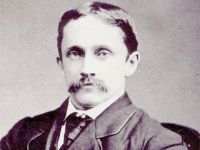 C. R. Conder,
Tent Work in Palestine: A Record of Discovery and Adventure
C. R. Conder,
Tent Work in Palestine: A Record of Discovery and Adventure
“ Christ was at Cana of Galilee (John i. 29, 35, 43; ii. 1) . Now Cana was at least seventy miles from the neighbourhood of Jericho, and the distance is manifestly too great for one day’s journey. But the error lies, not with the Evangelist, but with his opponents, who assume that the fourth-century tradition is necessarily correct.{209} The name Bethabara is not to be found in the neighbourhood of Jericho, and the site discovered, by the Survey party, in 1874 (to be described in the next chapter) is much higher up the valley. ”
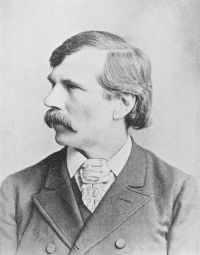 S. H. M. Byers,
A Layman's Life of Jesus
S. H. M. Byers,
A Layman's Life of Jesus
“ He is loved in Cana, as everywhere in Galilee, for His gentle kindness to the poor. The story of what happened to this carpenter at the Jordan river has not reached Galilee—the greatness of the guest at their side is as yet unknown. But there is one present who knows mighty things. For thirty years Mary, the mother, has kept the secret told her by the Angel of the Annunciation. ”
H. S. Osborn, A Class-Book of Biblical History and Geography
“ There are two places, each of which is pointed out as the Cana of the Gospel. One is eight miles due north of Nazareth and the other three and a half miles northeast of it. The one is on the north side of an extensive plain and is entirely in ruins, while the other is now an inhabited village. Early tradition seems to claim the former, but the latter is now, and appears always to have been, on the direct line to Capernaum and the Sea of Galilee from Nazareth, and it may be due to this fact that many have supposed it to be the Cana of the Gospel. ”
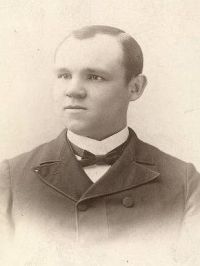 James E. Talmage,
Jesus the Christ — Chapter 13
James E. Talmage,
Jesus the Christ — Chapter 13
“ JESUS AGAIN IN GALILEE: AT CANA AND NAZARETH. Following the two days' sojourn among the Samaritans, Jesus, accompanied by the disciples who had traveled with Him from Judea, resumed the journey northward into Galilee, from which province He had been absent several months. Realizing that the people of Nazareth, the town in which He had been brought up, would be probably loath to acknowledge Him as other than the carpenter, or, as He stated, knowing that "a prophet hath no honour in his own country," [7] He went first to Cana. ”
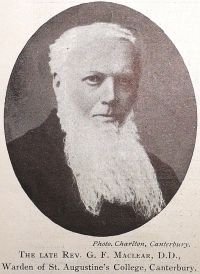 G. F. Maclear,
A Class-Book of New Testament History
G. F. Maclear,
A Class-Book of New Testament History
“ The day following, the Saviour set out in the direction of Galilee, and finding Philip, a native, like Andrew and Peter, of Bethsaida, bade him join their company. Philip obeyed, and falling in with Nathanael254, the son of Tolmai, a native of Cana in Galilee (Jn. xxi. 2) , announced that He, of whom Moses and the Prophets had written, had been discovered in the person of Jesus of Nazareth, the Son of Joseph. Though a native of Galilee, Nathanael could not at first believe that any good could come out of a town which enjoyed so low a reputation as Nazareth. ”
Henry Latham, Pastor Pastorum; Or, The Schooling of the Apostles by Our Lord
“ He will work no miracle to shew that He can work a miracle, or [pg 132] to assure either Himself or others that He is the Son of God; neither will He use this power to provide what others win by toil, or to preserve Himself or His followers from the common ills of human life. There are a few of our Lord's Signs which might, at first sight, look as if in them this principle were not observed. At the marriage of Cana in Galilee, the Sign is worked as an act of kindness to save the host from mortification arising from an accident. ”
Paul Wilhelm Schmiedel, The Johannine Writings (1908)
“ Jerusalem. To Galilee he came only on rare occasions and only for a short time: in ii. 1-12 to Cana at the marriage-feast and to Capernaum, where however he remained "not many days"; in iv. 43-v. 1 to Cana again, as regards which visit only the cure of the son of the royal official from Capernaum is signalised as a (special) event; finally in vi. 1 Jesus crosses the Lake of Galilee without its being said how he came there from Judaea; he feeds the five thousand, on the following night walks across the Lake, on the ensuing day teaches the people ”
 Kirsopp Lake,
Landmarks in the History of Early Christianity
Kirsopp Lake,
Landmarks in the History of Early Christianity
“ If he heard Jesus say, "Love your enemies, do good to them that hate you, bless them that curse you ... as ye would that men should do to you do ye to them likewise; for if ye love them that love you what thank have you ... love ye your enemies," what would such a man have thought? In the light of the experiences of our own time there is no reason for wonder that Jesus in the end found it impossible to live in Galilee. ”
 Flavius Josephus,
Antiquities of the Jews
Flavius Josephus,
Antiquities of the Jews
“ And now there went a great fame abroad among the neighboring people of the courage of the Hebrews; and those that heard what a number of men were destroyed, were greatly affrighted at it: so the kings that lived about Mount Libanus, who were Canaanites, and those Canaanites that dwelt in the plain country, with auxiliaries out of the land of the Philistines, pitched their camp at Beroth, a city of the Upper Galilee, not far from Cadesh, which is itself also a place in Galilee. ”
Cornelius à Lapide, The great commentary of Cornelius à Lapide… (1908)
“ For the Jews would not have permitted them to assemble in Judæa. Thirdly, because in Galilee Christ had for the most part preached, and had performed very many miracles.Symbolically: S. Gregory (Hom. 21) says, “For Galilee means a passing over from death to life; for our Redeemer had already passed from His Passion to His resurrection, from death unto life. And He is seen first by His disciples after His resurrection in Galilee, because we shall have joy in seeing the glory of His resurrection, if only we pass over from vice to the heights of virtue. ”
Charles Foster Kent, Biblical Geography and History
“ One zone of strong cities, beginning with Gezer on the west, including Shaalbim, Ajalon, Gibeon, and Jerusalem, remained in possession of the Canaanites. Farther north, beginning with Dor on the Mediterranean coast, another line of strong Canaanite cities extended across the Plain of Esdraelon to the Jordan, including Megiddo, Taanach, Ibleam, and Bethshean. These cities commanded all the important highways from north to south. Still farther north the chief cities of Galilee were still held by the Canaanites. ”
David Francis Bacon, Lives of the apostles of Jesus Christ (1836)
“ Kuinoel (on Matthew ii. 23) speaks strongly of their proverbially low moral character. “All the Galileans were so despised by the dwellers of Jerusalem and Judea, that when they wished to characterize a man as a low and outcast wretch, they called him a Galilean.” On other passages also, (as on John vii. 52, and Matthew iv. 17,) he repeats this intellectual and moral condemnation in similar terms. Beza and Grotius also, in commenting on these passages, speak of Galilee as “contempta regio.” ”
Ernest Renan,
The Life of Jesus
“ It was believed (not without reason) that they were not of pure Jewish blood, and no one expected Galilee to produce a prophet. [5] Placed thus on the confines of Judaism, and almost outside of it, the poor Galileans had only one badly interpreted passage in Isaiah to build their hopes upon. [6] "Land of Zebulon, and land of Naphtali, way of the sea, Galilee of the nations! The people that walked in darkness have seen a great light: they that dwell in the land of the shadow of death, upon them hath the light shined." The reputation of the native city of Jesus was particularly bad. ”
Atticus G. Haygood, The Man of Galilee
“ He had nothing from other teachers or thinkers. He was only a Jew, never out of Palestine, of a peasant family in Galilee. The Galilean was a narrow, suspicious, and revengeful man; provincial to the last degree; holding fast old ideas and rejecting new ones with little regard to argument or evidence—the “Bourbon” of his time. He was a man of bitterer prejudices than characterized even the men of Judea. But even Galilee had its best and its worse, and Jesus was brought up in a disreputable mountain town. “Can there any good thing come out of Nazareth?” ”
Cornelius à Lapide, The great commentary of Cornelius à Lapide… (1908)
“ He left his riches to his concubines, but they too, pricked with compunction by his example, also shut themselves up in cells, and did continual penance. (See John Moschus, Spiritual Meadow, c. 32.) Verily the word of the Gospel is quick and powerful. (Heb. iv. 12.) Appositely did Christ preach repentance in Galilee because Galilee is the same as transmigration, say S. Gregory and others, from the root נלה galah, “he migrated.” For in Galilee Christ taught men in mind, and affection, and love, to migrate from earth to heaven. ”
Lady Mary Ross, "Granny's Chapters" (on scriptural subjects…
“ His words had no effect but to make the other members of the council ask him, "Art thou also of Galilee?"—that is, art thou one of those who have the folly to believe in this Galilean. "Search and look" in the Scriptures, for they will show that "out of Galilee ariseth no prophet."Nothing more was at this time said or done, and the Pharisees probably broke up the council in anger, vexed at not having got Jesus into their power. "Every man went unto his own house." ”
Ernest Renan,
The Life of Jesus
“ A beautiful external nature tended to produce a much less austere spirit—a spirit less sharply monotheistic, if I may use the expression, which imprinted a charming and idyllic character on all the dreams of Galilee. The saddest country in the world is perhaps the region round about Jerusalem. Galilee, on the contrary, was a very green, shady, smiling district, the true home of the Song of Songs, and the songs of the well-beloved. ”
S. H. M. Byers,
A Layman's Life of Jesus
“ The whole race of men there are idealists. There was not a better place than this Galilee in all the world for Christ to be born in. This is the spot of all the world for a new religion. These Galilean peasants are not reasoners, they are simply believers. They are the children of faith. Sad enough it is that the centuries of time, and the hands of war, changed all the beautiful scene. Even the climate lost its loveliness—there is almost nothing left that is lovely in dear Galilee any more save its enchanting lake. ”
 Alexander Maclaren,
Expositions of Holy Scripture: St…
Alexander Maclaren,
Expositions of Holy Scripture: St…
“ There is scarcely anything about the facts of His outward life at all. There is scarcely a word about the whole of His ministry in Galilee. There is not one of His parables, there are only seven of His miracles before the Resurrection, and two of these occur also in the other Evangelists. There is scarcely any of His ethical teaching ”
 W. T. Stead,
King of the Jews: A story of Christ's last days on Earth
W. T. Stead,
King of the Jews: A story of Christ's last days on Earth
“ The voice that echoed from the hills of Galilee is echoing today from hills the Romans never trod, and the story of that life is rendered in tongues unknown at Pentecost. The more you look at it from the standpoint of the contemporaries of the carpenter of Nazareth the more incredibly marvelous it appears. And this is the great gain of the Passion Play. It takes us clear back across the ages to the standpoint of those who saw Jesus, the Galilean, as merely a man among men. ”
Rush Rhees, The Life of Jesus of Nazareth: A Study
“ It is not impossible that on some of the earlier visits of Jesus to Jerusalem he did not accompany his Master, and in reporting the things which he knew he naturally confined himself to his own experiences. If this can explain the predominance of Galilean incidents in the ministry as depicted in Mark, it will explain the predominance of Galilee in the first three gospels, and the contradiction between John and the three is reduced to a divergence between two accounts of Jesus' ministry written from two different points of view. ”
 Simon Greenleaf,
Testimony of the Evangelists
(1846)
Simon Greenleaf,
Testimony of the Evangelists
(1846)
“ Yet everywhere he is the same; displaying a character of unearthly perfection, symmetrical in all its proportions, and encircled with splendor more than human. Either the men of Galilee were men of superlative wisdom, and extensive knowledge and experience, and of deeper skill in the arts of deception, than any and all others, before or after them, or they have truly stated the astonishing things which they saw and heard. ”
 John Albert Broadus,
A Harmony of the Gospels for Students of the Life of Christ
John Albert Broadus,
A Harmony of the Gospels for Students of the Life of Christ
“ Various points in the six months have been suggested as the point when the return to Galilee was made. The most natural point is from Ephraim, whither he had withdrawn (John 11:54) . It was not far to go up through Samaria and join in Galilee (Luke 17:11) the pilgrims from his own country who were in the habit of going to the Passover through Perea, to avoid passing through Samaria. This supposition is not improbable, as Robinson and McClellan urge, but very natural; it makes Luke and John both agree, and allows Luke 9:51 to mean that Jesus then left Galilee as a field of operations. ”
 Edwin Abbott Abbott,
Philochristus: Memoirs of a Disciple of the Lord
Edwin Abbott Abbott,
Philochristus: Memoirs of a Disciple of the Lord
“ Here we tarried some days, even till the beginning of Nisan, which is the month of the Passover: and, about this time, were completed two full years during which we had followed Jesus of Nazareth. Now the people and the land of Peræa are not like unto the people and the land of Galilee. For in Galilee the fields are small, and they till corn and vines and olives; and the men are exceeding stubborn and resolute, neither very rich, nor very poor. But in Peræa they have great pastures, and some are rich in flocks and herds, while others have scarce bread to eat ”
G. A. Chadwick, The Expositor's Bible: The Gospel According to St…
“ It is easy to read without emotion that Jesus arose from the scene of His last discourse, and came into the borders of Judæa beyond Jordan. But not without emotion did Jesus bid farewell to Galilee, to the home of His childhood and sequestered youth, the cradle of His Church, the centre of nearly all the love and faith He had awakened. When closer still to death, His heart reverted to Galilee, and He promised that when He was risen He would go thither before His disciples. ”
 Maurice H. Harris,
A Thousand Years of Jewish History
Maurice H. Harris,
A Thousand Years of Jewish History
“ We have already heard of John the Baptist (Essene) , who so stirred the people by preaching that "the kingdom of God" was at hand; this was the Messianic hope. He evidently inspired one youth, who was in close sympathy with the Essene brotherhood, Joshua (Greek Jesus) from Nazareth, in Galilee. Galilee, like the other provinces in northern Palestine, was away from the learning and culture of Jerusalem. It was the home of simple folk who spoke a corrupt dialect, and who credulously accepted popular superstitions; such as, every disease comes from an indwelling spirit or demon. ”
 Henry Van Dyke,
Out-of-Doors in the Holy Land: Impressions of Travel in Body and Spirit
Henry Van Dyke,
Out-of-Doors in the Holy Land: Impressions of Travel in Body and Spirit
“ We have been riding with fierce warriors and proud kings and fiery prophets of Israel, passing the sites of royal splendour and fields of ancient havoc, retracing the warpaths of the Twelve Tribes. But when we enter Galilee the keynote of our thoughts [page 220] is modulated into peace. Issachar and Zebulon and Asher and Naphtali have left no trace or message for us on the plains and hills where they once lived and fought. We journey with Jesus of Nazareth, the friend of publicans and sinners, the shepherd of the lost sheep, the human embodiment of the Divine Love. ”
Related terms
Authors who wrote about “Cana of Galilee”
Claude Reignier Conder and Robert Alexander Stewart MacalisterS. H. M. ByersJohn Albert BroadusRush RheesErnest RenanHenry LathamPaul Wilhelm Schmiedel Jesse Lyman HurlbutG. F. MaclearRandolph S. FosterLionel Lisle
 Philip SchaffEdwin Abbott AbbottVariousDavid Francis BaconAnonymousCornelius à LapideCharles Foster KentWalter Richard CasselsSimon Greenleaf
S. H. M. ByersJohn Albert BroadusRush RheesErnest RenanHenry LathamPaul Wilhelm SchmiedelJesse Lyman HurlbutG. F. MaclearRandolph S. FosterLionel LislePhilip SchaffEdwin Abbott AbbottVariousDavid Francis BaconAnonymousCornelius à LapideCharles Foster KentWalter Richard CasselsSimon Greenleaf