“ They are certainly going to be written in America some time, and certainly, unless the best and greatest part of the Carnegie Library of the future is to be the American part of it, the best our Carnegie Libraries will do for America will be to remind us of what we are not. Unless we can make the American part of Mr. Carnegie's Libraries loom in the world as big as Mr. Carnegie's chimneys, America—which is the last newest experiment station of the world—is a failure. ”
Carnegie library
Definition and stakes
The theme of “Carnegie library” has been addressed by authors such as . It is often associated with terms like librarian, Andrew, public, book and Pittsburgh.
Quotes about “Carnegie library”
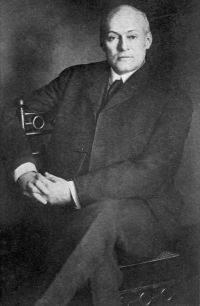 Arthur E. Bostwick,
Library Essays; Papers Related to the Work of Public Libraries
“ I am not sure that I should not prefer a sunny-faced, pleasant-voiced, intelligent, good-tempered assistant in a tumble-down building with a lot of second-hand, badly arranged books, rather than the latest Carnegie library stocked with literary treasures if these had to be dispensed by a haughty young lady with monosyllabic answers and a fatigued expression. I know of no more exasperating duty than that of continually meeting a library public—and I know of no pleasanter one. For the public is just you and me and some other people, and like you and me it is various in its moods. ”
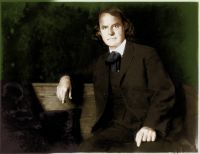 Elbert Hubbard,
Little Journeys to the Homes of the Great - Volume 11
“ The offer was accepted and the building built, but at a cost of nearly one hundred thousand dollars more than was expected.Yet Mr. Carnegie did not complain. To show that his heart was with the venture, he also presented a ten-thousand-dollar organ for the hall. It was a first attempt, but the "North Side Library" is a model of beauty and convenience today.The way in which the people of Allegheny awakened, responded and availed themselves of the benefits to be obtained from the Carnegie Library at Allegheny was most gratifying. ”
Papers and Proceedings of the Twenty-Third General Meeting of the American Library Association
“ Mr. Hanson: I have not had to deal with that question. I should think they would be entered under the name of the city, and then if you want to bring the entire Carnegie record together you can make a second entry.Chairman: This raises the question whether or not the designation "Carnegie library" is an official one. If it is not, then it is a name [Pg 160] which has come up by common consent, and it seems to me that nothing but time would enable us to determine exactly how it should be treated; the conservative thing would be to use the name of the place. ”
Elbert Hubbard,
Little Journeys to the Homes of the Great - Volume 11
“ It is a wonderful bit of psychology—this giving with an obligation—and Andrew Carnegie is not only the Prince of Ironmasters, but he is a pedagogic prestidigitator, and an artistic financial hypnotist. Not only does he give the library, but he sets half the town hustling to maintain it. The actual good comes, not from the library building, but from the human impulses set in motion—the direction given to thousands of lives. The library is merely an excuse—a rallying-point—and around it swings and centers the best life of the town. ”
 Andrew Carnegie,
An American Four-in-Hand in Britain
“ And do not fail to note that this library, like all others in Britain organized under the Libraries act, does not pauperize a people. It is no man's library, but the library of the people—their own, maintained and paid for by public taxation to which all contribute. An endowed library is just like an endowed church, at best half and generally wholly asleep. It is a great mistake to withdraw from such an institution the healthy breeze of public criticism; besides this, people never appreciate what is wholly given to them so highly as that to which they themselves contribute. ”
Papers and Proceedings of the Twenty-Third General Meeting of the American Library Association
“ Chairman: That is just the kind of thing we want to find out.Miss Crawford: Under 1 i 12 what would you advise regarding the Carnegie libraries which in large numbers have assumed the name Carnegie since the endowment of the building? Would you give them all as Carnegie libraries of so-and-so, or would you still preserve the form showing the library was supported by the city in which it was? For example, Pittsburgh Carnegie Library and Atlanta Carnegie Library—introducing the word Carnegie right after the city? ”
Shelby M. Cullom, Fifty Years of Public Service
“ Andrew Carnegie was a poor boy, enjoying none of the advantages and opportunities which are afforded by a good library. He missed in his early life the opportunity for culture which is now obtained through the facilities supplied by libraries in the towns and cities. He knew that there was no other agency so valuable for the purpose of spreading culture among the people as the public library. No word so precisely describes the influence of good reading as does the word 'culture'. ”
Elizabeth Moorhead Vermorcken, The Carnegie Institute and Library of Pittsburgh (1916)
“ Art, according to this theory, springs from and is dependent upon popular sympathy. Though too early to hazard any predictions as to the creative work that may result from the foundation of the Carnegie Library and Institute, it is safe to say that this institution has already become a definite shaping influence, a vital educational and social force among the people in general. ”
Arthur E. Bostwick,
Library Essays; Papers Related to the Work of Public Libraries
“ Carnegie’s gifts it may doubtless be regarded as abnormal, although it should be noted that every Carnegie building means a present and future outlay on the part of the community in which it stands, of many times the amount given by the donor. Primarily, library expansion is the result of a popular conviction that the public library is a public necessity. ”
Multiple, Dictionary of National Biography… (1927)
“ The youthful Carnegie wrote a letter to the Pittsburg Dispatch arguing that telegraph messengers were ‘working boys’, and so impressed was the colonel that he enlarged the classification. Every Saturday a new volume was obtained by Carnegie, and in after life, when he had become a great founder of free libraries, he declared that it was his own personal experience which led him to value a library beyond all other forms of beneficence. ”
Elizabeth Moorhead Vermorcken, The Carnegie Institute and Library of Pittsburgh (1916)
“ As it stands to-day, the entire institution is known as the Carnegie Library and Institute of Pittsburgh, and, except the Technical Schools, occupies the Central Library Building. This was completed in its present enlarged form and rededicated in April, 1907. There are the Library proper, which, with its outlying branches, is governed by a Board of Trustees of eighteen members and maintained by the city of Pittsburgh; the Music Hall, which is self-supporting ”
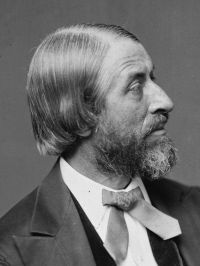 Ainsworth Rand Spofford,
A Book for All Readers
“ This secures, in most cases, a good working library of choice reading, as well as its steady annual growth and management, free of the heavy expense of building, of which the tax-payers are relieved. The many munificent gifts of library buildings by Mr. Andrew Carnegie, to American towns and cities, and to some in his native Scotland, are worthy of special note. ”
Allan Fea, Nooks and Corners of Old England
“ Carnegie to cater for the welfare of millions, nor the finest classics to be purchased for sixpence, it was only natural, books being rare, that the local authorities should not have placed the same implicit trust in would-be readers as is shown by the British Museum Library authorities. The rusty iron chains securing the aged tomes to an iron rod above the queer old desks even after the lapse of centuries would hold their own. The literature cannot be said to be of a much lighter nature than the bulky volumes in weight. ”
“ Carnegie would spend his money on search parties for people among the books, or what it would mean if the entire library, if all the books in it, became, as it were, wired throughout with live, splendid, delighted men and women, to make connections, to establish the current between the people and the books, to discover the people one by one and follow them to their homes, and follow them in their lives, and take out the latent geniuses, and the listless engineers and poets, and the Kossuths, Cæsars, the Florence Nightingales...? ”
 Alice Isabel Hazeltine,
Library Work with Children
“ Those who desire suggestion of material and specific information as to method and practice will find much that is valuable and practical in the publication of the Carnegie library of Pittsburg and in the Handbook of the Cleveland public library. Those who are seeking to place a Story hour in work already established will do well to remember that it is a distinctly social institution and as such is bound to be colored by the personality of its originator whether she tells the stories herself or finds others to carry out her ideas. ”
 Sarah Knowles Bolton,
Famous Givers and Their Gifts
“ Above, cut in stone, are the words, "Carnegie Library; Free to the People." The vestibule, finished in marble with mosaic floors, is handsomely decorated. On the first floor are [Pg 84] the circulating-library, "its blue-ceiling panels bordered with an interlace in orange and white," a periodical room on either side, one for scientific and technical, the other for popular and literary magazines, with rooms for cataloguing and for the library officials."The reference reading-room on the second floor, large, beautiful, and well-lighted," says the efficient librarian, Mr. ”
Richard Garnett, Essays in librarianship and bibliography
“ We cannot but be conscious of a wave of public feeling slowly rising, the action of which is visible in the establishment of new libraries, in the adoption of the Free Libraries Act by communities which had long resisted it, in improved library buildings and appliances, in acts of munificence like Mr. Carnegie's and Mrs. Rylands's, and as a natural consequence, in the improved salaries and status of librarians. I am aware that very much remains to be done in this latter respect. No one can more earnestly desire that the librarian's position were better than it is. ”
Edmund G. Gress, The Art & Practice of Typography
“ Or, Benjamin Franklin, as he founded the first circulating library? Andrew Carnegie, ridiculed when announcing his intention to use his wealth in providing buildings for public libraries, lived to see himself acknowledged a benefactor of mankind.Next to providing books is the necessity of providing good books and of printing them according to the laws of art and good taste. Continual association develops a taste for the things associated with. If the majority of books are poorly composed or poorly printed, they will unconsciously be taken as standards of book style by the reading public. ”
Sarah Knowles Bolton,
Famous Givers and Their Gifts
“ Carnegie's own great gifts have been largely along the line which he believes the "best gift to a community,"—a free public library. He thinks with John Bright that "it is impossible for any man to bestow a greater benefit upon a young man than to give him access to books in a free library." ”
Andrew Carnegie,
An American Four-in-Hand in Britain
“ There was something of the fairy tale in the fact that she had left her native town, poor, thirty odd years before, with her loved ones, to found a new home in the great Republic, and was to-day returning in her coach, to be allowed the privilege of linking her name with the annals of her beloved native town in one of the most enduring forms possible; for whatever agencies for good may rise or fall in the future, it seems certain that the Free Library is destined to stand and become a never-ceasing foundation of good to all the inhabitants. ”
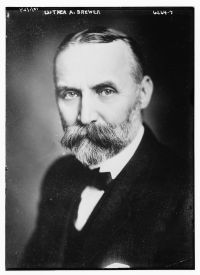 Luther Albertus Brewer,
History of Linn County Iowa
“ The annual income is $5,000.The library now consists of 33,900 volumes and many hundred pamphlets that have not been numbered. The administration of the library resembles that of a college more than a public library, and no list of borrowers is kept.MARION FREE PUBLIC LIBRARYMarion free public library dates from 1903. Miss Adaliza Daniels first began her work as early as 1902, to agitate for a Carnegie library. She and Mrs. C. N. Owen then began to solicit funds for a building site and collected $3,775 for that purpose. The first board consisted of the following: Messrs. ”
Elizabeth Moorhead Vermorcken, The Carnegie Institute and Library of Pittsburgh (1916)
“ Careless borrowers are supplied with temporary cards when they forget to bring their own, for it is the aim of the Library staff that no one shall go away unsatisfied. Two books of fiction are lent on one card, and practically no limit is placed on non-fiction—an inestimable boon to the student, who may carry off just as many volumes as he can handle. ”
 William Warner Bishop,
Popular Science Monthly
(1904)
“ Carnegie is a firm believer in the doctrine that the public should support the public library, and he has regularly stipulated that ten per cent, of the amount which he gives for a building should be pledged by the community as an annual appropriation for maintenance. ”
William H. Drescher, History of West Hoboken N.J. (1903)
“ Andrew Carnegie, has recently notified the library trustees that he is ready to donate $25,000 for a new library building. The authorities have complied with the terms of his generous offer and have recently purchased the necessary ground on High street for the erection of the building, which, I suppose, will be erected and in operation by the time this history is given to the public. ”
Elizabeth Moorhead Vermorcken, The Carnegie Institute and Library of Pittsburgh (1916)
“ Perhaps no department of the Carnegie Institute is doing a greater educational work than this. There is a small lecture-room in which talks on scientific subjects are given and special specimens are exhibited. The Academy of Arts and Sciences is associated with the Museum in giving free lectures. In most of the sections the plan is adopted of having a small exhibition series for the general public, while special collections are kept apart for the use of students. These can always be seen upon request. ”
 Upton Sinclair,
The Book of Life
“ We take it for granted that our cities could run the libraries—even though we were glad when Carnegie came along and saved us the need of appropriating money for buildings. Just why a city should be able to run a library, and should not be able to run an opera-house, or a newspaper, is something which has never been made clear to me. ”
Elizabeth Moorhead Vermorcken, The Carnegie Institute and Library of Pittsburgh (1916)
“ Free to the People. Bronze doors open into a handsome vaulted hall paneled with Tennessee marble, from which two broad staircases of the same material lead to the second floor. The effect of this entrance is dignified and harmonious. But more significant is the fact that the Library accomplishes its purpose; in a very real sense it is "free to the people." Entering the well-arranged Loan Department, the visitor is impressed with its homelike, cheerful atmosphere, and at once has a pleasant feeling of proprietorship. For everything is made comfortable, easy, accessible ”
 Frederick Jackson Turner,
The Frontier in American History
“ He built up his fortunes through successive grades until he became the dominating factor in the great iron industries, and paved the way for that colossal achievement, the Steel Trust. Whatever may be the tendencies of this corporation, there can be little doubt of the democratic ideals of Mr. Carnegie himself. With lavish hand he has strewn millions through the United States for the promotion of libraries. The effect of this library movement in perpetuating the democracy that comes from an intelligent and self-respecting people can hardly be measured. ”
Andrew Carnegie,
Autobiography of Andrew Carnegie
“ Youths must acquire knowledge themselves. There is no escape [Pg 48] from this. It gave me great satisfaction to discover, many years later, that my father was one of the five weavers in Dunfermline who gathered together the few books they had and formed the first circulating library in that town.The history of that library is interesting. It grew, and was removed no less than seven times from place to place, the first move being made by the founders, who carried the books in their aprons and two coal scuttles from the hand-loom shop to the second resting-place. ”
Andrew Carnegie,
Autobiography of Andrew Carnegie
“ It was from my own early experience that I decided there was no use to which money could be applied so productive of good to boys and girls who have good within them and ability and ambition to develop it, as the founding of a public library in a community which is willing to support it as a municipal institution. ”
The Library and Society: Reprints of Papers and Addresses
“ As individuals, we are coming to have an enormous interest in other human lives, there is a sense of social obligation upon us; we have come to know that personal righteousness is not all that is required of us, but that we must help to realize the social righteousness. The library has the duty of being all things to all men. It is no longer simply a repository of books, it is exactly what Mr. Carnegie calls it, the cradle of democracy, filled with the democratic spirit, and it endeavors, as far as circumstances permit, to minister to all the needs of the community in which it dwells. ”
