“ They returned to Illinois in the Spring of 1840, in company with Chester Loveland and Jeremiah Willey, and soon afterwards Anson and Chester Loveland rented a farm in Carthage, where they were fairly successful, and interspersed their labors on the farm with preaching in the Carthage court house. ”
Carthage, Illinois
Definition and stakes
The theme of “Carthage, Illinois” has been addressed by authors such as Alfred John Church, Ernest Charles François Babelon, Charles Rollin, Wilfred Harvey Schoff and Francis Patrick Havey. It is often associated with terms like Rome, Africa, Phoenicians, sea and Mediterranean.
Quotes about “Carthage, Illinois”
 Richard Francis Burton,
The City of the Saints
(1862)
Richard Francis Burton,
The City of the Saints
(1862)
“ Governor Ford, of Illinois, persuaded the Smiths, under the pledge of his word, and the faith and honor of the state, to yield up their arms, and sent them prisoners under the charge of sixty militia-men, the Carthage Grays, a highly hostile body, commanded by Captain Smith, to Carthage, the capital of Hancock Co., eighteen to twenty miles from Nauvoo, where 5000 Mormons were in arms. ”
Richard Francis Burton,
The City of the Saints
(1862)
“ Bettesworth, I offered, in the presence of more than twenty persons, to go to any other magistrate, either in our city, in Appanoose, or in any other place where we should be safe, but we all refused to put ourselves into the power of a mob. What right had that constable to refuse our request? He had none according to law; for you know, Governor Ford, that the statute law in Illinois is, that the parties served with the writ 'shall go before him who issued it, or some other justice of the peace.' Why, then, should we be dragged to Carthage, where the law does not compel us to go? ”
John Lord, Ancient States and Empires
“ Wealth and population of Carthage. Power of Carthage. As has been narrated, Carthage was founded upon a peninsula, or rocky promontory, sixty-five years before the foundation of Rome. The inhabitants of Carthage, descendants of Phœnicians, were therefore of Semitic [pg 432] origin. The African farmer was a Canaanite, and all the Canaanites lacked the instinct of political life. The Phœnicians thought of commerce and wealth, and not political aggrandizement. With half their power, the Hellenic cities achieved their independence. Carthage was a colony of Phœnicians, and had their ideas. ”
George Washington Williams, History of the Negro Race in America from 1619 to 1880…
“ It became at length, particularly at the period of the Punic War, one of the most splendid cities in the world, and had under its dominion 300 cities bordering upon the Mediterranean. From the small beginning we have described, Carthage increased till her population numbered 700,000, and the number of her temples and other public buildings was immense. Her dominion was not long confined to Africa. Her ambitious inhabitants extended their conquest into Europe, by invading Sardinia, seizing a great part of Sicily, and subduing almost all of Spain. ”
Charles Morris, Historic Tales: The Romance of Reality…
“ An army of seventy thousand men landed on the western corner of the island, brought thither by a fleet of two hundred triremes and one thousand transports. In the army were ten thousand heavy-armed Carthaginians, who carried white shields and wore elaborate breastplates. Among these were many of the rich men of Carthage, who brought with them costly baggage and rich articles of gold and silver. Twenty-five hundred of them were called the Sacred Band of Carthage. That great city had rarely before made such a determined effort at conquest. ”
 Alfred John Church,
Lords of the World: A story of the fall of Carthage and Corinth
Alfred John Church,
Lords of the World: A story of the fall of Carthage and Corinth
“ I had intended to offer you a post on my staff, but, as things are at present, [131] the less you have to do with a suspected man the better for you. If things turn out more favourably than I fear they may—we will certainly talk of this again.""But, sir," broke in the Greek with some heat, "it is surely impossible that the Senate should listen to such palpable absurdities as this. Why, there is not a general in Carthage who has such a record of successes as yours.""My dear young friend," replied the general, "you don't know us. The Carthaginians always suspect their generals. ”
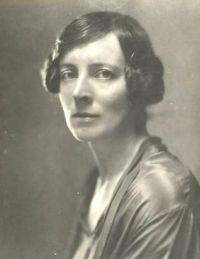 Mary Agnes Hamilton,
Ancient Rome: The Lives of Great Men
Mary Agnes Hamilton,
Ancient Rome: The Lives of Great Men
“ They brought home tin from distant Cornwall, silver from Spain, iron from Elba, copper from Cyprus. Carthage itself was a magnificent city and the richest in the world. Its citizens lived in wealth and idleness on the labour of others. Trade supplied them with riches: the hardy tribes of Africa, Numidians and Libyans, were their slaves, manned their fleets and armies. Their navy ruled the seas. They had settlements in Spain; Corsica and Sardinia were owned by Carthage; all the west of Sicily was in their hands. ”
1911 Encyclopædia Britannica (1911)
“ Natural gas for domestic use and for factories is piped from the Kansas gas fields. The municipality owns and operates the electric-lighting plant. Carthage, founded in 1833, was laid out as a town and became the county-seat in 1842, was incorporated as a town in 1868, was chartered as a city in 1873, and in 1890 became a city of the third class under the general (state) law. ”
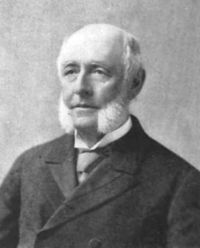 George Park Fisher,
Outlines of Universal History, Designed as a Text-book and for Private Reading
George Park Fisher,
Outlines of Universal History, Designed as a Text-book and for Private Reading
“ On account of this internal conflict, and from dread of the Assyrian power, a large number of the old families emigrated to North Africa, and founded Carthage (about 814 B.C.) .The Phoenician cities were confederated together under hereditary kings, whose power was limited by the lay and priestly aristocracy. The common people, many of whom were skilled artisans, made themselves felt in some degree in public affairs. The mercantile class were influential. Thus there was developed a germinant municipal feeling and organization. The "strong city," Tyre, is mentioned in Joshua xix. ”
Karl Baedeker, The Mediterranean (1911)
“ History. Carthage was founded about 880 B. C. by Phœnicians from Tyre, under the leadership, according to tradition, of Dido, adjacent to Kambe, a colony from Sidon. Under the name of Kart-hadasht (‘new town’) it extended gradually from the dale on the N.E. side of the Bordj el-Djedid up to the castle-hill. ”
Apuleius, The Apologia and Florida of Apuleius of Madaura
“ As, then, to call down the doom of law it suffices to purpose deeds meet for punishment, so to win praise it is sufficient to essay deeds worthy of the voice of fame; and what greater or surer claim to praise may any man have than to glorify Carthage? For you, her210 citizens, are full of learning to a man, your boys learn, your young men display, and your old men teach all manner of knowledge. Carthage is the venerable instructress of our province, Carthage is the heavenly muse of Africa, Carthage is the fount whence all the Roman world draws draughts of inspiration. ”
John Lord, Ancient States and Empires
“ The Roman deserters in the same manner perished. The city was given up to plunder, the inhabitants whose lives were spared were sold as slaves, and the gold and works of art were carried to Rome and deposited in the temples. Her awful fate. Carthage utterly destroyed. Such was the fate of Carthage—a doom so awful, that we can not but feel that it was sent as a chastisement for crimes which had long cried to Heaven for vengeance. Carthage always was supremely a wicked city. ”
 Rupert Hughes,
In a Little Town
Rupert Hughes,
In a Little Town
“ But for Prue to earn anything was a miracle. And in Carthage two dollars is two dollars, at the very least.IXThe news that Carthage had a tango-teacher created a sensation rivaling the advent of its first street-car. It gave the place a metropolitan flavor. If it only had a slums district, now, it would be a great and gloriously wicked city.Prue was fairly besieged with applicants for lessons. Those who could dance a few steps wanted the new steps. Those who could not dance at all wanted to climb aboard the ark.Mrs. Hippisley's drawing-room did not long serve its purpose. ”
Alfred John Church,
Lords of the World: A story of the fall of Carthage and Corinth
“ Some parents offered their own children—to think that anybody could be so wicked!—and these quite rich and noble people, I am told; but still there were not enough, so others had to be taken by force. Besides, the priests said that there must be children of every race that was in Carthage; and no Greek children could be got except by kidnapping them. And there was something, too, which Daphne did not tell you. She picked up a button where the old man had been sitting, and I have been told by someone who knows that it is of a kind that only the temple servants of Hammon use. ”
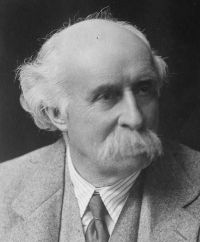 Douglas Brooke Wheelton Sladen,
Twenty Years of My Life
Douglas Brooke Wheelton Sladen,
Twenty Years of My Life
“ We were hovering between Italy in the winter, and Tenby in the summer, and taking uncommonly little out of our rent at 32 Addison Mansions.I had always been mightily interested in Carthage. I hated Carthage being beaten by Rome, partly, perhaps, because history has invested the career of Hannibal and the fall of Carthage with such undying romance. When we were in Sicily in 1906 we suddenly made up our minds to go to Tunis, of which Carthage is practically a suburb, just as when we were at Vancouver we suddenly made up our minds to take a trip to Japan. ”
 William Jennings Bryan,
The World's Famous Orations
(1906)
William Jennings Bryan,
The World's Famous Orations
(1906)
“ Impious men are endeavoring to transfer our republic to that town in which our ancestors decided that there should be no republic at all, when they resolved that there were but three cities in the whole earth, Carthage, Corinth, and Capua, which could aspire to the power and name of the imperial city. Carthage has been destroyed, because, both from its vast population, and from the natural advantages of its situation, being surrounded with harbors, and fortified with walls, it appeared to project out of Africa, and to threaten the most productive islands of the Roman people. ”
Hutton Webster, Early European History
“ Their colonies covered the shores of Sicily, Sardinia, Corsica, and southern Spain. The western half of the Mediterranean had become a Carthaginian lake.CARTHAGINIAN CIVILIZATION Before the opening of the Punic wars Carthage had been much enlarged by emigrants from Tyre, after the capture of that city by Alexander. [2] The Phoenician colonists kept their own language, customs, and beliefs and did not mingle with the native African peoples. Carthage in form was a republic, but the real power lay in the hands of one hundred men, selected from the great merchant families. ”
Samuel G. Goodrich, Famous Men of Ancient Times
“ The number of its inhabitants was several millions.Carthage was also a vast city, situated in Africa, about four hundred miles south-west of Rome, the Mediterranean Sea lying between them. It originated with a small colony of people from Tyre, a maritime city in Syria, about a hundred years before Rome was founded by Romulus. It increased rapidly, and became a flourishing place. The city exercised dominion over the whole country around. Its government was a mixture of aristocracy and democracy; the chief men ruling on all ordinary occasions, but sometimes consulting the people. ”
Alfred John Church,
Lords of the World: A story of the fall of Carthage and Corinth
“ All Carthage is hard at work on some ramparts of earth that are being made in the rear of the south wall, just where the ground dips a little. Men of all ranks are working at them, and even women and children. All are volunteers, no wages are given, and no questions are asked. ”
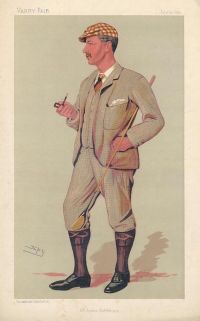 Horace G. Hutchinson,
The greatest story in the world…
Horace G. Hutchinson,
The greatest story in the world…
“ The Phœnicians, as we have seen, had planted colonies of their own at all convenient places along the Mediterranean shore, and of all these Carthage had grown to be by far the strongest in its numbers. It was regarded as the capital city, the headquarters, of all that half-merchant and half-pirate host which we have seen always going to and fro on the waters of the great inland sea. For fifty years and more before the battle of Marathon was fought it had become a great power, the chief naval power of the world, and it had already come into collision with the Greeks. ”
Clive Day, A history of commerce (1922)
“ About 200 B.C., scarcely more than a century afterward, there were four cities with a population over 200,000, Alexandria, Seleukia, Antioch, Carthage; one city with a population far above 100,000, Syracuse; and of cities with a population about 100,000 there were Corinth, Rome, Rhodes, Ephesos, and possibly others. The names of some of these cities are already familiar to us. Carthage was enjoying its last century of commercial greatness, before Rome robbed it of its influence in the northern Mediterranean. ”
Ralph Boston, Nick Carter Stories No. 150, July 24… (1914)
“ I have nothing especially to live for. I have formed an attachment to Gillette. I will die here. I am emperor of the place. My word is law, having no one to dispute it."The visitors soon after this resumed their journey to Cripple Creek, seven miles away. An air of depression filled each and every one of them. They began to realize what Carthage looked like after the carnage of the Romans. As they turned off the main "drag" into a side street and thence to the main road, the newspaper man looked back. Sam Bolger, a pathetic figure to say the least, was still sitting where he had been left. ”
 Plutarch,
Parallel Lives
(c. 100 AD)
Plutarch,
Parallel Lives
(c. 100 AD)
“ But Publius Scipio Nasica would always declare his opinion to the contrary, in these words, "It seems requisite to me that Carthage should still stand." For seeing his countrymen to be grown wanton and insolent, and the people made, by their prosperity, obstinate and disobedient to the senate, and drawing the whole city, whither they would, after them, he would have had the fear of Carthage to serve as a bit to hold in the contumacy of the multitude; and he looked upon the Carthaginians as too weak to overcome the Romans, and too great to be despised by them. ”
 William Smith,
Dictionary of Greek and Roman Geography
(1854)
William Smith,
Dictionary of Greek and Roman Geography
(1854)
“ Sources of Wealth in general. — It is wrong to think of Carthage as a purely commercial state. Her prosperity rested, as already intimated in speaking of her territory, on the solid basis of the land. Agriculture was the favourite pursuit of her nobles, citizens, and colonists; her immediate territory was so fertile, that the soil of Byzacium is said to have yielded a hundred-fold return (Plin. v. 4. s. 3.) ; and her foreign possessions, especially Sardinia and Sicily, were made to contribute large supplies of com for the consumption of the city. ”
 Hannah More,
The Inflexible Captive: A Tragedy…
Hannah More,
The Inflexible Captive: A Tragedy…
“ He at last extorted from them their consent; and departed amidst the tears of his family, the importunites of his friends, the applauses of the Senate, and the tumultuous opposition of the people; and, as a great poet of his own nation beautifully observes, "he embarked for Carthage as calm and unconcerned as if, on finishing the tedious law-suits of his clients, he was retiring to Venafrian fields, or the sweet country of Tarentum." ”
Mrs. Lang, The Red Book of Heroes
“ On reading the tale of his steadfastness, his unselfishness, his goodness to his soldiers, and the base ingratitude [Pg 93] and wickedness with which his countrymen treated him, more than ever do we instinctively long that the lost cause had proved the winning one, and again and again we have to remind ourselves of the terrible evil it would have been to the world if Carthage had overcome Rome. For Carthage was possessed of almost every bad quality which could work ill to the human race. ”
J. N. Larned, History for ready reference, Volume 1…
“ The reputation of the Carthaginians was not equal to that of their country, and the reproach of Punic faith still adhered to their subtle and faithless character. The habits of trade and the abuse of luxury had corrupted their manners. ... The King of the Vandals severely reformed the vices of a voluptuous people. ... The lands of the proconsular province, which formed the immediate district of Carthage, were accurately measured and divided among the barbarians." E. Gibbon, Decline and Fall of the Roman Empire, chapter 33. ”
Alfred John Church,
Lords of the World: A story of the fall of Carthage and Corinth
“ Whatever there is of real value that can be given back to its rightful owners shall be given back. Now, Carthage has for three hundred years and more been robbing the Greek cities in Sicily. She has had, at one time or other, pretty nearly every one of them, except Syracuse, in her power. The gold and silver that she has taken from them are gone beyond remedy, but the works of art remain, and can be given back. I have taken some trouble to inquire into the matter, and I have got a list here, which has been made up for me in Sicily, of some of the chief things that we may expect to find. ”
Great Men and Famous Women. Vol…
“ The vagabond part of the constituency was well contented with what it had obtained, a life in the city, supported at the public expense, with politics and games for its amusements. It had not the least inclination to be drafted off into settlements in Spain or Africa, where there would be work instead of pleasant idleness. Carthage was still a name of terror. To restore Carthage was no better than treason. Still less had the Roman citizens an inclination to share their privileges with Samnites and Etruscans, and see the value of their votes watered down. Political storms are always cyclones. ”
Related terms
Authors who wrote about “Carthage, Illinois”
Alfred John ChurchErnest Charles François Babelon Charles RollinWilfred Harvey SchoffFrancis Patrick Havey
 Theodor MommsenGeorge Albert CookeWilliam Alexander LinnCyprian Arthur George BridgeMary Agnes Hamilton
 Barthold Georg NiebuhrVarious
 G. A. HentyWilliam SmithJohn LordRichard Francis BurtonJ. N. LarnedIanthe M. DunbarGeorge Park FisherPlutarch