Charles I of Spain

Definition and stakes

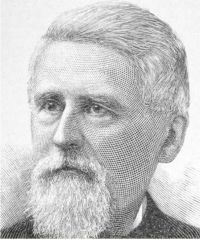
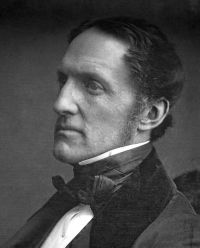
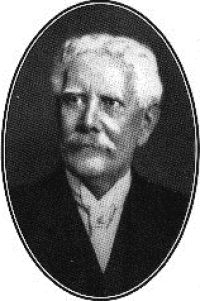
Portrait of Rafael Altamira Rafael Altamira A History of Spain

It appears, therefore, that the empire was more a matter of show than of strength, and that Spain, who already had a surfeit of responsibility, what with her conquests in Italy, Africa, and the Americas, must bear the burden for all. The reign of Charles would seem to be the parting of the ways for Spain. If she could have restricted herself to her purely Spanish inheritance, even with the incubus of her Italian possessions, she might have prolonged her existence as a great power indefinitely.
Source: Gutenberg

Portrait of Rafael Altamira Rafael Altamira A History of Spain

His achievements in Spain belong to the field of institutional development rather than to that of political narrative, however. As for the Americas his reign was characterized by such a series of remarkable mainland conquests that it is often treated as a distinct epoch in American history, the era of the conquistadores, and Spanish America is, after all, the principal monument to the greatness of his reign. The Emperor Charles V was a failure; but King Charles I of Spain gave the Americas to European civilization.
Source: Gutenberg

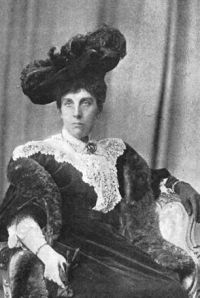
Mary Platt Parmele A Short History of Spain

Charles was, by the unanimous vote of the Electors, raised to the imperial throne; and the grandson of Isabella, as Charles I. of Spain and Charles V. of Germany, possessed more power than had been exercised by any one man since the reign of Augustus. The territory over which he had dominion in the New World was practically without limit. Mexico surrendered to Cortez (1521) and Peru to Pizarro (1532) ; Ponce de Leon was in Florida and de Soto on the banks of the Mississippi; while wealth, fabulous in amount, was pouring into Spain, and from thence into Flanders.
Source: Gutenberg

Get perspective with Kwize: daily news enlightened by great literature