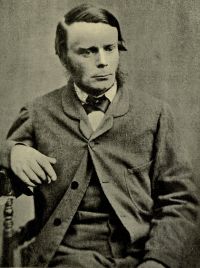
“ Mackworth was not an ill-natured man when he was not opposed, and, being a brave man himself, could well appreciate bravery in others. He had knowledge enough of men to know that the revelation of to-day had been as bitter a blow to a passionate, sensitive man like Charles, as he could well endure and live. ”
Charles Mackerras
Definition and stakes
The theme of “Charles Mackerras” has been addressed by authors such as . It is often associated with terms like Mackenzie, Mackay, Alexander, Macpherson and Canada.
Quotes about “Charles Mackerras”
1911 Encyclopædia Britannica, Volume 17… (1911)
“ MACKAY, CHARLES (1814–1889) , Scottish writer, was born at Perth, on the 27th of March 1814, and educated at the Caledonian Asylum, London, and in Brussels. In 1830, being then private secretary to a Belgian ironmaster, he began writing verses and articles for local newspapers. Returning to London, he devoted himself to literary and journalistic work, and was attached to the Morning Chronicle (1835–1844) . He published Memoirs of Extraordinary Public Delusions (1841) , and gradually made himself known as an industrious and prolific journalist. In 1844 he was made editor of the Glasgow Argus. ”
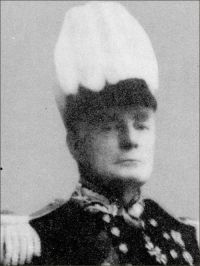 Charles Alexander Harris,
Dictionary of National Biography…
(1893)
“ MACGREGOR, JOHN, commonly known as Rob Roy (1825–1892) , philanthropist and traveller, horn on 24 Jan. 1825, was son of General Sir Duncan MacGregor, K.C.B. His mother was the youngest daughter of Sir William Dick, bart., of Prestonfield, near Edinburgh. Adventures came to him early: as a baby he was outward bound on the Kent, East Indiaman, which took fire in the Bay of Biscay. An account of the disaster was published by his father in 1825, and repubished by him in 1880. As a boy he was apt at mechanics, read hard, was a good climber, boxer, and horseman, and passionately fond of boating. ”
The Modern Scottish Minstrel, Volume 6
“ Here we stop. This is not the time, nor is it the place, to discuss, with any great elaboration, the merits or peculiarities of Charles Mackay as an author. We have to do with him as the most successful of song-writers. Two of his songs, perhaps not among his best, have [Pg 6] obtained a world-wide popularity. His "Good Time Coming," and his "Cheer, Boys, Cheer," have been ground to death by barrel-organs, but only to experience a resurrection to immortality. ”
William Charles Mark Kent, Dictionary of National Biography… (1893)
“ By 2 June 1858 he had returned home, and in the following year brought to an end his association with the ‘Illustrated London News.’ In 1860 he established the ‘London Review,’ and his editorship was inaugurated on 2 July by a banquet at the Reform Club. Another new periodical, ‘Robin Goodfellow,’ was started by him in 1861. Neither proved successful. From February 1862 to December 1865 Mackay was the special correspondent of the ‘Times’ at New York during the civil war, and in the autumn of 1862 he revealed in the ‘Times’ the existence of the Fenian conspiracy in America. ”
Albert Charles Lewis Gotthilf Günther and Joseph Thomas Cunningham, 1911 Encyclopædia Britannica, Volume 17… (1911)
“ MACKEREL, pelagic fishes, belonging to a small family, Scombridae, of which the tunny, bonito, albacore, and a few other tropical genera are members. Although the species are fewer in number than in most other families of fishes, they are widely spread and extremely abundant, peopling by countless schools the oceans of the tropical and temperate zones, and approaching the coasts only accidentally, occasionally, or periodically. ”
Charles Alexander Harris,
Dictionary of National Biography…
(1893)
“ Later in the year Mackenzie revisited Scotland; he was presented with the freedom of Irvine, Dundee, and Perth, and was entertained by the queen at Windsor, but he declined the honour of knighthood. During the sessions of 1876 and 1877 several measures of a liberal character and permanent utility became law, and public works, including sections of the Pacific railway, were vigorously prosecuted. The premier was also successful in obtaining from the home government permission for Canada to nominate a delegate to the International Fishery Commission, which met at Halifax on 15 June 1877. ”
William Charles Mark Kent, Dictionary of National Biography… (1893)
“ MACKAY, CHARLES, LL.D. (1814–1889) , poet and journalist, was born at Perth in Scotland on 27 March 1814. His father, George Mackay, was the second son of Captain Hugh Mackay of the Strathnaver branch of the clan, whose chief is Lord Reay. ”
Charles Alexander Harris,
Dictionary of National Biography…
(1893)
“ Young MacKay was educated for the presbyterian ministry at the Australian college in Sydney, and he became for a time a school-master. But he soon turned his attention to journalism, and before he was twenty years of age he was a contributor to the 'Australian Magazine' and the 'Atlas' (a paper established by Robert Lowe, afterwards Viscount Sherbrooke) . ”
Charles Alexander Harris,
Dictionary of National Biography…
(1893)
“ The Pacific railway scandal gave Mackenzie his opportunity. The government met parliament in 1873 with apparently undiminished strength. On 27 Oct. Mackenzie moved an amendment to the speech from the throne to the effect that the conduct of Sir John Macdonald's ministry towards the Pacific railway charter had deprived it of the confidence of the country [see Macdonald, Sir John] . The debate was continued for seven days, and before a vote was taken the ministry resigned. Mackenzie formed a new ministry (7 Nov.) , becoming himself minister of public works. ”
Albert Charles Lewis Gotthilf Günther and Joseph Thomas Cunningham, 1911 Encyclopædia Britannica, Volume 17… (1911)
“ No other fish shows finer proportions in the shape of its body. Every “line” of its build is designed and eminently adapted for rapid progression through the water; the muscles massed along the vertebral column are enormously developed, especially on the back and the sides of the tail, and impart to the body a certain rigidity which interferes with abruptly sideward motions of the fish. Therefore mackerel generally swim in a straightforward direction, deviating sidewards only when compelled, and rarely turning about in the same spot. ”
Alexander Mackenzie, History of the Mackenzies, with genealogies of the principal families of the name
“ He was also the first to introduce Clydesdale horses and shorthorn cattle to the Highlands, and was, as has been already said, along with Sir George Mackenzie of Coul and his own cousin, Alexander Mackenzie, XI. of Hilton, the first to import Cheviot sheep to the northern counties. He married Catherine, daughter of Angus Nicolson, Stornoway, and grand-daughter of the gentleman of the same name who commanded and brought to Poolewe, with the intention of joining the standard of Prince Charles, the three hundred men ordered back to the Lewis, as already mentioned, by Seaforth, in 1745. ”
Charles Alexander Harris,
Dictionary of National Biography…
(1893)
“ Shortly before his retirement from office Macalister received the decoration of C.M.G. From 22 June 1876 till 16 Nov. 1881, he was agent-general for the colony of Queensland in London. The prominent part Macalister took in the politics of Queensland was due to his perseverance and devotion to the life, rather than to any commanding ability. He retired to the neighbourhood of Glasgow in 1881, and died there on 23 March 1883. He was married, and left grown-up children residing in Queensland. ”
Albert Charles Lewis Gotthilf Günther and Joseph Thomas Cunningham, 1911 Encyclopædia Britannica, Volume 17… (1911)
“ They now begin to disappear from the coasts and return to the open sea. Single individuals or small companies are found, however, on the coast all the year round; they may have become detached from the main bodies, and be seeking for the larger schools which have long left on their return migration. Although, on the whole, the course and time of the annual migration of mackerel are marked with great regularity, their appearance and abundance at certain localities are subject to great variations. ”
Charles King, Cadet Days: A Story of West Point
“ Some of his new associates Pops found congenial, some antagonistic; but the one thing he kept in mind was that all were merely conditional. Not until after the June examination would they really know who were and who were not to be of "the elect." "Those who are most volubly confident to-day," wrote McCrea, "are the ones who will be most apt to fail. Keep your own counsel, 'give every man thine ear and few thy voice'—and that's all." ”
Charles Alexander Harris,
Dictionary of National Biography…
(1893)
“ MacGregor had much literary facility, and was a good draughtsman, always illustrating his own books. While at Cambridge as an undergraduate he contributed to the 'Mechanics' Magazine/ 1844, and sent sketches to 'Punch,' His records of his travels are very brightly written. Their titles are: 1. 'Three Days in the East,' 1850. 2. 'Our Brothers and Cousins, a Tour in Canada,' 1859. 3. 'A Thousand Miles in the Rob Roy Canoe, 1866. 4. 'A Voyage alone in the Yawl Rob Roy,' 1867. 5. 'The Rob Roy on the Baltic,' 1867. 6. 'The Rob Roy on the Jordan, Red Sea, and Gennesareth,' 1869. ”
Charles Alexander Harris,
Dictionary of National Biography…
(1893)
“ MACALISTER, ARTHUR (1818–1883) , Australian politician, born in Glasgow in 1818, was brought up to the profession of a solicitor. He emigrated to Australia in 1850, and settled down to practice in Ipswich. ”
James Cruikshank Roger, Celtic MSS. in relation to the Macpherson fraud (1890)
“ It is my experience that to persons of this class it comes more natural to state a falsehood than to speak the truth. We all remember Charles Surface’s exculpatory witness in The School for Scandal, “Oh yes, I swear.” Mr. Mackinnon states that “The Gaelic text of Ossian which James Macpherson handed over to Mr. Mackenzie, and which was given to the editor of the edition of 1807, has disappeared.” How very odd that manuscripts on which the human eye never rested should thus so strangely disappear! Can that be said to disappear which was never visible? Of the poems of Ossian, Dr. ”
Charles King, To the Front: A Sequel to Cadet Days
“ Another second and, sheltered by the skirts of their squaws, the warriors were blazing away at the astonished soldiery. "Good God, boys, we can't fire on women and children!" shouted one brave young sergeant. "Down on your faces! Down!" And "down" was his last word, as down on his bullet-riven face he plunged, shot dead through the brain.Almost at the same moment McCrea's galloping steed stumbled heavily forward and rolled stiffening on the frozen earth, his gallant rider flung headlong beyond him. ”
Charles Mackay, Memoirs of Extraordinary Popular Delusions…
“ Nobody seemed to imagine that the nation itself was as culpable as the South Sea Company. Nobody blamed the credulity and avarice of the people,—the degrading lust of gain, which had swallowed up every nobler quality in the national character, or the infatuation which had made the multitude run their heads with such frantic eagerness into the net held out for them by scheming projectors. These things were never mentioned. The people were a simple, honest, hard-working people, ruined by a gang of robbers, who were to be hanged, drawn, and quartered without mercy. ”
Charles Alexander Harris,
Dictionary of National Biography…
(1893)
“ In 1875 Mackenzie's ministry advised an amnesty to those concerned in the troubles in the north-western territories in 1869-70 (which led to the Red River expedition) ; took important steps towards consolidating those territories, and established a supreme court of the Dominion. ”
Charles Alexander Harris,
Dictionary of National Biography…
(1893)
“ In 1847 MacKay became editor of the 'Atlas,' In 1850 he migrated to Geelong in Victoria, which is at once an industrial centre and a seaside resort, and there became manager of a general business for Mr. ”
Charles King, A War-Time Wooing: A Story
“ Here in the thronging ranks, close at hand, men speak in low tones as they stamp upon the frozen ground or whip their mittened hands across the broad blue chests to restore circulation and drive the ache and numbness away. ”
“ In the glare of the burning sheds the besieged caught a glimpse of two of the gang bending low in their saddles a hundred yards away and scudding like hounds over towards the open plain."Is it rescue? Are our people coming?" was the query that rose to every lip. "God grant it!"Heavens, how hearts were beating! How ears were straining underneath that now blazing roof! Louder, fiercer soared the flames; furious became the snapping of sun-baked branch and twig; stifling and thick the smoke."Quick! Come here for a breath of air," called Harvey to his sisters. "It's safe for a moment, at least." ”
Charles King, To the Front: A Sequel to Cadet Days
“ Mr. Ross, who wired Dr. Graham, is here, and he'll meet us at the restaurant. He thinks they are following him—shadowing him.""Who?" asked McCrea."Why, the crowd that are trying to get control there of Silver Shield. Some of them live in Argenta, he says, and found out he had been in correspondence with the doctor, and that it was he who had given warning." Then, glancing over his shoulder as they neared the gate, and speaking to Geordie, he continued, "What is the name of the brewer up there who wanted your place at the Point for his son?""Breifogle.""That's the man," answered Warden. ”
“ How quick they spring to ranks, those eager bearded faces and trim blue-clad forms! How buoyant and brisk even the elders seem as the captains speed over to their company quarters and the quick, stirring orders are given! ”
Charles Mackay, Memoirs of Extraordinary Popular Delusions and the Madness of Crowds
“ Let us not, in the pride of our superior knowledge, turn with contempt from the follies of our predecessors. The study of the errors into which great minds have fallen in the pursuit of truth can never be uninstructive. As the man looks back to the days of his childhood and his youth, and recalls to his mind the strange notions and false opinions that swayed his actions at that time, that he may wonder at them; so should society, for its edification, look back to the opinions which governed the ages fled. ”
Charles Mackay, Memoirs of Extraordinary Popular Delusions and the Madness of Crowds
“ An enthusiastic philosopher, of whose name we are not informed, had constructed a very satisfactory theory on some subject or other, and was not a little proud of it. “But the facts, my dear fellow,” said his friend, “the facts do not agree with your theory.”—“Don’t they?” replied the philosopher, shrugging his shoulders, “then, tant pis pour les faits;”—so much the worse for the facts! ”
Charles Mackay, Memoirs of Extraordinary Popular Delusions and the Madness of Crowds
“ Much as the sage may affect to despise the opinion of the world, there are few who would not rather expose their lives a hundred times than be condemned to live on, in society, but not of it—a by-word of reproach to all who know their history, and a mark for scorn to point his finger at. ”
Charles King, An Apache Princess: A Tale of the Indian Frontier
“ All on a sudden there arose a wild clamor—shouts, scuffling, the thunder of iron upon resounding woodwork, hoarse orders, curses, shrieks, a yell for help, a shot, a mad scurry of many feet, furious cries of "Head 'em off!" "Shoot!" "No, no, don't shoot! You'll kill our own!" ”
Charles King, Kitty's Conquest
“ Proud of its strength and grace, it surges ahead, rumbling in the vast caverns of its seething furnaces, panting in the depths of its powerful lungs, straining with muscles that glory in their task, hurling aside from iron-shod beak the burdened billows of the opposing river. ”
Charles Alexander Harris,
Dictionary of National Biography…
(1893)
“ Macquarie had all the faults of military governors, but possessed their good points in a marked degree. His want of judgment and impatience of opposition were accentuated by his personal vanity and ambition. But 'there was a vigour about Governor Macquarie's administration of which it was long afterwards refreshing to contemplate the effects, and which under the guidance of a better regulated judgment would undoubtedly have led to the happiest results.' He has established some sort of claim to the title of 'father of the colony which some admirers sought to bestow on him. ”
“ Lashed tight to the heavy picket rope, the horses were revelling in the keen morning air and slanting sunshine, nipping at each other's noses, challenging, with sparkling eye and tip-tilted ear, each well-known face and form of officer or man to caress or frolic, snapping and squealing at each other across the line, occasionally rearing and plunging in uncontrollable jollity. ”
“ All at full speed, all ayell, brandishing their weapons, firing wildly into the valley, leaping, some of them, for an instant to the ground to take better aim, then, like a flash, to saddle and top speed again; through every little swale, over every ridge they popped like so many savage Jacks-in-the-box, and came swooping, circling down on the little column at the old-time tactics of the stampede. ”
Charles King, Ray's Daughter: A Story of Manila
“ Along the shaded and gravelled walks that bordered the Paseo, within short pistol-shot of the grim bastions beyond the green glacis and even greener moat, many dark-haired, dark-eyed daughters of Spain, leaving their carriages and, guarded by faithful duenna, strolled slowly up and down, exchanging furtive signal of hand or kerchief with some gallant among the throngs of captive soldiery that swarmed towards sunset on the parapet. ”
