Charles XII of Sweden

Definition and stakes

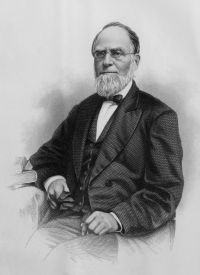
Portrait of Voltaire Voltaire Voltaire's history of Charles XII, king of Sweden (1912)

Thus fell Charles XII, King of Sweden, at the age of thirty-six and a half, having experienced the extremes of prosperity and of adversity, without being softened by the one or in the least disturbed by the other. All his actions, even those of his private life, are almost incredible. Perhaps he was the only man, and certainly he was the only king who never showed weakness; he carried all the heroic virtues to that excess at which they become faults as dangerous as the opposed virtues. His resolution, which became obstinacy, caused his misfortunes in Ukrania, and kept him five years in Turkey.
Source: Gutenberg

Portrait of Voltaire Voltaire Voltaire's history of Charles XII, king of Sweden (1912)

Accustomed in his hereditary dominions to absolute power, he was perhaps too confident that he could govern Poland like Saxony.
The beginning of his reign raised malcontents, his very first acts irritated the party which was opposed to his election, and alienated almost all the rest. The Poles resented the fact that their towns were filled with Saxon garrisons and their frontiers with troops. The nation, far more anxious to maintain their own liberties than to attack their neighbours, did not consider the king’s attack on Sweden and his invasion of Livonia as advantageous to the State.
Source: Gutenberg

Portrait of Voltaire Voltaire Voltaire's history of Charles XII, king of Sweden (1912)

The King was unwilling to flee, and would not defend himself. General Poniatowski chanced to be with him at that moment. He was a colonel of King Stanislas’ Swedish guards, and a person of remarkable merit, who was so attached to Charles XII that he had accompanied him as a volunteer to Ukrania. He was a man who in all the chances of life, and in danger, where others would at most have only shown courage, always made his plans at once and met with success; he signed to two soldiers, who took the King under the arms and put him on horseback in spite of the great pain of his wound.
Source: Gutenberg

Get perspective with Kwize: daily news enlightened by great literature