Riga

Definition and stakes

Peter Kropotkin and John Thomas Bealby,  1911 Encyclopædia Britannica, Volume 23… (1911)

“ RIGA (Esth. Ria-Lin) , a seaport of Russia, 366 m. by rail S.W. of St Petersburg, the capital of the government of Livonia. The Gulf of Riga, 100 m. long and 60 m. in width, with shallow waters of inconsiderable salinity (greatest depth, 22 fathoms) , freezes to some extent every year. The town is situated at the southern extremity of the gulf, 8 m. above the mouth of the Dvina, which brings Riga, by means of inland canals, into water communication with the basins of the Dnieper and the Volga. ”
Source: Wikisource

Peter Kropotkin and John Thomas Bealby,  1911 Encyclopædia Britannica, Volume 23… (1911)

“ Industrial activity has developed and includes railway-carriage works, works for the manufacture of machinery, oil mills and breweries. Owing to its communication by water and rail with the forests of White Russia and Volhynia, Riga is a great mart for timber. Flax and linseed also occupy a prominent place, Riga being the chief Russian port for the extensive flax-producing region of north-west Russia. ”
Source: Wikisource

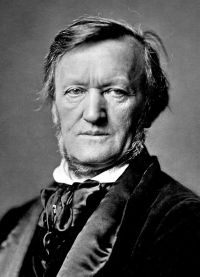
Portrait of Richard Wagner Richard Wagner,  My Life — Volume 1

“ I was conscious of a peculiar thrill on coming into contact with Russian officials, whom I had instinctively detested since the days of my sympathy with the Poles as a boy. It seemed to me as if the harbour police must read enthusiasm for the Poles in my face, and would send me to Siberia on the spot, and I was the more agreeably surprised, on reaching Riga, to find myself surrounded by the familiar German element which, above all, pervaded everything connected with the theatre. ”
Source: Gutenberg

Get perspective with Kwize: daily news enlightened by great literature