Latvia

Definition and stakes

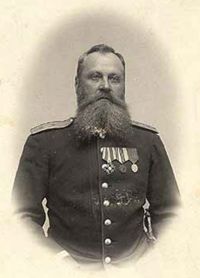
Arveds Bergs,  Latvia & Russia: One problem of the world-peace considered

“ The National Council of Latvia considered it a great honour that its aspirations were crowned with success. It was recognised as an independent body by the Governments of England and Japan.
Having suffered long at the hands of both Russia and Germany, the Lettish people has come to the conclusion that it would find its interests guaranteed only by independence. It is not a passing mood, but a firm conviction, for which the Lettish people has suffered and which it will never and in no case surrender. And it awaits the realisation of its aspirations and the solemn proclamation of its rights.
”
Source: Gutenberg

Arveds Bergs,  Latvia & Russia: One problem of the world-peace considered

“ This is not only the natural right of the Lettish people. It has long been the object of its permanent and definite leanings, and these are in harmony with its well-recognised interests.
The interests of Russia will in no way suffer from the separation of Latvia; neither economically, for Latvia will certainly be a better intermediary between the West and the East than Russia was or would be; nor strategically, for Latvia will be a much more conscientious sentinel on the Baltic Sea than Russia was or would be.
”
Source: Gutenberg

United States. Central Intelligence Agency,  CIA World Fact Book, 2004 — Latvia (2004)

“ Latvia
Introduction Latvia Background: After a brief period of independence between the two World Wars, Latvia was annexed by the USSR in 1940. It reestablished its independence in 1991 following the breakup of the Soviet Union. Although the last Russian troops left in 1994, the status of the Russian minority (some 30% of the population) remains of concern to Moscow. Latvia joined both NATO and the EU in the spring of 2004.
”
Source: Wikisource

Get perspective with Kwize: daily news enlightened by great literature