Christian knowledge
Definition and stakes
Quotes about “Christian knowledge”
W. H. Griffith Thomas, The Prayers of St. Paul
“ This does not mean that natural [Pg 98] knowledge or culture is to be despised or avoided as evil, but that the two kinds of knowledge should be carefully distinguished. The Christian Church has at least for the last three hundred years set great store by knowledge and science, but deeper than all this is the spiritual instinct, insight, knowledge, and illumination which constitute the supreme requirement of the true Christian life. We can see this spiritual perception in its various stages in several passages of the New Testament. ”
Archibald B. D. Alexander, Christianity and Ethics: A Handbook of Christian Ethics
“ This, of course, may be said to be the aim of all theology. The theologian must not be content to discuss merely speculative problems about God and man. He must seek above {2} all things to bring the truths of revelation to bear upon human practice. All knowledge has its practical implicate. ”
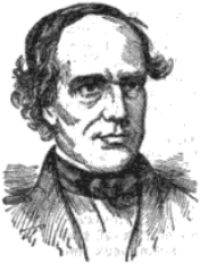 William Ware,
Zenobia; or, the Fall of Palmyra
“ If then you would know whether christianity be true, it is first of all needful that you read and ponder the Christian books. These books prove themselves. The religion of Christ is felt to be true, as you read the writings in which it is recorded. Just as the works of nature prove to the contemplative mind the being of a God, so do the books of the Christians prove the truth of their religion. ”
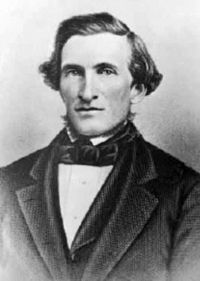 Jedediah M. Grant,
Journal of Discourses — Volume 3…
“ Take the balance of the world from the Saints, and with all their learning—with all their vanity—with all their books, science, and education—and contrast it with the fountain of knowledge that God, angels, and the servants of God possess, and what are the world with all their boasted acquirements, when contrasted with these things? What do they understand about the principles by which man is to be exalted into the presence of God? ”
 Brigham Young,
Journal of Discourses — Volume 7…
“ Under these considerations, I think that we, as a people, are doing as well as we know how. We are advancing from year to year in the knowledge of God. Before we came into this Church, we knew, comparatively, but little in regard to the true religion of Christ. ”
Brigham Young,
Journal of Discourses — Volume 1…
“ Permit me to remark, my hearers, as for the intelligence of the day, and the knowledge that they have had in Christendom—how long will it take a man of reflection, of deep thought, and of a sound mind, to circumscribe every particle of it? ”
Mrs. Bloomfield H. Moore, Keely and His Discoveries: Aerial Navigation
“ Religion as revealed to us by our Holy Master, Jesus Christ, is to know and to love the truth of things. When this religion is understood and practised, then, and not before, will the earth be full of the knowledge that it is God who is, and that all the rest only appears to be. ”
T. W. Allies, The Formation of Christendom, Volume II
“ From whom and through whom, when and to whom, was that discipline by which men become Christians delivered? For wherever the truth of that which is the Christian discipline at once and faith be shown to be, there will be the truth of the Scriptures, of their exposition, and of all Christian traditions. ”
 Leslie McChesney Scott,
Oregon Historical Quarterly
(1913)
“ It simply wishes to apply the tests of reason, of experience, of judgment, and of such knowledge as history affords from the manifestations of the religious principle in man, to some of the phases of the thought and inquiry of our time. "Christianity is a fact and it is to be accounted for. ”
Matthew Henry, Commentary on the Whole Bible… (1700s)
“ Observe, Those who have their eyes opened, and have some understanding in the things of God, have need to be more and more enlightened, and to have their knowledge more clear, and distinct, and experimental. Christians should not think it enough to have warm affections, but they should labour to have clear understandings; they should be ambitious of being knowing Christians, and judicious Christians. ”
 Timothy East,
The Sheepfold and the Common; Or…
“ Hence it is indispensably necessary for the Christian, in every period of his life, but especially when entering on his religious course, to implore the gracious influence of the Divine Spirit, to guard him against every species of error—to lead him into all truth—and to invest the truth with that holy unction, which will render it no less a source of the highest intellectual improvement, than of the most exquisite mental enjoyment. ”
 Origen,
Ante-Nicene Fathers Vol. IV, Origen…
(1885)
“ These truths are fully investigated by all who wish to attain a perfect knowledge of Christianity, and who know that “the mouth of the righteous speaketh wisdom, and his tongue talketh of judgment; the law of his God is in his heart.” ”
Timothy East,
The Sheepfold and the Common; Or…
“ Very likely, because they are more familiar with the phraseology of the Scriptures than you are; and they feel the power of religious truth on their heart more forcibly than you profess to do. Your religion, if I judge from your conversation, is the religion of opinion, theirs of belief—yours of speculation, theirs of principle—yours of forms and ceremonies, theirs of knowledge and of feeling—yours [419] of times and seasons, theirs of habitual devotion; and while you derive no consolation from the routine of duties which you perform, they have peace with God through Jesus Christ. ”
 John Andreas Widtsoe,
A Rational Theology, as Taught by the Church of Jesus Christ of Latter-Day Saints
“ Those who are led to study this rational theology in the light of the best knowledge and soundest thought, will enter a fertile field, and will find a surprising harmony between the Gospel and all discovered truth. ”
Origen,
The writings of Origen, Vol. 1…
(1869)
“ All who believe and are assured that grace and truth were obtained through Jesus Christ, and who know Christ to be the truth, agreeably to His own declaration, “I am the truth,” [3] derive the knowledge which incites men to a good and happy life from no other source than from the very words and teaching of Christ. ”
Matthew Henry, Commentary on the Whole Bible… (1700s)
“ If the same Spirit who indited the sacred scriptures do not take the veil from off our hearts, and enable us to understand and improve them, we shall be never the better.— In the knowledge of him, or for the acknowledgment of him; not only a speculative knowledge of Christ, and of what relates to him, but an acknowledgment of Christ's authority by an obedient conformity to him, which must be by the help of the Spirit of wisdom and revelation. ”
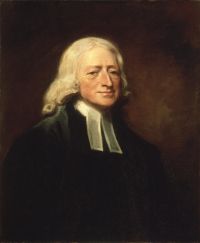 John Wesley,
The works of the Rev. John Wesley…
(1771)
“ If you turn to your own strength to have Christian piety and goodness; or are so deceived, as to think that learning, or local abilities, critical acuteness, skill in languages, church systems, rules and orders, articles and opinions, are to do that for you which the Spirit of Christ did, and only could do for the first Christians; your diligent reading of the history of the gospel, will leave you as poor, and empty, and dead to God, as if you had been only a diligent reader of the history of all the religions in the world. ”
Matthew Henry, Matthew Henry's Commentary on the Whole Bible… (1700s)
“ I keep thy precepts, that is, I make conscience of doing my duty in every thing. The best way to improve in knowledge is to abide and abound in all the instances of serious godliness; for, if any man do his will, he shall know of the doctrine of Christ, shall know more and more of it, John vii. 17. The love of the truth prepares for the light of it ”
Judson Eber Conant, The Church The Schools and Evolution (1922)
“ This will bring him face to face with Christ's formula for entering upon the knowledge of spiritual truth. Being honestly desirous of knowing what spiritual truth is, he will determine to do God's will in order that he may find out. ”
Brigham Young,
Journal of Discourses — Volume 1…
“ I have heard men preach upon the divinity of Christ, and exhaust all the wisdom they possessed. All Scripturalists, and approved theologians who were considered exemplary for piety and education, have undertaken to expound on this subject, in every age of the Christian era ”
Brigham Young,
Discourses of Brigham Young
“ I still feel to urge upon the Latter-day Saints the necessity of a close application of the principles of the Gospel in our lives, conduct and words and all that we do; and it requires the whole man, the whole life to be devoted to improvement in order to come to knowledge of the truth as it is in Jesus Christ. ”
James Galloway Cowan, Plain Sermons, Preached at Archbishop Tenison's Chapel…
“ Now, one of the most important thoughts which this text suggests is, that we Christians all have to some extent the privilege of spiritual knowledge, and consequently, we all have resting upon us, the responsibility of maintaining and increasing knowledge. ”
Josef Donat, The Freedom of Science
“ Hence, in the broad sense in which it is understood now, theology is the science that gathers the revealed truths from their sources, endeavours to grasp and to defend them, and to deduce new truths from them; which also studies these truths and the means given for salvation, in their development and effect in the Christian life. ”
Charles Ebert Orr, The Gospel Day; Or, the Light of Christianity
“ Christianity is not a mere profession, but a principle. Every being is possessed with a principle. Satan has a principle, which might properly be termed devilanity; Christ has a principle which is termed Christianity. When this Christ principle is instilled into man's soul by the Spirit of God he becomes a Christian. He possesses the Christ-life, nature, or principle. ”
 James George Frazer,
The Golden Bough
(1922)
“ Thus religion, beginning as a slight and partial acknowledgment of powers superior to man, tends with the growth of knowledge to deepen into a confession of man's entire and absolute dependence on the divine ”
Robert Flint, Theism; being the Baird Lecture of 1876
“ For all men, then, who have religious beliefs, and especially for all men who have Christian beliefs, these questions, What evidence is there for God's existence? and, What is known of His nature? are of primary importance. The answers given to them must determine whether religion and Christianity ought to be received or rejected. ”
Matthew Henry, Commentary on the Whole Bible… (1700s)
“ The best way to understand the mysteries and partake of the privileges of which we have read before is conscientiously to practise the duties prescribed to us in what follows: as, on the other hand, a serious consideration and belief of the doctrines that have been taught us in the foregoing chapters will be a good foundation on which to build the practice of the duties prescribed in those which are yet before us. Christian faith and Christian practice mutually befriend each other. ”
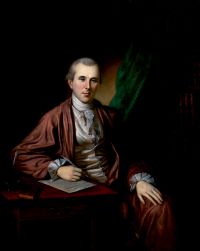 Benjamin Rush,
Medical Inquiries and Observations…
“ The truths of Christianity afford the greatest scope for the human understanding, and they will become [55] intelligible to us, only in proportion as the human genius is stretched, by means of philosophy, to its utmost dimensions. ”
Archibald B. D. Alexander, Christianity and Ethics: A Handbook of Christian Ethics
“ In a work that professes to deal with the Christian faith—The Truth of Religion—and which indeed presents a powerful vindication of historical Christianity, we miss any philosophical interpretation of the nature and power of prayer, adoration, or worship, or any account, indeed, of the intimacies of the soul which belong to the very essence of the Christian faith. ”
Matthew Henry, Matthew Henry's Commentary on the Whole Bible… (1700s)
“ Had a man ever so clear an understanding of the prophecies and types under the old dispensation, ever so accurate a knowledge of the doctrines of Christianity, nay, and this by inspiration, from the infallible dictates and illumination of the Spirit of God, without charity he would be nothing ”
Archibald B. D. Alexander, Christianity and Ethics: A Handbook of Christian Ethics
“ Corresponding, therefore, to the three great conceptions of Life in the New Testament, and especially in the teaching of Jesus—'Eternal Life,' 'the kingdom of God,' and the perfection of the divine Fatherhood, 'Perfect as your Father in heaven is perfect'—there are three aspects, individual, social, and divine, in which we may view the Christian ideal. ”
 Edwin Abbott Abbott,
The Kernel and the Husk
(1886)
“ First must come the historical evidence indicating the words, and deeds, and character, and results, of the life of Christ, the truth of which must be judged by the Reason; and then there must come the witness of the conscience exclaiming "This life is divine; this man is one with God." ”
Jedediah M. Grant,
Journal of Discourses — Volume 2…
“ We have the faculty to make discoveries, we have the faculty to discover, we have the faculty to learn and understand the first principles of the doctrines of Christ. Faith, being the first principle of our religion, is established in the mind by hearing, it is established in the mind by evidence and by testimony. ”
 Mary Baker G. Eddy,
Science and Health with Key to the Scriptures
(1898)
“ The history of Christianity furnishes sublime proofs of the supporting influence and protecting power Christian history. bestowed on man by his heavenly Father, omnipotent Mind, who gives him faith and understanding whereby to defend himself, not only from temptation, but from bodily suffering. ”
Alfonso Rodríguez, The Practice Of Christian And Religious Perfection… (1861)
“ Here the man of learning, who wishes to be guided by the great maxims and truths of Christianity, will find suitable subjects for the mind to dwell on. Here those on whom the impulse of tender and affecting devotion makes deep impression will meet whatsoever tends to inflame still more the heart of a Christian already touched with the love of God. ”
 Samuel Johnson,
The Lives of the Most Eminent English Poets
(1794)
“ The evidences and doctrines of Christianity, studied with attention, made me a most firm and persuaded believer of the Christian religion. I have made it the rule of my life, and it is the ground of my future hopes. I have erred and sinned; but have repented, and never indulged any vicious habit. In politicks, and publick life, I have made publick good the rule of my conduct. ”
Matthew Henry, Commentary on the Whole Bible… (1700s)
“ Accordingly most of the epistles begin with the great doctrines of the gospel, the articles of the Christian faith, which, when received, work by love, purify the conscience, and produce evangelical obedience; and, after these principles have been laid down, practical conclusions are drawn and urged from them. In taking this method there is a regard paid to the nature and faculties of the soul of man (where the understanding is to lead the way, the will, affections, and executive powers, to follow after) , and to the nature of religion in general, which is a reasonable service. ”
Timothy East,
The Sheepfold and the Common; Or…
“ And the same remark is equally applicable to the mind of man, whose knowledge on any subject, in any department of science, and especially the science of Biblical theology, is accurate and profound, in proportion to the efforts he is obliged to make in its acquisition. ”
Ellen Gould Harmon White, The Great Controversy Between Christ and Satan
“ In His word, God has committed to men the knowledge necessary for salvation. The Holy Scriptures are to be accepted as an authoritative, infallible revelation of His will. They are the standard of character, the revealer of doctrines, and the test of experience. “Every scripture inspired of God is also profitable for teaching, for reproof, for correction, for instruction which is in righteousness; that the man of God may be complete, furnished completely unto every good work.” ”
E. A. Washburn, Popular Science Monthly (1875)
“ The central truths of Christianity are always the same; but Biblical criticism, the comparative study of Hebrew or Christian epochs, the domain of doctrinal thought, are growths of the human mind, and every advance has been the fruit of experimental searching. ”
Various, The Continental Monthly, Vol. 3 No 2…
“ Moreover, in all the relations of life, he professes to be governed by the highest possible principle—Christian principle; and claims to be, indeed really is, at least theoretically, a believer in the truths of our holy religion. ”
M. Valentine, Theoretical Ethics
“ Whatever help may be obtainable from other sources, say from study of the Christian consciousness or of the effects of Christianity on personal and social life, the chief and highest source is these Sacred Scriptures. For the best Christian life falls short of the ideal standard of conduct there presented. ”
James Galloway Cowan, Plain Sermons, Preached at Archbishop Tenison's Chapel…
“ I mean, that you all as Christians are partakers of a new gift of knowledge—that you have within you, as one of the ordinary graces of the Spirit of regeneration in Christ, that Spirit which was given to guide men unto all truth, to convince of sin, of righteousness, and of judgment; the faculty of knowing spiritual things—a faculty to be sustained in appointed ways, and to be exercised upon the revelations of knowledge contained in the Word of God. ”
Archibald B. D. Alexander, Christianity and Ethics: A Handbook of Christian Ethics
“ The term nous, or reason, is of frequent occurrence in the New Testament. Christianity highly honours the intellectual powers of man and accords to the mind an important rôle in apprehending and entering into the thoughts and purposes of God. 'Thou shalt love the Lord thy God with all thy heart and with all thy soul and with all thy mind,' says Jesus. Many are disposed to think that the exercise of faith, the immediate organ of spiritual apprehension, is checked by the interference of reason. ”
Related terms
Authors who wrote about “Christian knowledge”
Timothy EastRobert Aitkin BertramCharles Ebert Orr Martin Luther
 Samuel Taylor ColeridgeJames Galloway CowanE. A. Washburn
 Mary Baker Eddy
 William Wilberforce
 Friedrich von SchlegelJosef DonatT. W. AlliesJohn WesleyVarious
 Jean-Baptiste Massillon
 William PennJames Dodds
 John Bunyan
