“ The curtains again parted, and I beheld Clarimonde, not as on the former occasion, pale in her pale winding-sheet, with the violets of death upon her cheeks, but gay, sprightly, jaunty, in a superb travelling-dress of green velvet, trimmed with gold lace, and looped up on either side to allow a glimpse of satin petticoat. Her blond hair escaped in thick ringlets from beneath a broad black felt hat, decorated with white feathers whimsically twisted into various shapes. ”
Clarimonde
Definition and stakes
The theme of “Clarimonde” has been addressed by authors such as Pierre Jules Théophile Gautier, Théophile Gautier, Various and George Saintsbury. It is often associated with terms like John, Clare, poetry, Clarissa and poet.
Quotes about “Clarimonde”
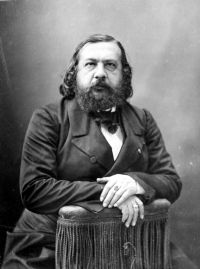 Pierre Jules Théophile Gautier,
One of Cleopatra's Nights, and Other Fantastic Romances
(1900)
Pierre Jules Théophile Gautier,
One of Cleopatra's Nights, and Other Fantastic Romances
(1900)
“ But notwithstanding the dissipation of such a life, I always remained faithful to Clarimonde. I loved her wildly. She would have excited satiety itself, and chained inconstancy. To have Clarimonde was to have twenty mistresses; aye, to possess all women: so mobile, so varied of aspect, so fresh in new charms was she all in herself—a very chameleon of a woman, in sooth. She made you commit with her the infidelity you would have committed with another, by donning to perfection the character, the attraction, the style of beauty of the woman who appeared to please you. ”
“ There, indeed, lay Clarimonde, even as I had seen her at the church on the day of my ordination. She was not less charming than then. With her, death seemed but a last coquetry. The pallor of her cheeks, the less brilliant carnation of her lips, her long eyelashes lowered and relieving their dark fringe against that white skin, lent her an unspeakably seductive aspect of melancholy chastity and mental suffering; her long loose hair, still intertwined with some little blue flowers, made a shining pillow for her head, and veiled the nudity of her shoulders with its thick ringlets ”
“ She wished no longer for anything but love—a love youthful, pure, evoked by herself, and which should be a first and last passion. I would have been perfectly happy but for a cursed nightmare which recurred every night, and in which I believed myself to be a poor village curé, practising mortification and penance for my excesses during the day. Reassured by my constant association with her, I never thought further of the strange manner in which I had become acquainted with Clarimonde. ”
Pierre Jules Théophile Gautier,
One of Cleopatra's Nights, and Other Fantastic Romances
(1900)
“ At one time I even thought I saw her foot move under the whiteness of the coverings, and slightly disarrange the long, straight folds of the winding sheet. And then I asked myself: "Is this indeed Clarimonde? What proof have I that it is she? Might not that black page have passed into the service of some other lady? Surely, I must be going mad to torture and afflict myself thus!" But my heart answered with a fierce throbbing: "It is she; it is she indeed!" ”
 Théophile Gautier,
One of Cleopatra's Nights and Other Fantastic Romances
Théophile Gautier,
One of Cleopatra's Nights and Other Fantastic Romances
“ I can never have thy heart all to myself, I whom thou didst recall to life with a kiss—dead Clarimonde, who for thy sake bursts asunder the gates of the tomb, and comes to consecrate to thee a life which she has resumed only to make thee happy! ”
 George Saintsbury,
A History of the French Novel, Vol…
George Saintsbury,
A History of the French Novel, Vol…
“ Now it is beauty of reality as well as of presentation that I at least find in La Morte Amoureuse. Clarimonde alive is very much more than a "shadow on glass"; Clarimonde dead is more alive than many live women. ”
Various, Great short stories, Volume II…
“ Clarimonde watched me with a kind of maternal fondness as I walked up and down the room, proving my new raiment as it were; then: "Come," she cried; "enough of this child's play! Up and away, my Romuald! We have far to go; we shall never arrive." ”
Pierre Jules Théophile Gautier,
One of Cleopatra's Nights, and Other Fantastic Romances
(1900)
“ I returned to my presbytery, and the noble Lord Romuald, the lover of Clarimonde, separated himself from the poor priest with whom he had kept such strange company so long. But once only, the following night, I saw Clarimonde. She said to me, as she had said the first time at the portals of the church: "Unhappy man! Unhappy man! What hast thou done? Wherefore have hearkened to that imbecile priest? Wert thou not happy? And what harm had I ever done thee that thou shouldst violate my poor tomb, and lay bare the miseries of my nothingness? ”
Various, Great short stories, Volume II…
“ Presently—"The famous harlot Clarimonde is dead," says he, in a piercing tone, "dead at the close of an eight days' revel. It was a feast of Belshazzar or of Cleopatra. Good God, what an age is ours! The guests were served by dusky slaves who spoke no tongue known among men, and who seemed like spirits from the pit. The livery of the least of them might have beseemed an emperor on a coronation day. Wild tales are told of this same Clarimonde, and all her loves have perished miserably or by violence. They say she was a ghost, a female vampire, but I believe she was the devil himself." ”
Pierre Jules Théophile Gautier,
One of Cleopatra's Nights, and Other Fantastic Romances
(1900)
“ And I felt life rising within me like a subterranean lake, expanding and overflowing; my blood leaped fiercely through my arteries; my long-restrained youth suddenly burst into active being, like the aloe which blooms but once in a hundred years, and then bursts into blossom with a clap of thunder. What could I do in order to see Clarimonde once more? I had no pretext to offer for desiring to leave the seminary, not knowing any person in the city. I would not even be able to remain there but a short time, and was only waiting my assignment to the curacy which I must thereafter occupy. ”
“ Large tears were falling from his eyes and streaming over his cheeks and white beard. "Too late!" he cried, sorrowfully shaking his venerable head. "Too late, sir priest! But if you have not been able to save the soul, come at least to watch by the poor body."He took my arm and conducted me to the death chamber. I wept not less bitterly than he, for I had learned that the dead one was none other than that Clarimonde whom I had so deeply and so wildly loved. ”
“ I know where Clarimonde is buried. It is necessary that we shall disinter her remains, and that you shall behold in how pitiable a state the object of your love is. Then you will no longer be tempted to lose your soul for the sake of an unclean corpse devoured by worms, and ready to crumble into dust. That will assuredly restore you to yourself.’ For my part, I was so tired of this double life that I at once consented, desiring to ascertain beyond a doubt whether a priest or a gentleman had been the victim of delusion. ”
 Alfred Tennyson,
Poems (Tennyson, 1843)/Volume 1…
(1843)
Alfred Tennyson,
Poems (Tennyson, 1843)/Volume 1…
(1843)
“ A MELODY. Where Claribel low-lieth The breezes pause and die, Letting the rose-leaves fall: But the solemn oak-tree sigheth, Thick-leaved, ambrosial, With an ancient melody Of an inward agony, Where Claribel low-lieth. ”
George Saintsbury,
A History of Elizabethan Literature
“ To superficial observers, or observers who have convinced themselves that high lights and bright colourings are of the essence of the art of the prose writer, Clarendon may seem tame and jejune. He is in reality just the contrary. His wood is tough enough and close-grained enough, but there is plenty of sap coursing through it. In yet a third respect, which is less closely connected with the purely formal aspect of style, Clarendon stands, if not pre-eminent, very high among historians. ”
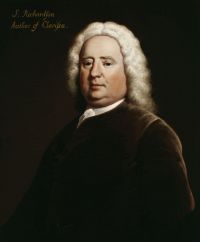 Samuel Richardson,
Clarissa: Preface, Hints of Prefaces…
Samuel Richardson,
Clarissa: Preface, Hints of Prefaces…
“ Cannot consent, that the History of Clarissa should be looked upon as a mere Novel or Amusement—since it is rather a History of Life and Manners; the principal View of which, by an Accommodation to the present light Taste of an Age immersed in Diversions, that engage the Eye and the Ear only, and not the Understanding, aims to investigate the great Doctrines of Christianity, and to teach the Reader how to die, as well as how to live. ”
“ And which of these, my gentle Claribel, (turning to her,) shall I present to you?” Claribel timidly answered, “I am not ambitious of riches, they would but embarrass me; neither do I covet beauty—to be an object of general notice, would to me be only distressing. A contented mind must surely be the greatest of all blessings: at least, I can neither imagine or desire a greater. I shall therefore gratefully accept one of your favourite flowers,” looking at the lilies.“Amiable girl,” exclaimed the fairy, [29] “there is no fear of your ever repenting of your choice. ”
Frederick Martin, The Life of John Clare
“ There now lies, under the shade of a sycamore-tree, with nothing above but the green grass and the eternal vault of heaven, all that earth has to keep of John Clare, one of the sweetest singers of nature ever born within the fair realm of dear old England—of dear old England, so proud of its galaxy of noble poets, and so wasteful of their lives. ”
“ Clare always felt himself cheated and empty of ideas when shut up within four walls. The Muse would not follow him to his fireside, but she would frolic with him the live-long day in the open air, filling him with buoyancy, kissing his lips, and smoothing out his wrinkles. Seated inside an old oak, whose heart had gradually passed into the atmosphere, Clare was wont to pour his soul in song, and so fruitful were the hints of his unseen companion that he soon had a great collection of new verses. ”
“ To influences other than those of the countryside, Clare remained unimpressionable. To be in London was to long for Helpstone, the commons and pools of which were more precious to the poet than all the glories of Westminster Abbey, and the expanses of the artificial lakes. While he sojourned in the Metropolis the right spark would not fall from heaven, but as soon as he wandered once more among the scenes so long familiar to him, the Muse was his unfailing companion. ”
Sarah Fielding, Remarks on Clarissa (1749)
“ Bellario.Miss GIBSON to BELLARIO.SIR,Your Good-nature in sending me your Thoughts on Clarissa, with a Design to give me Pleasure, I assure you is not thrown away; may [51] you have equal Success in every generous Purpose that fills your Heart, and greater Happiness in this World, I am sure I cannot wish you. ”
Various, Blackwood's Edinburgh Magazine…
“ There is an air of effort and elaboration, coupled with much studied negligence, which prevents us from surrendering ourselves to the charms of any of these portraitures. The Claribel, with which the volume commences, might be a woman or a child for anything that the poem tells us; we only gather from the expression "low lieth," that she is dead, and over her grave there rings a chime of words, which leave as little impression on the living ear as they would on the sleeper beneath. ”
Thomas Carlyle, The Works of Thomas Carlyle/Volume 6 (1896)
“ Lord Clarendon, a man of sufficient unveracity of heart, to whom indeed whatsoever has direct veracity of heart is more or less horrible, speaks always in official language; a clothed, nay sometimes even quilted dialect, yet always with some considerable body in the heart of it, never with none! The use of the human tongue was then other than it now is. I counsel the reader to leave all that of Cant, Dupery, Macchiavelism, and so forth, decisively lying at the threshold. He will be wise to believe that these Puritans do mean what they say, and to try unimpeded if he can discover what that is. ”
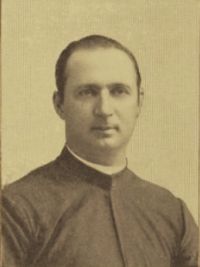 Francis J. Finn,
Cupid of Campion
Francis J. Finn,
Cupid of Campion
“ My firm belief is that Master Clarence’s bright-eyed goddess of adventure hasn’t lost her grip on her young victim yet. She’s got him hoodooed.”“See here, you fellows,” remonstrated Clarence, “talk about something pleasant. What I want is a quiet life.” ”
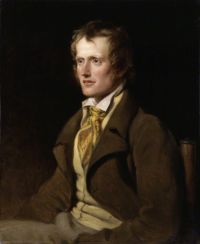 John Clare,
Life and Remains of John Clare…
John Clare,
Life and Remains of John Clare…
“ But too well does poor Clare's history illustrate that interpretation of the myth which pictures Great Pan secretly busy among the reeds and fashioning, with sinister thought, the fatal pipe which shall "make a poet out of a man." And yet it may be doubted whether, on the whole, Clare's lot in life, and that of the wife and family who were dependent upon him, was aggravated by the poetic genius which we are thus trying to make the scapegoat for his misfortunes. ”
Baron Edward Bulwer Lytton Lytton, The Disowned — Complete
“ The first time Clarence had observed the young artist, he had taken a deep interest in his appearance. Pale, thin, undersized, and slightly deformed, the sanctifying mind still shed over the humble frame a spell more powerful than beauty. ”
author:Metta Victoria Fuller Victor, Poems of Sentiment and Imagination (1851)
“ I scorn thee from my waking sight— Away! away Obedient to that gesture of command. From her proud, glorious presence, with no word, No sigh, and no farewell, young Clarence turned. The souls once blent in seeming perfectness Were riven apart forever—evermore! Earth—earth! thy mystery—thy agony! ”
Duchess, Faith and Unfaith: A Novel
“ Clarissa follows her, and together they wander up and down among the heavy roses and drooping lilies, that are languid with heat and sleep. Here all the children of the sun and dew seem to grow and flourish. ”
Samuel Mines, A matter of size (1946)
“ Clarissa was an energetic spinster in her forties with snapping black eyes, graying hair drawn into a neat, no-nonsense bun at the back of her head and the most remarkable grasp of bio-chemistry of any woman alive. Professors Dexter and Curtis admired her intellectual attainments extravagantly and mistook the admiration for love. ”
M. Y. Halidom, Tales of the Wonder Club, Volume II
“ I know not how two beings of such opposite temperaments should ever have become such fast friends, for Claribel was pensive and melancholy, and of a studious turn, poring over every book she could get hold of, whilst I, on the contrary, was a perfect hoyden, always laughing and playing the fool when I ought to have been at work. ”
 E. Temple Thurston,
The garden of resurrection
(1911)
E. Temple Thurston,
The garden of resurrection
(1911)
“ And then the name Clarissa—Clarissa—called itself back into my mind. Clarissa, with her little gown of canary-colored satin. CHAPTER III They can be cold, those nights in April, for spring comes timidly to this little island of ours. I have seen children, like her, peep round a door. There is laughter in their faces; it flows in a silver ripple, quivering shyly on their lips. For one instant they look in on you and then are gone. It is no good your calling. Nothing under Heaven will induce them to come back. ”
John Clare,
Poems Chiefly from Manuscript
“ The poetry of John Clare, originally simple description of the country and countrymen, or ungainly imitation of the poetic tradition as he knew it through Allan Ramsay, Burns, and the popular writers of the eighteenth century, developed into a capacity for exact and complete nature-poetry and for self-expression. Thoroughly awake to all the finest influences in life and in literature, he devoted himself to poetry in every way. ”
Emily Sarah Holt, A Forgotten Hero; Or, Not for Him
“ When then comes, Clarice, we shall be satisfied with what happened to us now.”“When will it come, my Lord?” asked Clarice, in a dreary tone.“When it is best,” replied the Earl quietly.“Your Lordship speaks as if you knew!” said Clarice.“God knows. And he who knows God may be sure of everything else.”“Is it so much to know God?”“It is life. ‘Without God’ and ‘Without hope’ are convertible terms.”“My Lord,” said Clarice, wondering much to hear a layman use language which it seemed to her was only fit for priests, “how may one know God?”“Go and ask Him. How dost thou know any one? ”
 Helen Leah Reed,
Brenda's Bargain: A Story for Girls
Helen Leah Reed,
Brenda's Bargain: A Story for Girls
“ Now, with Clarissa's letter before her, she wondered if she had been right in letting one or two slight set-backs discourage her. She had continued her practising, and her rendering of the great composers was a continual uplifting to those who heard her. ”
Mary Wollstonecraft Shelley, Tales and Stories
“ Clarice worshipped her parent, who came, during the transition from mere childhood to the period when reflection and observation awaken, to adorn a commonplace existence with all the brilliant adjuncts which enlightened and devoted affection can bestow. He appeared to her like an especial gift of Providence, a guardian angel—but far dearer, as being akin to her own nature. She grew, under his eye, in loveliness and refinement both of intellect and heart. ”
“ As this volume of selections is designed for the purpose of attracting readers to a poet whose appreciative receipts from his posterity are sadly deficient in{xlviii} quantity, the publisher has thought well to ask from me the tale of Clare’s life, rather than my views of the poet’s work and its effect upon his successors in the production of poetry dealing almost exclusively with the vowels and consonants in Nature’s mighty alphabet. Enough has been said to prove the writer no half-hearted advocate ”
