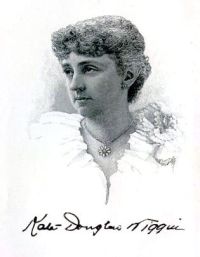
Clovelly, a coastal village in Devon, England, appears in literature both as a concrete location and a symbolic image. Authors like Gilbert Parker present it as a setting for complex human interactions, while Kate Douglas Smith Wiggin highlights its physical uniqueness, pointing out its difficult accessibility and distinctive architecture. Susan Coolidge places it within stories of social transformation, contrasting its calm with the turbulence of personal change.
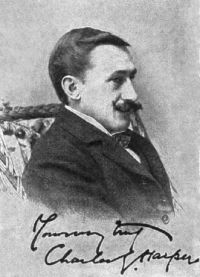
Charles G. Harper, on the other hand, addresses its historical uncertainty, casting doubt on its Roman beginnings. These diverse depictions show Clovelly as a richly layered perspective through which writers examine themes of identity, location, and human relationships, underscoring its dual function as a real and symbolic touchstone in literary imagination.
 Gilbert Parker,
Mrs. Falchion, Volume 1
Gilbert Parker,
Mrs. Falchion, Volume 1