
“ The Curetes and the Aetolians were fighting and killing one another round Calydon—the Aetolians defending the city and the Curetes trying to destroy it. For Diana of the golden throne was angry and did them hurt because Oeneus had not offered her his harvest first-fruits. ”
Quotes about “Curetes”
 Thomas Taylor,
Iamblichus on the Mysteries of the Egyptians…
(1895)
Thomas Taylor,
Iamblichus on the Mysteries of the Egyptians…
(1895)
“ And in the Laws, indeed, he reminds us of the inflation of the pipe by the Corybantes, which represses every inordinate and tumultuous motion. But in the Euthydemus, he makes mention of the collocation on a throne, which is performed in the Corybantic mysteries; just as in other dialogues he mentions the Curetic order, speaking of the armed sports of the Curetes. For the Curetes are said to surround and to dance round the Demiurgus of wholes, when he was unfolded into light from Rhea. In the intellectual Gods, therefore, the first Curetic order is allotted its hypostasis. ”
 Arnobius,
Ante-Nicene Fathers Vol. VI, Adversus Gentes…
(1885)
Arnobius,
Ante-Nicene Fathers Vol. VI, Adversus Gentes…
(1885)
“ Or if I invoked the Curetes instead of the Lares, whom some of your writers maintain to be the Digiti Samothracii, how shall I enjoy their help and favour, when I have not given them their own names, and have given to the others names not their own? Thus does our interest demand that we should rightly know the gods, and not hesitate or doubt about the power, the name of each ”
Strabo, The Geography of Strabo, Volume 2…
“ But according to some writers each tribe derived its name from some hero;693 according to others, that they had the [Pg 179] name of Curetes from the mountain Curium,694 which is situated above Pleuron, and that this is an Ætolian tribe, like the Ophieis, Agræi, Eurytanes, and many others.But, as we have before said, when Ætolia was divided into two parts, the country about Calydon was said to be in the possession of Œneus ”
John G. Edgar, Danes, Saxons and Normans; or, Stories of our ancestors
“ The adherents of Curthose, generally gay and thoughtless young men, exercised all their art to stimulate his ambition; and he yielded somewhat too readily to their suggestions."Noble son of a king," said they, "thy father's people must take good care of his treasure, since thou hast not a penny to bestow on thy followers. Why endurest thou to remain so poor when thy father is so rich?""But what can I do?" asked Curthose."Ask him for a portion of his England," they answered; "or, at least, for the duchy of Normandy, which he promised thee before all his barons." ”
 Barry Pain,
Stories in the Dark
(1901)
Barry Pain,
Stories in the Dark
(1901)
“ You'll die of suffocation, slowly, when the air in this cavern is exhausted.' 'Then we'd better get to work at once,' said Curtius. 'I have an excellent sword here and a couple of daggers. I put them on for the occasion. I didn't fall so far as I expected, and if we both of us work hard we shall be able to cut our way out.' 'Thanks,' said the voice, 'but I'm not going to do any work. I'm not of the same kind as yourself. I don't need the air of the outer world. In fact, I don't think much of the outer world, even its best specimens. That's why I live down here. You've got to die. ”
John G. Edgar, Danes, Saxons and Normans; or, Stories of our ancestors
“ Curthose did as he was advised. Excited and discontented, he went to William, and demanded to be put in possession of either part of the kingdom of England or the duchy of Normandy. William, instead of complying, exhorted Curthose, in a paternal tone, to amend his life, and to behave in a manner more worthy of the position he was destined to occupy."Return to your duty as a son," said the Conqueror, "and then make choice of better counsellors than you now have. Make choice of wise and grave persons of mature age to guide you—such a man, for instance, as Archbishop Lanfranc.""Sir King!" ”
The Children's Hour, Volume 3…
“ And while they doubted, one Marcus Curtius, a youth that had won great renown in war, rebuked them, saying, “Can ye doubt that Rome hath nothing better than arms and valor?”Then all the people stood silent; and Curtius, first beholding the temples of the immortal Gods that hung over the market-place and the Capitol, and afterward stretching forth his hands both to heaven above and to this gulf that opened its mouth to the very pit, as it were, of hell, devoted himself for his country ”
 H. Rider Haggard,
King Solomon's Mines — Chapter I: I Meet Sir Henry Curtis
(1907)
H. Rider Haggard,
King Solomon's Mines — Chapter I: I Meet Sir Henry Curtis
(1907)
“ I MEET SIR HENRY CURTIS It is a curious thing that at my age—fifty-five last birthday—I should find myself taking up a pen to try to write a history. I wonder what sort of a history it will be when I have finished it, if ever I come to the end of the trip! I have done a good many things in my life, which seems a long one to me, owing to my having begun work so young, perhaps. At an age when other boys are at school I was earning my living as a trader in the old Colony. I have been trading, hunting, fighting, or mining ever since. ”
C. G. Jung, Psychology of the Unconscious
“ One sacrifices the honey cake to the mother, so that she may spare one from death. Thus every year in Rome a gold sacrifice was thrown into the lacus Curtius, into the former fissure in the earth, which could only be closed through the sacrificial death of Curtius. He was the typical hero, who has journeyed into the underworld, in order to conquer the danger threatening the Roman state from the opening of the abyss. ”
 William Jennings Bryan,
The World's Famous Orations
(1906)
William Jennings Bryan,
The World's Famous Orations
(1906)
“ But very soon Curio stepped in, who carried you off from your public trade, and, as if he had bestowed a matron's robe upon you, settled you in a steady and durable wedlock. No boy bought for the gratification of passion was ever so wholly in the power of his master as you were in Curio's. How often has his father turned you out of his house? How often has he placed guards to prevent you from entering? while you, with night for your accomplice, lust for your encourager, and wages for your compeller, were let down through the roof. That house could no longer endure your wickedness. ”
 William Ware,
Zenobia; or, the Fall of Palmyra
William Ware,
Zenobia; or, the Fall of Palmyra
“ Indeed there is no duty so hard as to receive with grace the thanks of those whom you have obliged. Curtius is for once satisfied that I have performed with fidelity the part of a correspondent. He even wonders at my diligence. The advantage is, I believe for the first time, fairly on my side; though you can yourself bear testimony, having heard all his epistles, how many he wrote, and with what vividness and exactness he made Rome to pass before us. ”
 Hamlin Garland,
The Captain of the Gray-Horse Troop
Hamlin Garland,
The Captain of the Gray-Horse Troop
“ Curtis continued, "never lights that pipe you have put in his hands without blowing a whiff to the great spirits seated at the cardinal points of the compass. He makes offerings for the health of his children—he hears voices in the noon-day haze. He sits on the hill-top at dawn to commune with the spirits over his head. As a beggar he is picturesque; as a man, he is bewildered by the changes in his world, and sad with the shadow of his children's future. All these things, and many more, you must learn before you can represent the soul of the redman. You can't afford to be unjust." ”
Barry Pain,
Stories in the Dark
(1901)
“ The man who can die alone, slowly and terribly, is courageous. But you've got no more courage in you than a piece of chewed string. You're as white as chalk.' 'That's the effect of the green light,' interposed Curtius. 'Rubbish!' replied the voice, 'green light doesn't make a man shake all over, does it?' 'That's just the shock from the fall,' said Curtius. 'But I can't stop here arguing with you; I'm off to explore the cavern. There must be a way out somewhere.' 'There isn't,' said the voice; 'but you can explore.' 'I can't die like a rat in a trap,' said Curtius, whimpering. ”
 John Theodore Tussaud,
The Romance of Madame Tussaud's
John Theodore Tussaud,
The Romance of Madame Tussaud's
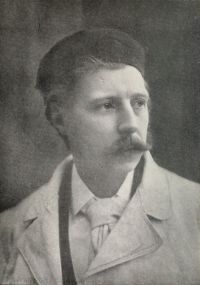
“ Then it was suggested that the models of Necker and the Duke of Orléans should be obtained from Curtius’s Museum. The idea was quickly seized upon, and the crowd rushed en masse to the Exhibition rooms on the Boulevard du Temple, where they demanded the busts of the “friends of the people.” They also asked for the model of the King, a request that was refused by Curtius, who observed that as the full-length figure was extremely heavy it would be “broken” if [84] carried. This reply pleased the people, who clapped their hands and shouted “Bravo, Curtius, bravo!” ”
Henry Curties, A Queen's Error
“ Yet striking as the likeness was to some one, I could not recall who that some one was."You must be hungry after your drive, gentlemen," he said, speaking very fair English, as indeed most educated people did in Aquazilia. "I have ordered déjeuner at once for you. While it is preparing would you like to see the monastery?"St. Nivel and I at once expressed our pleasure at the prospect, and the abbot preceded us, walking with Don Juan, but stopping occasionally to turn and speak to us and point out some object of interest. ”
John G. Edgar, Danes, Saxons and Normans; or, Stories of our ancestors
“ Suddenly Rufus and Beauclerc conceived the idea of varying their amusement, and, without calculating the consequences, they threw a quantity of water on Curthose and those with whom he was in earnest and animated conversation.This insult stung Curthose to the quick. Giving way to irritation, he swore that no man on earth should so treat him with impunity; and, drawing his sword, with a gesture of menace he sprang to the doorway, and rushed upstairs to inflict chastisement. Fortunately, his friends interfered in time to prevent bloodshed. ”
 Henry Morse Stephens,
Dictionary of National Biography…
(1888)
Henry Morse Stephens,
Dictionary of National Biography…
(1888)
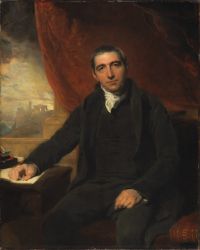
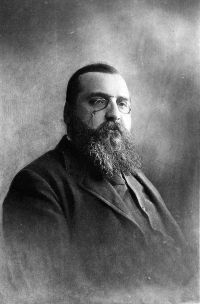
“ No man of his time was ever the subject of so much ridicule, of which Peter Pindar's ‘The Fat Knight and the Petition’ is a good example. The Rev. Charles Curtis, his brother, rector of Solihull and of St. Martin's, Birmingham, who died only six days before him, was also a well-known man in his day, and is chiefly famous for his controversy with Dr. Parr, who had attacked and, as he asserted, insulted Sir William. There is a well-known portrait of Curtis by Sir Thomas Lawrence, which was engraved by W. Sharpe. ”
Charles W. David, Robert Curthose, Duke of Normandy
“ But still being pursued by the spies whom William the Conqueror and Mabel’s powerful family had employed to take his life wherever they might find him, he had fled from Christendom altogether; and for many years had dwelt among the Moslems, whose language and customs he had learned. He now offered his services to Robert Curthose, who received him kindly; and, being an excellent warrior and familiar with all the deceptions and stratagems which the pagans practised against the Christians, he was able to be of great service to the crusaders. ”
Edward Lewes Cutts, Parish Priests and Their People in the Middle Ages in England
“ The curt, formal entries in these musty records sometimes seem to give us a glimpse into men’s hearts and lives: John Curteys, Vicar of Hobeche, in his will, made in 1418, leaves all his lands in Holbeach and Quappelode, to William Curteys for life, on condition that he shall become a priest as soon as possible after obtaining his legitimation, to celebrate for the souls of his parents ”
Charles W. David, Robert Curthose, Duke of Normandy
“ From England, strangely enough, only two crusaders of known name and history have come to light among the followers of [95] Robert Curthose: the Norman William de Percy, the great benefactor of Whitby abbey, and Arnulf of Hesdin, a Fleming. Neither, it will be observed, was a native Englishman. The Anglo-Saxon chronicler remarks that the preaching of Pope Urban caused “a great excitement through all this nation,” [26] and English mariners are known to have coöperated with the crusaders on the Syrian coast. ”
 Joseph Conrad,
Youth: a Narrative, and Two Other Stories
(1902)
Joseph Conrad,
Youth: a Narrative, and Two Other Stories
(1902)
“ Kurtz—Kurtz—that means short in German—don’t it? Well, the name was as true as everything else in his life—and death. He looked at least seven feet long. His covering had fallen off, and his body emerged from it pitiful and appalling as from a winding–sheet. I could see the cage of his ribs all astir, the bones of his arm waving. It was as though an animated image of death carved out of old ivory had been shaking its hand with menaces at a motionless crowd of men made of dark and glittering bronze. ”
Alexander Roberts and James Donaldson, Ante-Nicene Christian Library/Volume I (1865)
“ As the result of this discovery, Cureton published in 1845 a work, entitled, The Ancient Syriac Version of the Epistles of St Ignatius to St Polycarp, the Ephesians, and the Romans, etc., in which he argued that these epistles represented more accurately than any formerly published what Ignatius had actually written. This, of course, opened up the controversy afresh. While some accepted the views of Cureton, others very strenuously opposed them. ”
Henry Curties, A Queen's Error
“ At the farther end of the terrace was an old lady sitting in an invalid's chair, also enjoying the beautiful prospect. By her side sat a nun on a garden chair, holding a large white sunshade over her; the sun was very hot. Not wishing to disturb her privacy, we turned back and met the Reverend Mother approaching with our conductress.She was amiability itself. Certainly she would show monsieur and madame the goats. She was unaware that they had become so celebrated. Perhaps monsieur and madame kept goats in England?"No; you have come only by the recommendation of the boatman, Fritz Killner?" ”
 Charles Eliot Norton,
1911 Encyclopædia Britannica, Volume 7…
(1911)
Charles Eliot Norton,
1911 Encyclopædia Britannica, Volume 7…
(1911)
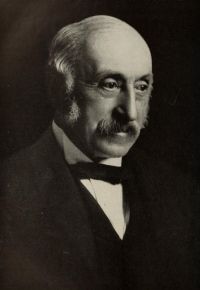
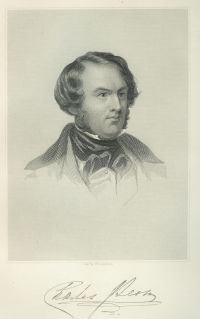
“ Then, his father having again married happily, the boys were brought home to Providence, where they stayed till, in 1839, their father removed to New York. Three years later, Curtis, being allowed to determine for himself his course of life, and being in sympathy with the spirit of the so-called Transcendental movement, became a boarder at the community of Brook Farm. He was accompanied by his brother, James Burrill Curtis, whose influence upon him was strong and helpful. He remained there for two years, brought into stimulating and serviceable relations with many interesting men and women. ”
 Jeremiah Curtin,
Myths and Folk-Lore of Ireland
(1911)
Jeremiah Curtin,
Myths and Folk-Lore of Ireland
(1911)
“ Cucúlin took leave of Gil an Og and sailed away in the speckled boat to Greece, where he went to the king's court, and challenged him to combat. The king of Greece gathered his forces and sent them out to chastise Cucúlin. He killed them all to the last man. Then Cucúlin challenged the king a second time. "I have no one now to fight but myself," said the king; "and I don't think it becomes me to go out and meet the like of you." "If you don't come out to me," said Cucúlin, "I 'll go in to you and cut the head off you in your own castle." ”
John Theodore Tussaud,
The Romance of Madame Tussaud's
“ This brief review will not permit us to dwell long on the early days of the young girl in Paris, nor on those events that prefaced the outbreak of the Revolution. Truth to say, between 1766 and 1789—a matter of twenty-three years—the details concerning the lives of Curtius and his niece are neither very full nor very clearly defined. ”
Hamlin Garland,
The Captain of the Gray-Horse Troop
“ Curtis, understanding this lack of training in their lives, did not allow himself to express the impatience he sometimes felt. He told them that the new life they were to lead involved constant care, but care would bring a reward. "In the old days when you hunted, these things were not so." He also made honorable examples of men like Two Horns and Crane's Voice, who kept their gardens clean of all noxious plants.He organized mimic war-parties. "To-day," he said, "the warriors of Elk will go forth with me against these evil ones, the weeds. Each man will be armed with a bright hoe. ”
Leon H. Vincent, American literary masters (1906)
“ HIS LIFE Henry Curtis, who sailed for New England from the port of London on May 6, 1635, was the founder of the Curtis family in America. His grandson, John Curtis of Worcester, was ‘a sturdy and open loyalist’ of Revolutionary times whose personal character was as heartily esteemed as his political principles were detested. ”
 Charles James Lever,
Sir Jasper Carew: His Life and Experience
Charles James Lever,
Sir Jasper Carew: His Life and Experience
“ Insignificant as was this incident in itself, it was the origin of very grave consequences. Curtis was one of those men who are unforgiving to anything like ridicule; and the sense of injury, added to the poignant suffering of a ruined estate and a fallen condition, by no means improved a temper irascible beyond everything. He entered the house swearing every species of vengeance on the innocent cause of his misadventure. ”
