“ How the name took me back to the summer parade on the West Point plain, and my first view of that smooth, sinister, ill-conditioned face. Now he was heading rebellion. Where would Dr. Sandford, and Mr. Thorold, and Preston be? How far would the rebels carry their work? and what opposition would be made to it? Again I asked Miss Cardigan."It's beyond me, Daisy," she said. "I suppose it will depend very much on whether we've got the right man to head us or no; and that nobody can tell till we try. This man Buchanan, that is over us at present, he is no better than a bit of cotton wool. ”
Daisy Buchanan
Definition and stakes
Daisy Buchanan, a fictional character from F. Scott Fitzgerald’s The Great Gatsby, embodies the conflicts between individual longing and societal norms in 1920s America. As a wealthy socialite caught between her husband, Tom Buchanan, and her former lover, Jay Gatsby, she represents the limited autonomy of women in high society. Fitzgerald’s Daisy, modeled after socialite Ginevra King, captures the contradictions of her era, merging charm with quiet submission.
Other writers, such as Susan Warner, feature characters named Daisy in diverse settings—ranging from spirited rebels to individuals torn between conflicting moral choices—demonstrating the name’s adaptability. While Fitzgerald’s Daisy remains a fixed symbol of unreachable perfection, Warner’s Daisies reflect evolving inner conflicts, emphasizing how the character’s meaning has been reimagined across literary works. These depictions together reveal Daisy as both a reflection of her historical context and a lens through which timeless human struggles can be examined.
Quotes about “Daisy Buchanan”
 F. Scott Fitzgerald,
The Great Gatsby
(1925)
“ Tom Buchanan, who had been hovering restlessly about the room, stopped and rested his hand on my shoulder. "What you doing, Nick?" "I'm a bond man." "Who with?" I told him. "Never heard of them," he remarked decisively. This annoyed me. "You will," I answered shortly. "You will if you stay in the East." "Oh, I'll stay in the East, don't you worry," he said, glancing at Daisy and then back at me, as if he were alert for something more. "I'd be a God damned fool to live anywhere else." At this point Miss Baker said: "Absolutely!" ”
F. Scott Fitzgerald,
The Great Gatsby
(1925)
“ People disappeared, reappeared, made plans to go somewhere, and then lost each other, searched for each other, found each other a few feet away. Some time toward midnight Tom Buchanan and Mrs Wilson stood face to face discussing, in impassioned voices, whether Mrs Wilson had any right to mention Daisy’s name. ”
Related terms
Authors who wrote about “Daisy Buchanan”
 Susan WarnerWill E. IngersollC. S. Guild
 Laura Jean LibbeyF. Scott FitzgeraldJoanna H. MathewsAgnes Giberne
 Julia Kavanagh
 Marie Adelaide Belloc LowndesEthel M. DellAnnie E. ArmstrongPansy Alden
 Louisa May AlcottMarshall Saunders
 W. Somerset MaughamVarious
 Rebecca West
 Mrs. Henry Wood
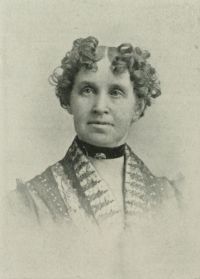 Kate Tannatt Woods
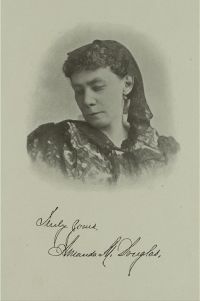 Amanda M. Douglas
