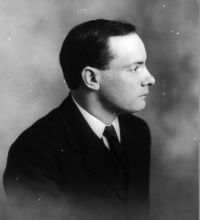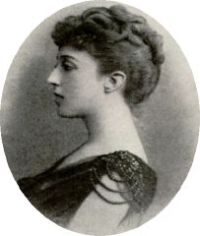
“ The Martins’ house in Dublin was one of the gathering places for the clans of the family. Dublin society still existed in those days; things went with a swing, and there was a tingle in life. Probably there was no place in the kingdom where a greater number of pleasant people were to be met with. Jovial, unconventional, radiant with good looks, unfailing in agreeability, they hunted, they danced, they got up theatricals and concerts, they—the elder ones, at least—went to church with an equal enthusiasm, and fought to the death over the relative merits of their pet parsons. ”
Dublin Society
Definition and stakes
Quotes about “Dublin Society”
Henry Brooke, An Essay on the Antient and Modern State of Ireland
“ The Linen-Hall was erected in Dublin, under as just and nice Regulations as any commercial House in Europe. The North of Ireland began to wear an Aspect entirely new; and, from being (through Want of Industry, Business, and Tillage) the almost exhausted Nursery of our American Plantations, soon became a populous Scene of Improvement, Traffic, Wealth, and Plenty; and is, at this Day, a well-planted District, considerable for Numbers of well-affected, useful, and industrious Subjects. Now arose, now shone forth, the ever Honourable Dublin Society; a Society equalled by none. ”
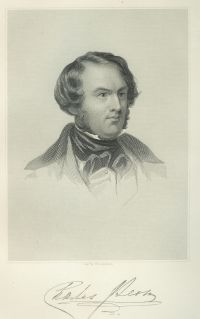
Charles James Lever,
Nuts and Nutcrackers
“ Dublin is the same dirty, ill-cared-for, broken-windowed, tumble-down concern it used to be—the country the same untilled, weed-grown, un-fenced thing I remember it fifty years ago—the society pretty much the same mixture of shrewd lawyers, suave doctors, raw subalterns, and fat, old, greasy country gentlemen, waiting in town for remittances to carry them on to Cheltenham—that paradise of Paddies, and elysium of Galway belles. ”
Henry Brooke, An Essay on the Antient and Modern State of Ireland
“ Countrymen, of whatsoever Denomination, without Favour or Distinction; for meliorating their proper Estates, or Farms; for excelling in any Production of Nature, or Art; for any Discovery, or Invention, useful to Mankind: A Set of truly honourable, and generous Personages, instructing their Countrymen with clear, yet philosophical Precepts, encouraging them by their Example, and rewarding them from their inexhaustible Bounty! Such, and such unrivalled, is the Illustrious Dublin Society! ”
“ When other European capitals were mere congeries of rookeries, Dublin, the centre of Irish political life, possessed splendid streets, grandly planned. But there was little solidarity among the artistic fraternity. Various associations of artists were formed, which held together fairly well until the flight of the resident town gentry after the Union, and many admirable artists were trained in the schools of the Royal Dublin Society, but, since the opening of the nineteenth century, there has been almost no visible art effort in Dublin. ”
Thomas Davis, Thomas Davis, selections from his prose and poetry
“ The Dublin Society was founded for the promotion of husbandry and other useful arts. Its labours to serve agriculture have been repeated and extensive, though not always judicious. It has also endeavoured to promote manufactures. It has gardens and museums fitter for scientific than practical instruction, admirable lecturers, a library most generously opened, a drawing-school of the largest purposes and of equivocal success, and various minor branches. The Irish Academy has some of this fault. It endeavours to unite antiquarianism and abstract science. ”
Robert Dunlop, Dictionary of National Biography… (1891)
“ On the reconstruction of the United Irish Society in 1795, he consented, though reluctantly, to take the oath of secrecy and fidelity, and was appointed a delegate to the upper baronial committee of Belfast. In the spring of 1796 he was sent to Dublin to extend the principles of the society among the operatives of the capital. For a time he resided at Balbriggan, working as a silk-weaver; but his object being suspected by the Orangemen in the factory, he removed to Dublin, working in the liberties as a cotton-weaver. ”
Wright, Wright's Historical Guide to the City of Dublin…
“ The lectures in Natural Philosophy have been discontinued, and the lecture-room latterly let to a Methodist congregation. Proprietors, paying one guinea per annum, have the privilege of introducing a visitor, not generally residing in Dublin, for one month.Dublin Library Society - The origin of this now numerous society can be traced to the meeting of a few persons at a bookseller's, No. 80 Dame-street, to read newspapers and new publications. Growing too numerous, they removed, in 1791, to a house in Eustace-street, and assumed the name and form of a regular society. ”
Charles Kingston O'Mahony, The Viceroys of Ireland
“ The viceroyalty remained, but it was shorn of some of its glory. With the death of the Irish House of Commons and the admittance of Irish peers to the English House of Lords, there was no longer any need for the native nobility to maintain expensive houses in Dublin. London became their centre, and they made their country houses their headquarters while in Ireland. Gradually the social power fell into the hands of the professional classes and the higher-grade civil servants; doctors, lawyers, officers in the army, and others of the professions dominated Dublin society. ”
“ Three Relief Funds in Dublin coped as best they{36} could with the distress of the Irish poor. One of them was worked with great enthusiasm and organising power by the Duchess of Marlborough, and by every means known to a most capable leader of Society she lured from Society of all grades a ready “rate in aid.” Entertainments sprang up—theatricals, bazaars, concerts—that helped the Fund and at the same time put heart into the flagging Dublin season, and Robert was in the thick of charitable endeavour. ”
Charles James Lever,
The Martins Of Cro' Martin, Vol…
“ With the Union, society in Dublin—using the word in its really comprehensive sense—ceased to exist. The great interests of a nation departed, men sank to the level of the small topics that engaged them, and gradually the smallest and narrowest views of mere local matters usurped the place of great events and liberal speculations. Towards the end of the first quarter of the present century, a few of those who had once made companionship with Curran and Grattan and Lysaght and Parsons were still in good health and vigor. ”
Lewis Wingfield, My Lords of Strogue, Vol. 1 (of 3…
“ During the last tempestuous years which preceded the Union, members of all parties were accustomed to meet in social intercourse, dining to-day with men they would hang tomorrow, even in some cases advancing funds out of their own pockets to secure the escape of those whom it was their duty to convict. The cause of the anomaly is not far to seek. Dublin society, though magnificent, was limited to a tiny circle. Absenteeism being voted low, the great families became interwoven by a series of intermarriages, while they were torn at the same time by religious or political dissensions. ”
Alexander Gordon, Dictionary of National Biography (1901)
“ Dublin, on the other side of the Dargle. In this cure he remained, without further preferment, till in 1893 he was appointed parish priest of Ballybrack and Killiney, co. Dublin, by archbishop Walsh. His income never exceeded 200l. a year; most of a sum raised for him by his friends was lost in Wicklow copper mines. Beloved by his parishioners, his social charm made him a coveted guest in the highest circles of Dublin society. ”
Leslie Stephen,
Dictionary of National Biography…
(1896)
“ Among his gifts were 14,000l. for a stove- tenter house at Dublin, to facilitate the work of poor weavers; 6,000l. for a Dublin hospital; and 700l. for buildings at a botanic garden. In 1816 Pleasants defrayed the cost of reprinting at Dublin 'Reflections and Resolutions proper for the Gentleman of Ireland' (1738) , by Samuel Madden [q. v.] . Pleasants died on 1 March 1818, in Camden Street, Dublin, and bequeathed sums for schools, almshouses, and hospitals in Dublin. A portrait of Pleasants in oil is in the possession of the Royal Dublin Society. ”
Thomas Davis, Thomas Davis, selections from his prose and poetry
“ Our readers will be glad to hear that this great boon is about to be given to Irish Art. A society for the formation of a gallery of casts in Dublin has been founded. It embraces men of every rank, class, creed, politics, and calling, thus forming another of those sanctuaries, now multiplying in Ireland, where one is safe from the polemic and the partisan. ”
Joseph Sheridan Le Fanu,
In a Glass Darkly
(1872)
“ He was in person about the middle size, and somewhat strongly formed—his countenance was marked with the lines of thought, and on the whole wore an expression of gravity and melancholy; being, however, as I have said, a man of perfect breeding, as well as of good family, and in affluent circumstances, he had, of course, ready access to the best society of Dublin, without the necessity of any other credentials. ”
Maria Edgeworth,
Tales and Novels — Volume 06
“ Lord Colambre, from his family connexions, had of course immediate introduction into the best society in Dublin, or rather into all the good society of Dublin. In Dublin there is positively good company, and positively bad ”
George W. Gough, The Yeoman Adventurer
“ The ship remained at anchor in Dublin harbour while tailors and tradesmen of all sorts fitted me out, for Master Freake had given me guineas enough for a horse-load. I did very well, for Dublin is a vice-regal city, with a Parliament of its own and reasonable society, so that the modes and fashions are not more than a year or so behind London, which did not matter to a man going to the Americas. From Dublin I wrote home. I had laid one strict injunction on Margaret. She was not to go to the Hanyards, or write there, or allow anyone else to do either. ”
Francis Storr, 1911 Encyclopædia Britannica (1911)
“ A society was formed in Dublin, similar to the Royal Society in London, as early as 1683; but the distracted state of the country proved unpropitious to the cultivation of philosophy and literature. The Royal Irish Academy grew from a society established in Dublin about 1782 by a number of gentlemen, most of whom belonged to the university. They held weekly meetings, and read, in turn, essays on various subjects. They professed to unite the advancement of science with the history of mankind and polite literature. ”
Stephen J. M. Brown, Ireland in Fiction: A Guide to Irish Novels…
“ A study from the life of an exceedingly unpleasant Dublin girl, an inveterate society flirt. The plot is chiefly concerned with her treatment of her various suitors, including a loveless marriage, contracted with one of them in order to spite another. Incidentally there are other clever character studies—Major Delaney, Barry Conway, Maurice Daly. Some are doubtless studies from life. Incidentally there is a clever and accurate picture of the Dublin middle-class, with its golf, its bridge, and its theatres. ”
Frank Thorpe Porter, Twenty Years' Recollections of an Irish Police Magistrate
“ You shall leave this place immediately, go up to Dublin, and take a lodging in one of the small city parishes, where few Protestants reside. I shall obtain leave of absence, follow you to Dublin, take out a license, and after a short stay I shall return and effect an exchange to a remote county, [Pg 114] where I can present you to society as my wife, without any suspicion being entertained that our union has been too recent for your reputation. There your child can be born without any stain on its birth, or any cloud on its future prospects. ”
William Eleroy Curtis,
One Irish Summer
“ An adequate staff was first employed who went about among the farmers holding meetings, delivering lectures, talking with them privately, explaining the advantages of education and co-operation, and organizing local societies in every county and district to co-operate with the general society in Dublin. This work has been going on ever since until we have now about ninety thousand members, mostly small landowners and farmers, although in the southern counties we have several prominent ones. ”
Various, Encyclopaedia Britannica, 11th Edition…
“ The Royal Hibernian military school in Phoenix Park (1765) provides for soldiers’ orphan sons. The Drummond Institution, Chapelizod, for the orphan daughters of soldiers, was established in 1864 by John Drummond, alderman, who left £20,000 to found the asylum. The Hibernian Marine Society for the maintenance of seamen’s sons was established in the city in 1766, but now has buildings at Clontarf. The Roman Catholic Church has charge of a number of special charities, some of them educational and some for the relief of suffering.History.—The name of Dublin signifies the “Black pool.” ”
Mrs. Hamilton Norway, The Sinn Fein Rebellion as I Saw It
“ Surely it must be possible to find men who will rule with firmness and understanding this fine people—so kindly, so emotional, so clever, so easily guided, and so magnificent when wisely led. One prays they may be found, and found quickly, and that we may live to see a Dublin restored to its former stateliness with a Government worthy of the nation. ”
Canon John O'Rourke, The History of the Great Irish Famine of 1847…
“ The young counsellor, fresh from the Kerry Mountains—an athlete in mind and body—had no notion to submit so such degradation from men who were his inferiors in every respect, and, consequently, his language was full of manly independence. His high spirit appeared in his whole manner, and as he walked through Dame Street, Parliament Street, and along the quays to the Four Courts, he looked the noblest and proudest man in Dublin—a very king of men. ”
1911 Encyclopædia Britannica, Volume 8… (1911)
“ About the time of the Revolution, the woollen trade flourished in Dublin, and the produce attained great celebrity. The cheapness of labour attracted capitalists, who started extensive factories in that quarter of the town known even now as the Liberties. This quarter was inhabited altogether by workers in wool, and as the city was small, the aristocracy lived close by in noble mansions which are now miserable memorials of past prosperity. About 1700 the English legislature prevailed on William III. to assent to laws which directly crushed the Irish trade. ”
Robert John Buckley, Ireland as It Is, and as It Would Be Under Home Rule
“ But there are none so blind as those who will not see, none so deaf as those who will not hear. It is impossible to withhold sympathy with the indignation and mental anxiety of these industrious men, who have made Dublin what she is, and whose only notion of happiness is the fulfilment of duty, their sole means of acquiring wealth or middleclass comfort, hard and honest work. That the backbone of the city should stand with their fortunes subject to the will of a few unscrupulous agitators is indeed, as they say, an inscrutable dispensation of Providence. ”
Thomas O'Neill Russell, Beauties and Antiquities of Ireland
“ It is not to be wondered at that wealthy English and Scotch people should prefer to live in their own countries, but wealthy Irish people seem not to desire to live in Dublin unless it is their native place. Ireland, unfortunately, does not possess very many rich people, but she has at least some outside of Dublin; but very few of these, even if they have young, growing-up families, go to reside in the capital in order to educate them. Some seem to think that outside of Trinity College, Dublin has no advantages in an educational point of view worth speaking of. ”
“ He felt that they were hard-featured realists and that they resented an exactitude which was the produce of a leisure not within their reach. No social revolution, he told her, would be likely to strike Dublin for some centuries. ”
1911 Encyclopædia Britannica, Volume 8… (1911)
“ It is also the seat of the Irish courts of law and equity. In connexion with these it may be noted that in 1904 a special court was established for children. On the constitution of Dublin as a county borough in 1898, the positions and duties of its corporation were left practically unaltered. The corporation consists of a lord mayor, 20 aldermen and 60 councillors, representing 20 wards. The income of the body arises from rents on property, customs and taxes. ”
Arthur Young,
A Tour in Ireland. 1776-1779
“ Many strokes in their character are evidently to be ascribed to the extreme oppression under which they live. If they are as great thieves and liars as they are reported, it is certainly owing to this cause.If from the lowest class we rise to the highest, all there is gaiety, pleasure, luxury, and extravagance; the town life at Dublin is formed on the model of that of London. Every night in the winter there is a ball or a party, where the polite circle meet, not to enjoy but to sweat each other ”