“ Others again go to visit the Duchy and come away disappointed because they have not found exactly what they wanted or expected. They take small children to coast places of which they have only heard by name, and are dismayed to find there is no sand, no beach, no bathing—only hills steep as the blue slate-roofs; and a good deal in the "people's" part of the town, which is narrow, slatternly and disagreeable. But it is one of the traits of Cornwall that she embraces such wide variety and shows such startling contrasts close up against each other. ”
Duchy of Cornwall
Definition and stakes
The theme of “Duchy of Cornwall” has been addressed by authors such as Davies Gilbert, S. Baring-Gould, Richard Carew, C. A. Dawson Scott and H. R. Coulthard. It is often associated with terms like England, earl, manor, borough and Richard.
Quotes about “Duchy of Cornwall”
 Sabine Baring-Gould,
A Book of the West
(1899)
Sabine Baring-Gould,
A Book of the West
(1899)
“ The Duchy of Cornwall, vested in the Princes of Wales, has claimed and exercised the power to cut away and reject the rights of every parish except such as are immediately contiguous to the moor, and to enclose and to shut out the good people of Devon from large tracts, one of which is made over to the convicts, another to the artillery, to fire across at long range. ”
The Parochial History of Cornwall…
“ The manors of Millaton and Carnadon Prior belong to the Duchy of Cornwall; the latter had belonged to the Priory of Launceston, and is one of the manors given in exchange by King Henry the Eighth for the honour of Wallingford.On the waste of this manor stands the lofty hill usually called Carraton Downs, supposed, with the exception of Brown Willy (which is elevated 1368 feet above the sea) to be the highest land in Cornwall. Here King Charles the First drew up his forces on the 2d of August, 1644, and was joined by Prince Maurice. ”
“ The constant steep places in Cornwall are a great puzzle to many people who come with an idea that the Duchy is neatly and evenly sloped, rising in the middle and falling down to the sea on each side. ”
Frederick Wilton Litchfield Stockdale, Excursions in the County of Cornwall
“ Afterwards it was given to Robert, Earl of Moreteyne and Cornwall, and in subsequent reigns was annexed to the Duchy of Cornwall. During the civil wars of the eighteenth century, we find no account of this castle’s having been occupied by either of the contending parties: but Carew relates, that during the Cornish commotions in 1549, Sir Richard Grenville held Trematon for a while against the rebels ”
J. Henry Harris, Cornish Saints & Sinners
“ The proverb may be relied on as authentic. The Prince of Wales has been the Duke of Cornwall ever since, so the Cornish people have had a very close connection with royalty from pre-historic times, as the Bookworm discovered; then through Kingsley's "guano and polecat" period, and then from Edward the Black Prince down to the present, which we can verify for ourselves every year, when the Duchy accounts are published, and the ancient tribute passes into the noble Duke's banking account. ”
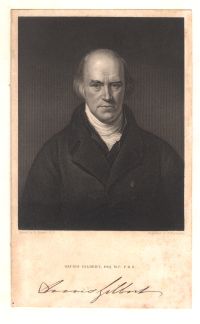 Davies Gilbert,
The Parochial History of Cornwall
(1838)
Davies Gilbert,
The Parochial History of Cornwall
(1838)
“ Advent contains the small villages of Treclogoe or Trelogoe, Pencarow, and Tresinny. Most of the estates in this parish are parcel of the duchy of Cornwall, being held as free and customary lands of the manor of Helston in Trigg. ”
“ They are friendly to all, but guarded nevertheless; and standing thus apart, marked out by their territory, with small chance to mingle with inhabitants of other counties, the clan feeling among them has grown to be analogous to that of the clans in Scotland. All other Britishers are to the true Cornishman "foreigners." How then could a man so imbued with his own and his Duchy's place in regard to the "rest of England" write a book which should convey in any way the real characteristics of his land? ”
S. Baring-Gould, A Book of Cornwall
“ A modern range of buildings has been added for the accommodation of the nuns, but it is not unsightly. The lovely pinnacled tower of the church of S. Mawgan rises beside the ancient mansion, at a considerably lower level, and the interior is rich with sculptured oak, and with monuments of the Arundells.Alas! the mighty family that once dominated in Cornwall, second in power only to the Princes of Wales, royal dukes of that duchy, is now represented in Cornwall by empty mansions, alienated to other holders, and by tombs. ”
G. Basil Barham, Legend Land, Vol. 1
“ Although Cornwall can boast many saints, St. Piran has greater right than any other to be called the patron of the Duchy. To him the Cornish in the old days attributed a vast number of good actions, among them the discovery of tin, the mining of which has for centuries formed one of the chief Cornish industries. ”
Arthur L. Salmon, The Cornwall Coast
“ For the legends and traditions of the country-side it is necessary to go to the guide-books, which are themselves often misleading. If a traveller were to go through Cornwall compiling a book that should contain solely what he saw and heard, it would be something quite different from the ordinary handbook, and those who only know the Duchy by reading about it would be chiefly struck by its omissions. ”
John Anderton Naylor, From John O'Groats to Land's End
“ In the year 1225 Henry III gave the whole county of Cornwall, in fee, to his brother Richard, who was created Earl of Cornwall by charter dated August 12th, 1231, and from that time Restormel became the property of the Earls of Cornwall. Afterwards, in 1338, when the Earldom was raised to a Dukedom, the charter of creation settled on the Duchy, with other manors, the castle and manor of Restormel, with the park and other appurtenances in the county of Cornwall, together with the town of Lostwithiel: and it was on record that the park then contained 300 deer. ”
C. A. Dawson Scott, Nooks and Corners of Cornwall
“ The present ruins are said to represent a castle built some little time after the Norman Conquest, a castle which speedily fell out of repair, for it had to be restored by Richard, King of the Romans, brother of Henry III., before he could entertain his nephew, David, Prince of Wales, here in 1245.When Cornwall, till then an earldom, was made a duchy (1337) and bestowed on the Black Prince, a boy seven years old, all the castles were again fallen into decay. At Tintagel the timber had even been removed from the great hall "because the walls were ruinous." ”
“ He speaks of the neighbourhood of Penrith, but the description applies to many other parts of the Duchy, though not to East Cornwall, where it is scarcely applicable at all, and is [73] precisely the part where there exists least of the Celtic and most of the English element. "Life on these small farms is incredibly rough. One may guess what it is like from the outward aspect of such places. Each, it is true, has its own individual character, but they are all pretty much alike in their dreary, naked, and almost squalid appearance. ”
The Parochial History of Cornwall…
“ Publishes an account of the Duchy of Cornwall, xxii Dog, a charitable, 113 Dones, Henry de, (temp. Henry 3) , 50 Dosmery pool, 122 Draenas, Robert de, (temp. Hen. 3) , 50 Drake, Sir Francis, 115-156 Dreams, 9 Dudman, a foreland, 141 Dukes of Cornwall, 76-79 Dunstanvill, Alan de, (temp. Rich. 1) , 49 Dynham, John de, (temp. Ed. 2) , 51 Earls of Cornwall, their houses, 78-80 East Wibilsher, hundred of, 93-94. Knights’ fees and acres (temp. Hen. 4) , 41. Survey of, 98 Ebbingford, a house of the Arundels of Trerise, 118 Edgecumbe of Mount Edgecumbe, pedigree and arms of, 100. Elizabeth, ix. ”
The Parochial History of Cornwall…
“ Edmund Earl of Cornwall had his palace here, privileges conferred by Earl Richard, antiquity of its franchise, revenues of the 487 corporation, damage done by the parliament army 26. The lords of the manor 27. Rent payable to the Duke, lies between hills, river navigable. By the Editor, locality, its beauty, seat of the duchy court, indebted to Richard King of the Romans, palace converted into a prison, charter of George 2nd 28. Its invalidity, church, town extends beyond the parish, statistics, incumbent, patron, Geology by Dr. Boase 29 Lestwithiel town, ii. ”
The Parochial History of Cornwall…
“ Willis. “It is a very ancient corporation, belonging to the Duchy, having had great privileges conferred upon it by Richard Earl of Cornwall (so saith Leland, Itinerary, vol. III. fol. 16,) who, when he was King of the Romans, in the twelfth year of his reign, by charter dated at Wallington, made Lostwithiel and Penknek (alias Penkneth, in the parish of Lanliversey, for Lanlivery, saith Leland, in the above cited place,) a place near adjoining, and now part of the borough, one free burgh, and granted his burgesses a gild mercatory, &c. ”
The Parochial History of Cornwall…
“ The earldom and dukedom of Cornwall have, since his time, done no more than afford a revenue and bestow a name, like the shadows of a shade, with which the private gentlemen, holding hereditary seats in Parliament at the present time, continue to decorate themselves, by assuming the verbal denominations of offices extinct above three centuries, and which habit alone enables us to pronounce, as applicable to them, without a smile; but which offices, like the ancient earldom of Cornwall, while they had any existence, conferred real feudal sovereignty, proportionate to their different degrees. ”
The Parochial History of Cornwall…
“ Point Hilary, Holyhead, and Caer-Cuby, viz. Cuby’s City or Castle.That Tregony Borough was invested with the privileges of a manor and court-leet, before the Norman Conquest, Domesday Roll informs us. How long before by prescription, no man living can tell. King Henry I. (the Earldom of Cornwall being then vested in the Crown) gave it the freedom of sending two burgesses, citizens, or townsmen, to sit in Parliament as its representatives, to be chosen by the majority of the townsmen that were housekeepers ”
Davies Gilbert,
The Parochial History of Cornwall
(1838)
“ The manor of Tintagel was very antiently demesne land of the crown, and famous for its castle, and Browne Willis says, the castle, manor, and borough of Tintagel, were settled by Edward the Third on his son Prince Edward, whom he created Duke of Cornwall, and continued it to his heirs, the succeeding Dukes of Cornwall, before which this king's brother, John of Eltham, Earl of Cornwall, held it. ”
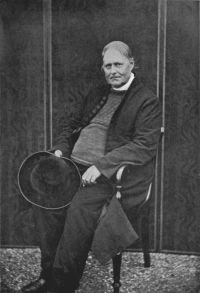 Robert Stephen Hawker,
Footprints of Former Men in Far Cornwall
Robert Stephen Hawker,
Footprints of Former Men in Far Cornwall
“ From all parts, and especially from that storied city whose merchants were then, as now, princes of the land, men were wont to encounter the perilous journey from the Thames to the Tamar, to pursue their traffic with the “underground folk,” as they termed the inhabitants of Cornwall, that rocky land of strangers, as, when literally interpreted, is the exact meaning of its name.It was in the year 1463, when Edward IV. occupied the English throne, that a tall and portly merchant, in the distinctive apparel of the times, rode along the wilds of a Cornish moor. ”
The Parochial History of Cornwall…
“ A great hall was lately there, which was used for those purposes in my knowledge, belonging to the Dukes of Cornwall, who did the like when under them; and here also they kept their court and residence, near to which stands yet their castle Restormell, in Cornish a bellyfull of money, a place of honey; besides which the Dukes had seven others, Liskeard, Tintagell, Lanceston, and Trematon, which is in Cornish three hills on a green top, though that came to the Crown by attainder. ”
Davies Gilbert,
The Parochial History of Cornwall
(1838)
“ For the etymology of the first compound word, it signifies the safe, secure, or impregnable fort or fortress; for the second, safe, secure, impregnable, or invincible man; or a man so fortified, magnified, or fenced, by art or nature, that he was not liable to hurt or danger, referring perhaps to the King or Earl of Cornwall, whose fort or castle it was; as also the manor of Dundagell, contiguous therewith, privileged with the jurisdiction of a court leet, and other marks of grandeur over the adjacent country, still pertaining to the Duke of Cornwall. ”
Davies Gilbert,
The Parochial History of Cornwall
(1838)
“ Lastly, after this prince had thus vanquished his enemies abroad and at home, had restored the Christian Religion, eclipsed by the Saxons, ordained this useful order of knighthood, and done all the good offices a just, pious, and religious king could do to his subjects, he was at last, as many others, ungratefully dealt with by his own people, who at the instigation of his discontented cousin Mordred on the Roman Pictish title, confederated with the Saxons as against a bastard, and rose a great army in Cornwall in opposition to his power ”
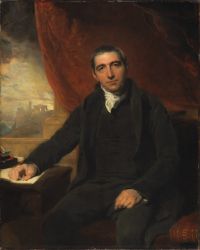 Thomas Taylor,
The Celtic Christianity of Cornwall…
Thomas Taylor,
The Celtic Christianity of Cornwall…
“ The settlers in Armorica introduced their own form of Christianity, and the object of the British and Irish missionary saints who flocked thither soon afterwards was not, as ancient writers have supposed, in order to convert the pagan Gauls, but rather to administer to the spiritual needs of their compatriots. To these missions our Dumnonia contributed little in comparison with Wales. Cornwall after the foundation of the kingdom of Wessex in 519 became isolated: its relations with Brittany were doubtless closer than with Saxonised Britain. ”
C. A. Dawson Scott, Nooks and Corners of Cornwall
“ We are so highly sensible of the merit of our county of Cornwall, of their zeal for the defence of our person and the just rights of our crown, in a time when we could contribute so little to our own defence or to their assistance, in a time when not only no reward appeared, but great and probable dangers were threatened to obedience and loyalty ”
Walter H. Tregellas, Cornish Worthies: Sketches of Some Eminent Cornish Men and Families…
“ Cornwall stood apart from the general life of England: cut off from it not only by differences of blood and speech, but by the feudal tendencies of its people, who clung with a Celtic loyalty to their local chieftains, and suffered their fidelity to the Crown to determine their own. They had as yet done little more than keep the war out of their own county; but the march of a small Parliamentary force under Lord Stamford upon Launceston, forced them into action. ”
Davies Gilbert,
The Parochial History of Cornwall
(1838)
“ His chief dwelling and place of residence was at Jutsworth, near Saltash and Trematon, where he married and had issue one only daughter named Agnes, as some say, others Beatrix, who was married to Reginald Fitz-Harry, base son of King Henry I., by his concubine Anne Corbett, in whose right he was made Earl of Cornwall, after William Earl of Cornwall aforesaid had forfeited the same, by attainder of treason against the Conqueror and his sons, and was deprived thereof. ”
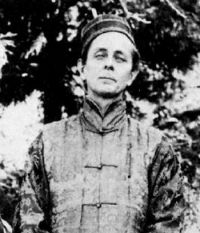 W. Y. Evans-Wentz,
The Fairy-Faith in Celtic Countries
W. Y. Evans-Wentz,
The Fairy-Faith in Celtic Countries
“ Strikingly like Brittany in physical aspects, Southern and Western Cornwall is a land of the sea, of rolling plains and moorlands rather than of high hills and mountains, a land of golden-yellow furze-bloom, where noisy crowds of black crows and white sea-gulls mingle together over the freshly-turned or new-sown fields, and where in the spring-time the call of the cuckoo is heard with the song of the skylark. Like the Isle of Man, from the earliest ages Cornwall has been a meeting-place and a battle-ground for contending races. ”
Thomas Taylor,
The Celtic Christianity of Cornwall…
“ Domesday Book shows that, with three exceptions, all the landholders in Cornwall were, in the days of Edward the Confessor, Saxons. When William the Norman set about the conquest of England, he was joined by several Breton nobles, who, by way of reward, received considerable grants of land in Cornwall. Richard Fitz Turold, the ancestor of the baronial house of Cardinan, received thirty-one manors, Brient six, Blohiu five, Jovin thirteen, Wihumar three and Judhel one. ”
“ No road in England has been so wheel-worn as that strip running out to the most westerly point of England.Some there are who are drawn by a similar magnet to the Lizard, the most southerly point of our land, but the attraction is not so potent. From time immemorial John o' Groat's to Land's End has formed the measure of Britain.For very many years Cornwall has been known for its fine coast scenery, but wild and desolate scenery was not the fashion in Early Victorian days, and there were comparatively few brave souls who penetrated so far. ”
 Dinah Maria Mulock Craik,
An Unsentimental Journey through Cornwall
Dinah Maria Mulock Craik,
An Unsentimental Journey through Cornwall
“ One of the charms of Cornwall is that it gives one the sense of being such an old country, as if things had gone exactly as they do now, not merely since the days of King Arthur, but for ever so long before then. The Romans, the Phœnicians, nay, the heroes of pre-historic ages, such as Jack the Giantkiller and the giant Cormoran, seemed to be not impossible myths, as we gradually quitted civilisation in the shape of a village or two, and a few isolated farm-houses, and came out upon the wild district known as Goonhilly Down. ”
Related terms
Authors who wrote about “Duchy of Cornwall”
Davies GilbertS. Baring-Gould Richard CarewC. A. Dawson ScottH. R. CoulthardM. A. CourtneyThomas TaylorArthur L. SalmonWalter H. TregellasFrederick Wilton Litchfield StockdaleG. E. MittonJ. Henry HarrisG. Basil BarhamRobert Stephen HawkerJohn Anderton NaylorRobert Hunt
 Havelock EllisSabine Baring-GouldVariousDinah Maria Mulock Craik