Duke of Exeter

Definition and stakes

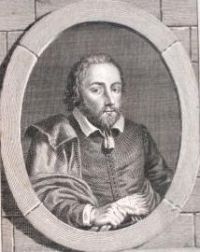
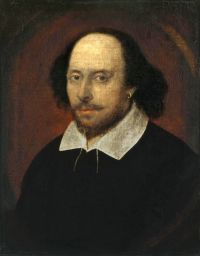
Portrait of William Shakespeare William Shakespeare,  The Life of King Henry V

“ Is the Duke of Exeter safe?
FLUELLEN.
The Duke of Exeter is as magnanimous as Agamemnon; and a man that I love and honour with my soul, and my heart, and my duty, and my life, and my living, and my uttermost power. He is not—God be praised and blessed!—any hurt in the world; but keeps the bridge most valiantly, with excellent discipline. There is an anchient lieutenant there at the pridge, I think in my very conscience he is as valiant a man as Mark Antony
”

Source: Gutenberg

1911 Encyclopædia Britannica, Volume 8… (1911)

“ The trial by rack is utterly unknown to the law of England, though once when the dukes of Exeter and Suffolk, and other ministers of Henry VI., had laid a design to introduce the civil (i.e. Roman) law into the kingdom as the rule of government, for a beginning thereof they erected a rack for torture, which was called in derision the duke of Exeter’s daughter, and still remains in the Tower of London, where it was used as an engine of state, not of law, more than once in Queen Elizabeth’s reign. ”
Source: Wikisource

John G. Edgar,  The Wars of the Roses; or, Stories of the Struggle of York and Lancaster

“ Indeed, his place in Parliaments and councils must have reminded the young duke that, through his grandmother, he was of the blood of Lancaster; and to a man of his rank flatterers would hardly be wanting to suggest the probability of the course of events bringing the regal sceptre to his hand. On arriving at years of discretion, Exeter changed the pale for the purple rose, and, after the first battle of St. Albans, he was under the necessity of flying to the sanctuary of Westminster. From that place of security he was taken on some pretext, and sent as a prisoner to Pontefract Castle. ”
Source: Gutenberg

Get perspective with Kwize: daily news enlightened by great literature