Eastern Galicia

Definition and stakes

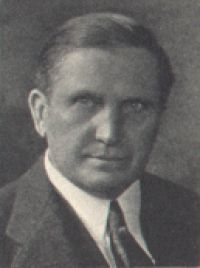
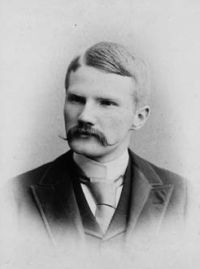
Portrait of Charles Homer Haskins Charles Homer Haskins,  Some Problems of the Peace Conference (1920)

“ Eastern Galicia was originally settled by a population historically known, and still commonly known as Ruthenians. They are a branch of that Little Russian race for which the general name Ukrainian is now coming into use. After belonging to various Ruthenian principalities in the early middle ages, Eastern Galicia was conquered by Poland in 1340; it remained a part of the Polish state down to 1772; and even under the Austrian rule the Poles have continued to be the dominant nation. ”
Source: Gutenberg

1911 Encyclopædia Britannica, Volume 11… (1911)

“ Exposed to the cold northern and north-eastern winds, and shut out by the Carpathians from the warm southerly winds, Galicia has the severest climate in Austria. It has long winters, with an abundant snowfall, short and wet springs, hot summers and long and steady autumns. The mean annual temperature at Lemberg is 46.2° F., and at Tarnopol only 43° F.
Of the total area 48.45% is occupied by arable land, 11.16% by meadows, 9.19% by pastures, 1.39% by gardens and 25.76% by forests. The soil is generally fertile, but agriculture is still backward.
”
Source: Wikisource

Moritz Busch,  Bismarck (1898)

“ A branch society for Eastern Galicia has been founded in Cracow under the leadership of Byglewski, the president of the so-called Siberian Committee, which provides for the Poles who return from Siberia, and which is now to be affiliated to the Opielka. The society has already established branches in twenty-six districts. The Opielka Narodowa exercises strict supervision over the emigrants resident in Galicia, and is in direct communication with all the emigrant committees in England, France, Belgium, and Switzerland, thus forming a connecting link between them. ”
Source: Gutenberg

Get perspective with Kwize: daily news enlightened by great literature