“ See the tree prefixed by Sir Egerton Brydges to his edition of HAMMOND'S POEMS, 1816, and the Introduction to STANLEY'S POEMS, 1814. Sir William Lovelace, the poet's grandfather, married Elizabeth, daughter of Edward Aucher, Esq., of Bishopsbourne, near Canterbury, while Sir William Hammond, of St. Alban's Court, married, as his second wife, Elizabeth, daughter of Anthony Aucher, Esq., of Bishopsbourne, by whom he had, among other children, Mary, who became the wife of Sir Thomas Stanley, of Cumberlow, father of Thomas Stanley, the poet, historian, and translator of Bion, &c. ”
Edward Lovelace
Definition and stakes
The theme of “Edward Lovelace” has been addressed by authors such as Samuel Richardson, Alec Waugh, Richard Lovelace, Thomas Seccombe and Georgette Heyer. It is often associated with terms like Richard, Thomas, John, Mr. and Robert.
Quotes about “Edward Lovelace”
Gerald le Grys Norgate, Dictionary of National Biography… (1912)
“ There was no male issue. Lovelace's daughter, Ada Mary, by his first wife, succeeded to her father's barony of Wentworth. The earldom of Lovelace devolved on his half-brother Lionel Fortescue King, son of the first earl by his second wife. ”
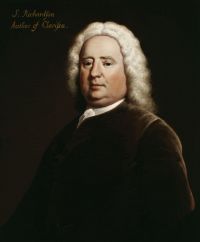 Samuel Richardson,
Clarissa Harlowe; or the history of a young lady…
“ I am still well pleased with Mr. Lovelace's behaviour. We have had a good deal of serious discourse together. The man has really just and good notions. He confesses how much he is pleased with this day, and hopes for many such. ”
1911 Encyclopædia Britannica (1911)
“ The last ten years of Lovelace’s life were passed in obscurity. His fortune had been exhausted in the king’s interest, and he is said to have been supported by the generosity of friends. He died in 1658 “in a cellar in Longacre,” according to Aubrey, who, however, possibly exaggerates his poverty. A volume of Lovelace’s Posthume Poems was published in 1659 by his brother Dudley. They are of inferior merit to his own collection. The world has done no injustice to Lovelace in neglecting all but a few of his modest offerings to literature. ”
“ As all things, crumble into dust, And though you finde this faire-built tombe Ashes, as what lyes in its wombe: Yet her saint-like name shall shine A living glory to this shrine, And her eternall fame be read, When all but VERY VERTUE'S DEAD.<44.3><44.1> This lady was perhaps the daughter of Edward Filmer, Esq., of East Sutton, co. Kent, by his wife Eliza, daughter of Richard Argall, Esq., of the same place (See Harl. MS. 1432, p. 300) . ”
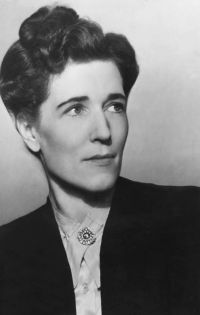 Georgette Heyer,
The Black Moth: A Romance of the XVIIIth Century
“ Yes, she would be very good, but so must he! And now she was going shopping, and she would require at least twenty guineas.In spite of her promise to "be good," she made no attempt to discourage Lovelace's attentions, always smiling charmingly upon him and beckoning him to her side.It was the morning of the Duchess of Devonshire's rout that Carstares again broached the subject. My lady was in bed, her fair hair unpowdered and streaming all about her shoulders, her chocolate on a small table at her side and countless billets doux from admirers scattered on the sheet. ”
“ You wrong'd in her the Houses priviledge; Some that you under sequestration are, Because you write when going to the Warre; And one the book prohibits, because Kent Their first Petition by the Authour sent. But when the beauteous ladies came to know, That their deare Lovelace was endanger'd so: Lovelace, that thaw'd the most congealed brest, He who lov'd best, and them defended best, Whose hand so rudely grasps the steely brand, Whose hand so gently melts the ladies hand, They all in mutiny, though yet undrest, Sally'd, and would in his defence contest. ”
“ You that do suck for thirst your black quil's blood,<90.6> And chaw your labour'd papers for your food, I will inform you how and what to praise, Then skin y' in satin as young Lovelace plaies. Beware, as you would your fierce guests, your lice, To strip the cloath of gold from cherish'd vice; Rather stand off with awe and reverend fear, Hang a poetick pendant in her ear, Court her as her adorers do their glasse, Though that as much of a true substance has, Whilst all the gall from your wild<90.7> ink you drain, The beauteous sweets of vertues cheeks to stain ”
Specimens with Memoirs of the Less-known British Poets…
“ Which never can be set at onement more, Until the maw's wide mouth be stopt with store.RICHARD LOVELACE. This unlucky cavalier and bard was born in 1618. He was the son of Sir William Lovelace, of Woolwich, in Kent. He was educated some say at Oxford, and others at Cambridge—took a master's degree, and was afterwards presented at Court. ”
 Anthony Trollope,
Is He Popenjoy?
“ She had, perhaps, taught herself to believe that she was indispensable to her father's happiness. Then after a pause he continued: "Of course you must be ready to see Lord George when he comes again, and you ought to remember, my dear, that marquises do not grow on every hedge."With great care and cunning workmanship one may almost make a silk purse out of a sow's ear, but not quite. The care which Dean Lovelace had bestowed upon the operation in regard to himself had been very great, and the cunning workmanship was to be seen in every plait and every stitch. ”
“ Did I pronounce him dead! no, no! he lives, And from his aromatique cell he gives Spice-breathed fumes, whose odoriferous scent (In zephre-gales which never can be spent) Doth spread it self abroad, and much out-vies The eastern bird in her self-sacrifice; Or Father Phoebus, who to th' world derives Such various and such multiformed lives, Took notice that brave Lovelace did inspire The universe with his Promethean fire, And snatcht him hence, before his thread was spun, En'ving that here should be another Sun. T. L.<113.1><113.1> Thomas Lovelace, one of the poet's brothers. ”
Samuel Richardson,
Clarissa Harlowe; or the history of a young lady…
“ I seem still to stand high in their favour. But, methinks, I should be glad to have this confirmed to me, as from themselves, by the lips of an indifferent person; and the rather, because of their fortunes and family; and take it amiss (as they have reason) to be included by ours in the contempt thrown upon their kinsman. Curiosity at present is all my motive: nor will there ever, I hope, be a stronger, notwithstanding your questionable throbs—even were the merits of Mr. Lovelace much greater than they are. ”
Samuel Richardson,
Clarissa Harlowe; or the history of a young lady…
“ Punctilio is out of doors the moment you are out of your father's house. I know how justly severe you have been upon those inexcusable creatures, whose giddiness and even want of decency have made them, in the same hour as I may say, leap from a parent's window to a husband's bed—but considering Lovelace's character, I repeat my opinion, that your reputation in the eye of the world requires no delay be made in this point, when once you are in his power. ”
“ This is the more vexatious, inasmuch as it seems probable that ALTHEA, whoever she was, became the poet's wife, after LUCASTA'S marriage to another. The CHLOES, &c. mentioned in the following pages were merely more or less intimate acquaintances of Lovelace, like the ELECTRA, PERILLA, CORINNA, &c. of Herrick. But at the same time an obscurity has hitherto hung over some of the persons mentioned under fictitious names in the poems of Lovelace, which a little research and trouble would have easily removed. ”
Fred M. White, A Garden of Pearls (1917)
“ As the German spoke, he reached over in the direction of an electric bell starred on the wall. Lovelace put up his hand. "I wouldn't do that if I were you," he said quietly. "I am not armed myself, but there are others behind me in the darkness who are more fortunate. And if you want your sentries, then I tell you frankly they are otherwise engaged. Come, Herr Hellmer, there is no occasion to quarrel. I also have a fancy to do a little dabbling in pearls, and I think my financial credit is at least equal to that of the gentlemen I see around me. Won't you sit down?" ”
Samuel Richardson,
Clarissa Harlowe; or the history of a young lady…
“ Nevertheless, you may depend upon it, my dear, that these agreeable assurances, and hopes of his begun reformation, shall not make me forget my caution. Not that I think, at worst, any more than you, that he dare to harbour a thought injurious to my honour: but he is very various, and there is an apparent, and even an acknowledged unfixedness in his temper, which at times gives me uneasiness. I am resolved therefore to keep him at a distance from my person and my thoughts, as much as I can: for whether all men are or are not encroachers, I am sure Mr. Lovelace is one. ”
“ On the title-page of the copy of LUCASTA, 1649, preserved among the King's Pamphlets in the British Museum, the original possessor has, according to his usual practice, marked the date of purchase, viz., June 21; perhaps, and indeed probably, that was also the date of publication. A copy of LUCASTA, 1649, occasionally appears in catalogues, purporting to have belonged to Anne, Lady Lovelace; but the autograph which it contains was taken from a copy of Massinger's BONDMAN (edit. 1638, 4to.) , which her Ladyship once owned. ”
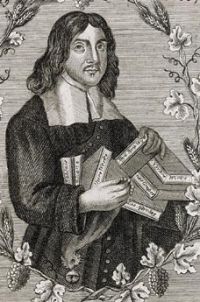 William Winstanley,
The Lives of the Most Famous English Poets…
“ Scholars none can deny them both: The one Celebrated his Mistress under the bright name of Stella, the other the Lady Regent of his Affections, under the Banner of Lucasta, both of them endued with transcendent Sparks of Poetick Fire, and both of them exposing their Lives to the extreamest hazard of doubtful War; both of them such Soldiers as is expressed by the Poet. Undaunted Spirits, that encounter those Sad dangers, we to Fancy scarce propose. To conclude, Mr. Lovelace's Poems did, do, and still will live in good Esteem with all knowing true Lovers of Ingenuity. ”
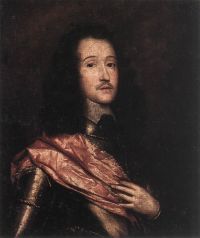
“ On the fly-leaves of his copy of Rosse's MYSTAGOGUS POETICUS, 1648, 8vo., he has written the names of a variety of works, of which he was at the time seemingly in recent possession. BIOGRAPHICAL NOTICE. With the exception of Sir Egerton Brydges, who contributed to the GENTLEMAN'S MAGAZINE for 1791-2 a series of articles on the life and writings of the subject of the present memoir, all the biographers of Richard Lovelace have contented themselves with following the account left by Anthony Wood of his short and unhappy career. ”
“ ELLINDA is a female friend of the poet, who occasionally stayed at her house, and on one occasion (p. 79) had a serious illness there. ELLINDA marries AMYNTOR, under which disguise, I suspect, lurks the well known Maecenas of his time, Endymion Porter. If Porter be AMYNTOR, of course ELLINDA must be the Lady Olivia Porter, his wife. ARIGO (see the poem of AMYNTOR'S GROVE) signifies Porter's friend, Henry Jermyn. It may be as well to add that the LETTICE mentioned at p. 121, was the Lady Lettice Goring, wife of Lovelace's friend, and third daughter of Richard Boyle, first Earl of Cork. ”
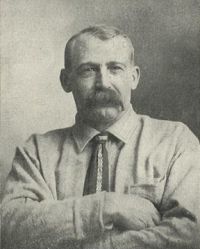 Andy Adams,
A Texas Matchmaker
“ With a remarkable complacency, Jean Lovelace met and parried her tormentor, but her brother never tired of his hobby while there was a third person to listen.Though an unlettered man, Lance Lovelace had been a close observer of humanity. The big book of Life had been open always before him, and he had profited from its pages. With my advent at Las Palomas, there were less than half a dozen books on the ranch, among them a copy of Bret Harte's poems and a large Bible. ”
Samuel Richardson,
Clarissa Harlowe; or the history of a young lady…
“ Solmes a man to whom I could but be indifferent, it might be found, that to have spirit, would very little answer the views of that spirit. It is my fortune to be treated as a fool by my brother: but Mr. Lovelace shall find—Yet I will let him know my mind; and then it will come with a better grace to your knowledge. Mean time, give me leave to tell you, that it goes against me, in my cooler moments, unnatural as my brother is to me, to have you, my dear, who are my other self, write such very severe reflections upon him, in relation to the advantage Lovelace had over him. ”
“ In fact he was ravenously hungry, and he hastened to hide the offending gaiters under the spotless table-doth as soon as he had rung the bell for the dish which was being kept hot for him.When Mrs. Lovelace came stoutly in, he greeted her with a smile. "I'm late this morning. Been having a tussle with one of the youngsters. No, don't put that whip away! It wants a new lash. What a cussed nuisance this rain is! The ground is a quagmire, and the animals can hardly keep their feet. ”
Samuel Richardson,
Clarissa Harlowe; or the history of a young lady…
“ Your native generosity and greatness of mind endanger you: all your friends, by fighting against him with impolitic violence, fight for him. And Lovelace, my life for yours, notwithstanding all his veneration and assiduities, has seen further than that veneration and those assiduities (so well calculated to your meridian) will let him own he has seen—has seen, in short, that his work is doing for him more effectually than he could do it for himself. And have you not before now said, that nothing is so penetrating as the eye of a lover who has vanity? And who says Lovelace wants vanity? ”
Samuel Richardson,
Clarissa Harlowe; or the history of a young lady…
“ And then folding me to her maternal bosom, I leave you, my dearest Miss, said she—I leave you, because I must!—But let me beseech you to do nothing rashly; nothing unbecoming your character. If all be true that is said, Mr. Lovelace cannot deserve you. If you can comply, remember it is your duty to comply. They take not, I own, the right method with so generous a spirit. But remember, that there would not be any merit in your compliance, if it were not to be against your own liking. ”
Samuel Richardson,
Clarissa Harlowe; or the history of a young lady…
“ But how much to be cursed that abhorred Lovelace, who, as it seems, by arts uncommon, and a villany without example, has been the sole author of a woe so complicated and extensive!—God judge me, as—But I stop— the man (the man can I say?) is your friend!—He already suffers, you tell me, in his intellect.—Restore him, Heaven, to that—If I find the matter come out, as I apprehend it will—indeed her own hint of his usage of her, as in her will, is enough—nor think, my beloved cousin, thou darling of my heart! ”
Samuel Richardson,
Clarissa Harlowe; or the history of a young lady…
“ In her answer she tells him, 'that she looks not upon herself as absolutely bound by her appointment: that there are many points to be adjusted between them (were she to leave her father's house) before she can give him particular encouragement: that he must expect she will do her utmost to procure a reconciliation with her father, and his approbation of her future steps.' All her friends are to be assembled on the following Wednesday: she is to be brought before them. How to be proceeded with. Lovelace, in his reply, asks pardon for writing to her with so much assurance ”
Samuel Richardson,
Clarissa Harlowe; or the history of a young lady…
“ I have had noble instances of their esteem for me, on their apprehending that my father's displeasure must have had absolutely refused their pressing solicitations in their kinsman's favour as well as his own. Nor think me, my dear Cousin, blamable for refusing him. I had given Mr. Lovelace no reason to think me a weak creature. If I had, a man of his character might have thought himself warranted to endeavour to take ungenerous advantage of the weakness he had been able to inspire. ”
Fred M. White, A Garden of Pearls (1917)
“ And then, as if he had been no better than a dead dog, three of the boat's crew picked up the carrion lying on the floor and took it out and buried it. Lovelace gathered up the pearls from the table and shovelled them carelessly into his pocket. Then he turned the lights out in the bungalow, and, with a friendly Kanaka to guide them, made his way back in the direction of the hut where Vivette was awaiting him."We have been quite successful," he explained, "and all that remains to you is now in my pocket. You will be troubled no more with Hellmer. ”
Samuel Richardson,
Clarissa Harlowe; or the history of a young lady…
“ That is spoken as I wish the man to speak whom I should be pleased to call my friend, if all his actions were of a piece; and as I would have the man speak whom I would think it worth my while to call my foe. I love a man of spirit, as I love my soul. But, Mr. Lovelace, as my Lord thinks we aim at one mark, let me say, that were we permitted to be alone for six minutes, I dare say, we should soon understand one another perfectly well.—And he moved to the door. ”