Rout

Definition and stakes

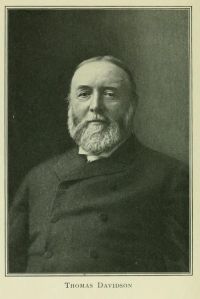
Portrait of Thomas Davidson Thomas Davidson,  Chambers's Twentieth Century Dictionary 1908… (1908)

“ Rout′er-plane, a plane for the bottoms of rectangular cavities; Rout′er-saw; Rout′ing-machine′, a shaping-machine for wood, metal, or stone. [Root.]
Rout, rowt, n. the brent goose. [Ice. hrota.]
Route, rōōt, n. a course to be traversed: a line of march: road: track.—n. Route′-step, an order of march in which soldiers are not required to keep step.—Star route, in the United States, a post route by means other than steam, the blank contracts for which have three groups of four stars.
”
Source: Wikisource

Portrait of E. V. Lucas E. V. Lucas,  Roving East and Roving West

“ The years passed on in swiftness fleet, The road became a village street, And then before men were aware, A city's crowded thoroughfare, And soon the central street was this Of a renowned metropolis. And men two centuries and a half Trod in the footsteps of that calf. Each day a hundred thousand rout Followed the zigzag calf about; And o'er his crooked journey went The traffic of a continent. A hundred thousand men were led By one calf near three centuries dead. ”
Source: Gutenberg

Harold Bayley,  Archaic England

“ Both road and route are the same word as the British rhod, and Latin rota meaning a wheel, and it is likely that the term roadway meant primarily a route along which rotæ or wheels might travel: as rotten would be the ancient plural of rot, Rottenrow may thus simply have meant a roadway for wheeled traffic. According to Borlase the British fighting chariot was a rhod, the rout of this traffic presumably caused ruts upon the route, whence it is quite likely that Rotten Row was a rutty and foul thoroughfare. ”
Source: Gutenberg

Get perspective with Kwize: daily news enlightened by great literature