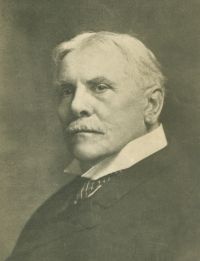
 Martin Luther,
Commentary on the Epistle to the Galatians
(1535)
Martin Luther,
Commentary on the Epistle to the Galatians
(1535)
“ "The Epistle to the Galatians is my epistle. To it I am as it were in wedlock. It is my Katherine." ”
The Epistle to the Galatians, a New Testament letter traditionally ascribed to Paul the Apostle, addresses early Christian communities in Galatia, discussing whether Gentile converts needed to follow Mosaic Law. Paul opposes legalism, stressing belief in Christ rather than ritual practices, a theme essential to Christian doctrine. Scholars such as Martin Luther regarded it as fundamental to Evangelical faith, while George G.
Findlay referred to it as the “charter of Evangelical faith,” underscoring its significance in shaping early Christian identity. J. Gresham Machen emphasized its role in defending Paul’s gospel against Judaizers, presenting it as a key text in New Testament apologetics. This letter continues to serve as a central reference in discussions about law, grace, and the essence of Christian liberty.
Martin Luther,
Commentary on the Epistle to the Galatians
(1535)
“ "The Epistle to the Galatians is my epistle. To it I am as it were in wedlock. It is my Katherine." ”
George G. Findlay, The Expositor's Bible: The Epistle to the Galatians
“ For the spirit of Paul lived again in Luther, as in no other since the Apostle's day. The Epistle to the Galatians is the charter of Evangelical faith.The historical criticism of the present century has brought this writing once more to the front of the conflict of faith. Born in controversy, it seems inevitably to be born for controversy. Its interpretation forms the pivot of the most thoroughgoing recent discussions touching the beginnings of Christian history and the authenticity of the New Testament record. The Galatian Epistle is, in fact, the key of New Testament Apologetics. ”
James Moffatt, 1911 Encyclopædia Britannica, Volume 11… (1911)
“ G. G. Findlay (Expositor’s Bible) . On the historical aspects, Zimmer (Galat. und Apostelgeschichte, 1882) and M. Thomas (Mélanges d’histoire et de litt. religieuse, Paris, 1899, pp. 1-195) are excellent; E. H. Askwith’s essay (Epistle to the Galatians, its Destination and Date, 1899) advocates ingeniously the south Galatian theory, and W. S. Wood (Studies in St Paul’s Epistle to the Galatians, 1887) criticizes Lightfoot. General studies of the epistle will be found in all biographies of Paul and histories of the apostolic age, as well as in works like Sabatier’s The Apostle Paul (pp. 187 f.) ”