“ To press on towards Paris would have been suicidal. To linger in his present position would have been to court capture. He, therefore, began the famous march across the French front, by which he hoped to gain touch with the army on his left, and as he turned, the British and French fell upon him simultaneously, as in a vice. For a day the line wavered irresolutely, then Von Kluck realised that the pendulum of success was beginning to swing the other way. He had to retire or face irretrievable disaster. ”
Erich von Kluck
Definition and stakes
The theme of “Erich von Kluck” has been addressed by authors such as G. H. Perris, Fritz Leiber, Edward Parrott, Francis Rolt-Wheeler and Edmund Dane. It is often associated with terms like army, Paris, artillery, German and British.
Quotes about “Erich von Kluck”
True Stories of the Great War, Volume 3…
“ Among other distinguished men who came to see my Princes and their plays, was General von Kluck—another one of those "great dome heads!" To me, it seemed the best part of his personality, and certainly the development was far superior to what I had named the "German officer head," a crude, unfinished type of head, which gives the impression that the skull has hardened before the brain had time to finish growing. General von Kluck did not talk at all to me, or appear to take any interest in the toy soldiers' battle. ”
The Story of the Great War, Volume III…
“ Meanwhile the French and British generals more effectually concealed their armies in the forests, doing so with such skill that their movements were unmarked by the German air scouts. All that day General von Kluck moved his forces, leaving his heavy artillery with about 100,000 men on the steep eastern bank of the Ourcq and taking 150,000 troops south across the Marne toward La Ferté Gaucher. ”
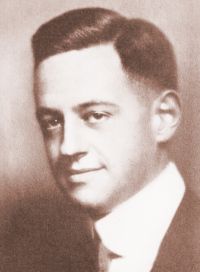 Eric Fisher Wood,
The Note-Book of an Attaché: Seven Months in the War Zone
Eric Fisher Wood,
The Note-Book of an Attaché: Seven Months in the War Zone
“ Von Kluck fought his way to a position approximately defined by a line through Creil, Senlis, Nanteuil-le-Haudouin, and Lizy-sur-Ourg. His cavalry advanced even to Chantilly and Crécy. His army was not intended to have any part in the main German offensive, its sole duty being to protect the German right from any attack in flank which might be prepared and launched from the entrenched camp of Paris. Von Kluck was not to attack Paris, but to protect the Germans from Paris, and this he successfully did. ”
Edmund Dane, The Battle of the Rivers
“ The crossing of such a stream is no easy feat.But General von Kluck did not mind the losses he incurred so long as he achieved his purpose. This was clearly his best policy. In the intervals of desperate fighting his men had to undertake long marches at a breakneck pace. For several days together they were without rest or sleep. To some extent they were aided by the entrenchments already dug to guard against an attack from the west. These positions, prepared to [Pg 98] protect the head of the German chain of armies remaining in contact with Paris, now proved useful in covering the retirement. ”
The Story of the Great War, Volume III…
“ Three guns were smashed to pieces, and the gun carriages were burned. We halted for a few seconds to take breath. And all the time that whistling and banging of the shells continued. It is a wonder one is not driven mad." Admiration cannot be withheld from General von Kluck for his splendid fight at the battle of Coulommiers. He was out-generaled, for one thing, because of his plan—or his orders—to strike a southeasterly blow; he was outmaneuvered by the presence of a vastly larger British force than he had any reason to expect, and he was outnumbered almost two to one. ”
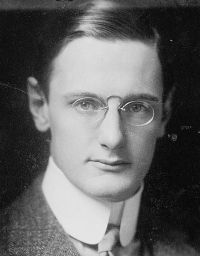 Ralph Pulitzer,
Over the Front in an Aeroplane…
Ralph Pulitzer,
Over the Front in an Aeroplane…
“ He decided to attack Paris. The verdict of the board of generals who were judging the maneuvers contained the severest kind of arraignment of Von Kluck for having violated the cardinal principal of German military strategy by allowing a mere geographical point to divert him from the one paramount object of German generalship—the [76] enemy's army. We actually possess a copy of this official reprimand, for 'tout s'achête' (there is nothing that money will not buy) , you know. ”
The Marne Battle-fields (1914)
“ The Germans became more and more anxious, and rightly so, at the turn events were taking on their right where Von Kluck's army was beginning to be tightly squeezed between the armies of General Maunoury, the British and General Franchet d'Esperey. Von Kluck was forced to retreat and, in doing so, left exposed Von Bulow's army. The armies of Von Bulow and Von Hausen received orders to crush Foch and break through the French centre at all costs, so as to be able to turn Franchet d'Esperey's army on the west, and that of Langle de Cary on the east. ”
The Story of the Great War, Volume III…
“ What is of importance is the strategical object. The strategical object is the essential, the geographical object is only accessory. Once the essential object is attained, the accessory object is acquired of itself. Once the French armies had been beaten, thrown back, and dispersed, Von Kluck could return to the capital and take it easily. Conceive of him, on the other hand, attacking the capital with the army of Manoury on his right, which constituted a serious menace to his left, and in front or him the British army and the Fifth French Army ”
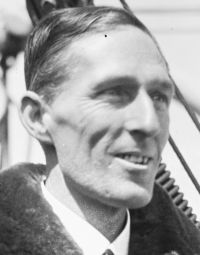 Philip Gibbs,
The Soul of the War
Philip Gibbs,
The Soul of the War
“ The failure of the German centre was the gravest disaster, and threatened von Kluck with the menace of an enveloping movement by the Allied troops which might lead to his destruction, with the flower of the Imperial troops. Away back there on the Aisne were impregnable positions tempting to hard-pressed men. Leaving nothing to chance, the Germans had prepared them already in case of retreat, though it had not been dreamed of then as more than a fantastic possibility. The fortune of war itself as well as cautious judgment pointed back to the Aisne for safety. ”
Francis Rolt-Wheeler, The Wonder of War on Land
“ Modern warfare has horrors heretofore unknown, with liquid fire, poison gas, and explosive fumes. Yet after all, it is the spirit of the soldier which counts most.Von Kluck's strategy was clear. He sent one corps to engage the jointure between the French and English lines—always a weak spot because of the division of command. He threw three army corps against the one and a half of the British, not trying to throw them back, but merely to keep them in action every minute of the time. ”
Various, Punch, or the London Charivari…
“ He's very unforgiving, you know. You don't care? But, my dear dead General Von Kluck, you must care. What is it you say you wanted to do? Congratulate me? What on? My splendid defence of the Hindenburg line? Now, look here. As one German General to another do you mean to tell me you believe in the Hindenburg line? No, of course you don't. You thought I believed in it? Was that what you said? Come, don't wriggle, though you are a dead man. Yes, that was what you said. Well, then understand henceforth that there is no Hindenburg line and there never was anything of the sort. ”
Edmund Dane, The Battle of the Rivers
“ Like a well-tempered sword, it is at once more flexible yet more unbreakable than an inferior weapon. [Pg 31] Against an inferior army the tactics of General von Kluck must infallibly have succeeded. Against such a military weapon as the British force at Mons they were foredoomed to failure. Assuming the British army to be inferior, General von Kluck threw the full weight of his troops upon it before he had tried its temper. ”
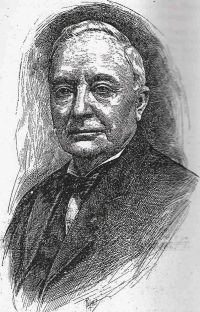 Joseph G. Butler,
A Journey Through France in War Time
Joseph G. Butler,
A Journey Through France in War Time
“ At this time the Allied lines swung like a huge gate from Verdun west toward the sea, barring the Kaiser's passage. The Germans then had a million of men, with hordes of the famous lancers, and clouds of these horsemen hung on the right flank of the English, swinging out and around them so as to force Sir John French to fall back or suffer the turning of his flank. Von Kluck was in command of this turning movement, which was made possible by the fall of Namur, Lille and Charleroi. Things then looked desperately bad for the Allies. ”
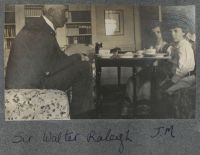 Sir Walter Alexander Raleigh,
The War in the Air; Vol. 1
Sir Walter Alexander Raleigh,
The War in the Air; Vol. 1
“ When the reports are systematically mapped out, day by day, they give a fairly accurate picture of the German advance and throw light on the German plans. General von Kluck speaks more than once of driving the British army before him, but the complete map of the German movements, as they were reported day by day from the air, shows that his predominant idea was to envelop them. Always the crab-like claw is seen extended to the west and beginning to close in on the line of the British retreat; always the British army is already at a point farther south on the line, out of the reach of the claw. ”
Various, Punch, or the London Charivari…
“ The fact was that VON KLUCK did not think the British were unbeaten. He could not conceive that men who had just endured such a harassing experience as the seven days' continuous retreat could possibly be in a condition to turn and fight. Not for the first or last time in the War German psychology was woefully at fault. Whether General MAURICE'S theory is correct or not, it is most attractively set forth, and, thanks to the excellent; maps with which the volume is provided, can be easily followed even by the non-military reader. ”
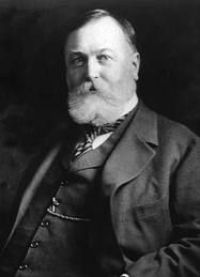 Clarence W. Barron,
The Audacious War
Clarence W. Barron,
The Audacious War
“ A fresh force of 50,000 held in reserve near Paris flew by motors and motor-busses against the right wing of Von Kluck, which the English in retiring had been punishing so heavily. Von Kluck had been drawn too far into France with no support on his left from the army of the Crown Prince, which the French had held at bay but with a tremendous sacrifice of men. ”
Arthur Corbett-Smith, The Retreat from Mons
“ What can four battered regiments, fighting by handfuls, do in face of such thousands of a fresh army corps! From Maroilles right down the line the British are fighting for their lives, for von Kluck has staked heavily on this throw, and it would seem that the dice are loaded. He pushes his guns up still closer until some are firing into the town almost at point-blank range. Again, what does it matter if his own men are swept away? There are thousands more to fill their places. ”
The Story of the Great War, Volume 2
“ Von Kluck was compelled to mark time in his impetuous march on Central Belgium. His losses had been heavy. Support in strength seemed urgent. But this need passed as the Liege forts fell one after the other under the fire of the German siege guns. General von Hausen was released for action elsewhere. Thus we may assume, he was ordered to follow the armies of the Duke of Württemberg and crown prince down through the Ardennes to strike the Meuse south of Namur. ”
The Story of the Great War, Volume III…
“ Some tense interest was roused among the men as British aeroplanes rose to encounter the German aircraft. It was the first real battle of the sky they had witnessed. General French's cavalry patrols now brought information that the woods were thick with German troops, some of them deploying eastward toward their right at Binche. At twenty minutes to one the first shots swept from the woods upon the British line. Presently, Von Kluck's main attack developed with great rapidity. The German artillery was brought to the front edge of the woods to hurl a storm of shells on the British trenches. ”
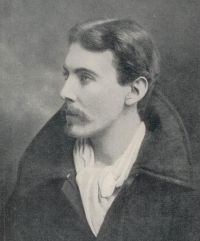 Geoffrey Winthrop Young,
From the Trenches: Louvain to the Aisne…
(1914)
Geoffrey Winthrop Young,
From the Trenches: Louvain to the Aisne…
(1914)
“ That Von Kluck, if it is still Von Kluck on the German right, is alive to its importance, [Pg 244] there is evidence in the strong reinforcements constantly thrust out towards the line Paris-Amiens, to anticipate the French movements, and in the vigour of the offensive which is pushing out to the west of Noyon. The conflicts between the patrols and our flying mitrailleuse-cars have made a distraction in the north to the unvarying character of reports from the long and terrible ding-dong battle on the Aisne and Oise. ”
Ralph Marlow, The Big Five Motorcycle Boys on the Battle Line…
“ Then when the sudden alteration came about in the plans of Von Kluck, and his army turned aside from Paris so as to save its exposed flank, the one thought in the mind of the general was to save those wonderful guns, without which all his work would be for naught.It was for this purpose that these desperate rearguard actions were being undertaken by the retreating Germans. Some of the big guns were drawn by traction engines, and their progress even over good roads must necessarily be very slow. ”
De Lysle F. Cass, The Airship Boys in the Great War…
“ The severe guerrilla fighting which had nearly turned the Ardennes region into a shambles had then ceased almost entirely, while General von Kluck, commanding the German army of the west, was endeavoring to force the arms of his crescent battle line westward in [89] around the Allied forces and by so doing compel them either to be surrounded and captured, or else to fall back upon Paris once more. ”
The Marne Battle-fields (1914)
“ Those running in the streets were held up by the police, and the occupants made to alight. When the latter learned the reason, instead of grumbling, they gave a rousing cheer. Eleven hundred taxis made the journey twice during the night from Paris to the front transporting, in all, eleven thousand men.Unfortunately, the effect of these reinforcements was fully counterbalanced by the troops which Von Kluck had brought up on the two previous days from before the British front, and only the extreme tenacity and courage of his troops enabled Maunoury to avoid being outflanked. ”
Richard Joseph Beamish, History of the World War
“ The news of this great triumph reached Berlin upon the anniversary of the battle of Sedan, and on the same day that the news came from the west that von Kluck had reached the gates of Paris and it had a profound effect upon the German mind. They had grown to believe that the Germans were a sort of superman; these wonderful successes confirmed them in this belief.No longer did they talk of a mere defense in the east; an advance on Warsaw was demanded and von Hindenburg was acclaimed the greatest soldier of his day. ”
The Marne Battle-fields (1914)
“ Fronting the British, there was now only a thin curtain of troops taken from two of the German army corps opposed to Franchet d'Esperey.This small force fought with great stubbornness, in order, if possible, to give Von Kluck time to crush Maunoury, before the advance by the British and Franchet d'Esperey could become really dangerous. [Pg 10] VON BULOWThe slow progress effected in the British sector is explained by the extreme fierceness of the struggle. ”
Edward Parrott, The Childrens' Story of the War…
“ In some respects this position was stronger than the line of heights, for there was little or no cover for troops advancing upon it. Still farther to the east the German line rested on the Argonne, where the army of the Crown Prince was operating. Along this front, which was more than a hundred miles in length, two million men were now to engage.Von Kluck was opposed by the 5th and 6th French Armies and the British army. The 6th French Army lay between Soissons and the Oise. Its left wing was extended along the Oise, in case von Kluck should attempt, as of old, to envelop the Allies' left. ”
Arthur Corbett-Smith, The Retreat from Mons
“ To that extent, then, had von Kluck succeeded in his scheme. The First Corps were temporarily out of action; the French, as the Commander-in-Chief remarks, "were unable to afford any support on the most critical day of all"; and to the Second Corps was left the task of withstanding the whole German attack, designed to outflank them on the left and roll them up. And the odds against them were, as at Agincourt, "five to one"; in guns, more than six to one. ”
The Story of the Great War, Volume 2
“ The troops were eager to get to work with the bayonet, and greatly aided by their field artillery, in which mobility had been sacrificed to power, they quickly cleared the hills to the westward of the Ourcq. By nightfall of September 5, 1914, the country west of the Ourcq was in French hands. But to cross that river seemed impossible. General von Kluck's heavy artillery had been left behind to hold that position, and every possible crossing was covered with its own blast of death. ”
Philip Gibbs,
The Soul of the War
“ But all retirements are costly when the enemy follows close, and the rearguard of Von Kluck's army was in a terrible plight and suffered heavy losses. The French light artillery opened fire in a running pursuit, advancing their guns from position to position with very brief halts, during which the famous soixante-quinze flung out shells upon bodies of troops at close range—so that they fell like wheat cut to pieces in a hailstorm. The British gunners were pushing forward, less impetuously but with a steady persistence, to the west of the River Ourcq, and after all their hardships ”
Related terms
Authors who wrote about “Erich von Kluck”
G. H. Perris Fritz LeiberEdward ParrottFrancis Rolt-WheelerEdmund DanePhilip Gibbs
 William Le QueuxArthur Corbett-SmithJoseph G. ButlerRalph MarlowSir Walter Alexander Raleigh
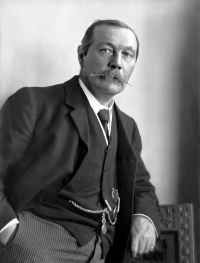 Arthur Conan DoyleRichard Joseph BeamishVariousDe Lysle F. CassGeoffrey Winthrop YoungClarence W. BarronRalph PulitzerEric Fisher Wood
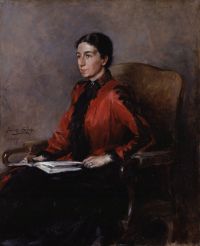 Mrs. Humphry Ward
Fritz LeiberEdward ParrottFrancis Rolt-WheelerEdmund DanePhilip GibbsWilliam Le QueuxArthur Corbett-SmithJoseph G. ButlerRalph MarlowSir Walter Alexander RaleighArthur Conan DoyleRichard Joseph BeamishVariousDe Lysle F. CassGeoffrey Winthrop YoungClarence W. BarronRalph PulitzerEric Fisher WoodMrs. Humphry Ward