
Erythrina

Definition and stakes

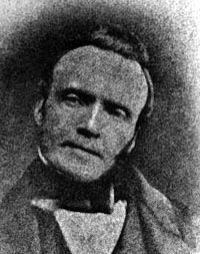
Portrait of H. B. Guppy H. B. Guppy,  Observations of a Naturalist in the Pacific Between 1896 and 1899…

“ There is abundant evidence in support of the dispersal of the genus by currents. I have observed the seeds of Erythrina indica on the beaches of Keeling Atoll. Schimper noted Erythrina seeds amongst the stranded drift of the Java Sea. Treub remarked young plants of the genus growing on the shore of Krakatoa three years after the great eruption, and Penzig places Erythrina indica and E. ovalifolia amongst the beach-plants brought to Krakatoa through the agency of the currents. ”
Source: Gutenberg

Anonymous,  The Periplus of the Erythræan Sea (1912)

“ Periplus was the name applied to a numerous class of writings in Roman times, which answered for sailing-chart and traveler's hand-book. The title might be rendered as "Guide-Book to the Erythraen Sea."
Title. Erythraean Sea was the term applied by Greek and Roman geographers to the Indian Ocean, including its adjuncts, the Red Sea and the Persian Gulf. Erythra means Red, so that the modern name perpetuates the ancient; but we are assured by Agatharchides that it means, not Red Sea, but Sea of King Erythras, following a Persian legend.
”
Source: Wikisource

Frank E. Beddard,  The Cambridge natural history, Vol… (1901)

“ Some species have a very wide geographical range.
Polynoë. [370] —The body is short; none or only a few segments at the end of the body are uncovered by the elytra, except in the long body of P. johnstoni.
A. With twelve pairs of elytra.—In P. squamata Linn. the elytra entirely cover the body and conceal the head, each elytron overlapping the next posterior one, and those of the two sides overlapping. General colour sandy-brown, speckled, lighter or darker. The fringed elytra are very firmly fixed to the body. The notopodial chaetae scarcely project from below the elytra.
”
Source: Gutenberg

Get perspective with Kwize: daily news enlightened by great literature