Carnarvon

Definition and stakes

E. M. Wilmot-Buxton,  Peeps at many lands: Wales (1911)

“ It was at Carnarvon Castle, which guards the entrance to “Snowdonia,” that the little Prince was born who was presented by Edward I. to the Welsh chieftains upon a shield as a “Prince of Wales who could not speak a word of English.” And nowadays Carnarvon is, perhaps, the best starting-point from [11] which to take a glimpse of this wild and mountainous district.
Behind us, as we look towards the mountains, lie the Menai Straits, spanned by the fine suspension bridge, so strong and yet so fairy-like with its arches of Anglesey marble, that it has been called a “poem in stone and iron.”
”
Source: Gutenberg

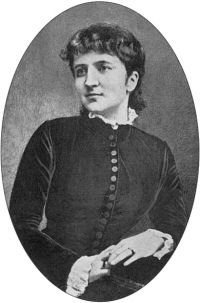
Portrait of May Agnes Fleming May Agnes Fleming,  A Terrible Secret: A Novel

“ The pretty, picturesque town of Carnarvon, in North Wales, was to be the nest of the turtledoves during the honeymoon—then away to the Continent, then back for the Christmas festivities at Catheron Royals.
Catheron Royals was fast becoming a palace for a princess—its grounds a sort of enchanted fairy-land. Edith walked through its lofty, echoing halls, its long suites of sumptuous drawing-rooms, libraries, billiard and ball rooms.
”
Source: Gutenberg

Charles Oman, Albert Pollard, Samuel Gardiner, Spencer Walpole and Hugh Chisholm,  1911 Encyclopædia Britannica (1911)

“ In the autumn of 1885 it was doubtful what course the Irish Nationalists would take. It was generally understood that Lord Carnarvon, who had been made viceroy of Ireland, had been in communication with Parnell; that Lord Salisbury was aware of the interviews Home Rule. which had taken place; and it was whispered that Lord Carnarvon was in favour of granting some sort of administrative autonomy to Ireland. Whatever opinion Lord Carnarvon may have formed—and his precise view is uncertain—a greater man than he had suddenly arrived at a similar conclusion. ”
Source: Wikisource

Get perspective with Kwize: daily news enlightened by great literature