Faubourg Saint-Honoré

Definition and stakes

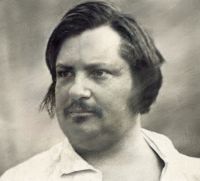
Portrait of Honoré de Balzac Honoré de Balzac Father Goriot (1835)

To set foot in the Vicomtesse de Beauseant’s house in the Faubourg Saint-Germain; to fall on your knees before a Comtesse de Restaud in the Chaussee d’Antin; to look at one glance across a vista of Paris drawing-rooms, conscious that, possessing sufficient good looks, you may hope to find aid and protection there in a feminine heart! To feel ambitious enough to spurn the tight-rope on which you must walk with the steady head of an acrobat for whom a fall is impossible, and to find in a charming woman the best of all balancing poles.
Source: Gutenberg

Portrait of Honoré de Balzac Honoré de Balzac The Collection of Antiquities (1839)

Such a young fellow is sure of an admirable reception in houses where there are marriageable daughters, fair but portionless partners at dances, and young married women who find that time hangs heavy on their hands. So the world, smiling, beckoned him to the foremost benches in its booth; the seats reserved for marquises are still in the same place in Paris; and if the names are changed, the things are the same as ever.
In the most exclusive circle of society in the Faubourg Saint-Germain, Victurnien found the Chevalier's double in the person of the Vidame de Pamiers.
Source: Wikisource

vicomte de François-René Chateaubriand The Memoirs of François René Vicomte de Chateaubriand sometime Ambassador to England…

On the next day, the Faubourg Saint-Germain arrived; everything concerned itself with the nomination, already obtained, of Fouché: religion as well as impiety, virtue as well as vice, the Royalist as well as the Revolutionary, the foreigner as well as the Frenchman; on every hand the cry was heard:
"No safety for the King without Fouché; no salvation for France without Fouché: he alone has saved the country, he alone can complete his work."
Source: Gutenberg

Get perspective with Kwize: daily news enlightened by great literature