“ Article 8 The Tagsatzung manages the affairs of the Confederacy, which are conferred upon it by the sovereign cantons, according to the provisions of the Federal Treaty. It consists of the ambassadors of the XXII cantons, that vote in accordance with their instructions. Every canton has one vote, which is expressed by an ambassador. It convenes in the capital city of the respective Vorort, normally every year on the first Monday in July, abnormally when the Vorort calls it, or at the desire of five cantons. ”
Five Cantons
Definition and stakes
The theme of “Five Cantons” has been addressed by authors such as Boyd Winchester, Federal Administration of Switzerland, Frederic Austin Ogg, William Augustus Brevoort Coolidge and J. N. Larned. It is often associated with terms like Canton, Constitution, Swiss, legislature and council.
Quotes about “Five Cantons”
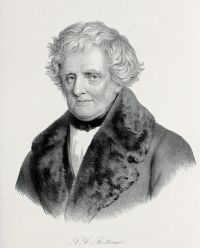 Johann Jakob Hottinger,
The Life and Times of Ulric Zwingli
Johann Jakob Hottinger,
The Life and Times of Ulric Zwingli
“ Moreover, the ignorance of the Five Cantons, in everything that belongs to government, is a reason why we must separate from them; for, if brothers keep house together, and one of them does nothing and only squanders, then they must divide, or the spendthrift will bring them all to poverty."But, that they cannot govern, is proved by all their proceedings in the German and French bailiwicks. In the French cantons they have ruined the bailiwicks by taking bribes for sentences and appeals and doing it so scandalously, that no honest man can see or hear it without great pain. ”
Johann Jakob Hottinger,
The Life and Times of Ulric Zwingli
“ All, with the exception of Freiburg, were present at it. A resolution was now passed to send an embassy to Luzern and into the Five Cantons, praying for the abandonment of a connection, which would necessarily shake the Confederacy to its very foundations. This embassy of the seven states was joined by delegates from the allied cities of St. Gall, Chur, Muehlhausen and Biel. ”
Various, The historians' history of the world in twenty-five volumes… (1905)
“ The democratical cantons, where the assembled population exercised the supreme power in their landsgemeinde, held the lowest station, in almost every respect, amongst the confederates. Narrowness of mind and ignorant hatred of all innovation withstood every proposal of improvement ”
 Frederic Austin Ogg,
The Governments of Europe
Frederic Austin Ogg,
The Governments of Europe
“ It consists of forty-four members, two chosen within each canton; and to this extent it indeed resembles the Senate. The manner of election and the qualifications of members, however, as well as tenure of office and the arrangements made for remuneration, are not regulated, as are (p. 428) similar matters in the United States, by the constitution, or by federal authority, but, on the contrary, are left entirely to be determined by the individual cantons. The consequence is a total lack of uniformity in these highly important matters. In some cantons members are elected by popular vote ”
 Boyd Winchester,
The Swiss Republic
(1891)
Boyd Winchester,
The Swiss Republic
(1891)
“ The national government has steadily extended its influence, every step increasing the authority of the nation at the expense of the cantonal independence; a steady growth in national feeling, a constant drift towards a stronger federal government. Many branches of legislation have been taken away from the Cantons, which under the constitution of the United States adhere to the States. ”
J. N. Larned, History for ready reference, Volume 1…
“ That they have been ratified by the people, and may be amended whenever the majority of all the citizens demand it. ARTICLE 7. All separate alliances and all treaties of a political character between the Cantons are forbidden. On the other hand the Cantons have the right to make conventions among themselves upon legislative, administrative or judicial subjects; in all cases they shall bring such conventions to the attention of the federal officials, who are authorized to prevent their execution, if they contain anything contrary to the Confederation, or to the rights of other Cantons. ”
J. N. Larned, History for ready reference, Volume 2…
“ The original nucleus of the State, however, was German, and even now three-fourths of the population are German. The twenty-two distinct states are federated under one president elected annually, and the Federal Assembly of two chambers. ... Each of the cantons is sovereign and independent, and has its own local parliament, scarcely any two being the same, but all based on universal suffrage. Each canton has its own budget of revenue and expenditure, and its own public debt. ”
Boyd Winchester,
The Swiss Republic
(1891)
“ The Cantons have deep-rooted and peculiar local institutions, in many cases of great vitality; laws handed down traditionally from generation to generation, often without having ever been committed to paper, much less to print. Until 1848 there was not one written and accepted cantonal constitution. ”
Frederic Austin Ogg,
The Governments of Europe
“ Powers Vested Exclusively in the Confederation.—Within the text of the constitution the division of powers between the federal and the cantonal governments is minute, though far from systematic. The clearest conception of the existing arrangements may perhaps be had by observing that provision is made for three principal categories of powers: (1) those that the Confederation has an exclusive right to exercise, some being merely permissive, others obligatory; (2) those which the Confederation is required, or allowed, to exercise in concurrence with the cantons ”
William Augustus Brevoort Coolidge, 1911 Encyclopædia Britannica (1911)
“ The canton is divided into 13 administrative districts, which comprise 166 communes. The cantonal constitution was little advanced till 1907 when it was entirely remodelled. The legislature (Grand Conseil or Gross Rath) is composed of members elected in the proportion of one for every 1000 (or fraction over 500) citizens, and holds office for four years. The executive (Conseil d’Etat or Staatsrath) is composed of five members, named by the Grand Conseil, and holds office for four years. ”
“ Article 4 In case of external or internal danger, every canton has the right to demand a loyal attitude from its Confederates. When troubles break out in one canton, the government in question may urge the help of the other cantons, but the Vorort should be notified immediately; in case of an enduring danger, the Tagsatzung will, at the request of the government in question, take additional measures. ”
 Arthur Charles Fox-Davies,
A Complete Guide to Heraldry
(1909)
Arthur Charles Fox-Davies,
A Complete Guide to Heraldry
(1909)
“ Both a cross and a saltire are sometimes described as "cantonned" by such-and-such charges, when they are placed in the blank spaces left by these ordinaries. In addition, the spaces left by a cross (but not by a saltire) are frequently spoken of e.g. as the dexter chief canton or the sinister base canton. The canton is frequently used to carry an augmentation, and these cantons of augmentation will be referred to under that heading, though it may be here stated that a "canton of England" is a canton gules, charged with three lions passant guardant or, as in the arms of Lane (Plate II.) . ”
Boyd Winchester,
The Swiss Republic
(1891)
“ It fixes the rate of troops and taxes for federal purposes; gives every Canton the right to demand defence against internal and external force; provides for the settlement of disputes between the Cantons; puts an end to all dependent [Pg 41] territory and exclusive possession of rights by a class of citizens; and continues the old plan of having a Vorort. Military capitulations and conventions concerning affairs of police or public economy may be made by single Cantons, provided they oppose no federal principles, nor existing league, nor cantonal rights. ”
1911 Encyclopædia Britannica (1911)
“ A man settling in another canton was, after a residence of three months only, given all cantonal and. communal rights, save a share in the common property (an arrangement which as far as possible kept up the old principle that the “commune” is the true unit out of which cantons and the Confederation are built) , and the membership of the commune carries with it cantonal and federal rights. The “Referendum” was introduced in its “facultative” form; i.e. all federal laws must be submitted to popular vote on the demand of 30,000 Swiss citizens or of eight cantons. ”
1911 Encyclopædia Britannica (1911)
“ In France, the canton, which is a subdivision of the arrondissement, is a territorial, rather than an administrative, unit. The canton, of which there are 2908, generally comprises, on an average, about twelve communes, though very large communes are sometimes divided into several cantons. ”
William Augustus Brevoort Coolidge, 1911 Encyclopædia Britannica, Volume 24… (1911)
“ One thousand citizens have the right of " initiative " as to legislative projects and important financial matters as well as to the revision of the cantonal constitution. Since 1895 the " obligatory referendum " for all legislative projects has prevailed, as well as a curious institution (formerly existing in several cantons) by which the legislature can consult the people on certain questions involving principles and not merely on fully drafted legislative projects. ”
J. W. Sullivan, Direct Legislation by the Citizenship through the Initiative and Referendum
“ Cantonal law governing their election, the tenure of their office is not the same: in some cantons they are elected by the people, in others by the legislature; their pay varies; their term of office ranges from one to three years. Their brief terms and the fact that their more important functions, such as the election of the federal executive council, take place in joint session with the second chamber, render the members of the "upper" house of less weight in national affairs than those of the "lower." ”
the New comittee of Constitution, said “Sieyès-Thouret Comittee”, Report on the bases of proportional representation
“ The population being unevenly distributed, one must not doubt that it will be in a great number of cantons below 4,000 individuals, and 680 voters: but what will be lacking in the average rate in the less populated cantons, will be found in excess in those which will be more populated, and will be used by means of the formation of double, triple or quadruple primary assemblies in these more populated cantons. ”
J. W. Sullivan, Direct Legislation by the Citizenship through the Initiative and Referendum
“ In no canton in Switzerland is there more than one legislative body: in none is there a senate. The cities of Switzerland have no mayor, the cantons have no governor, and, if the title be used in the American sense, the republic has no President. Instead of the usual single executive head, the Swiss employ an executive council. Hence, in every canton a deadlock in legislation is impossible, the way is open for all law demanded by a majority, and neither in canton nor Confederation is one-man power known. ”
Federal Administration of Switzerland, Swiss Federal Constitution of 1874 (1874)
“ The Cantons shall remain responsible, in particular, for fixing tax scales, tax rates and tax-free amounts. (3) In legislating on the principles for direct cantonal and communal taxes and in legislating for direct federal taxes, the Confederation shall take account of the efforts of the Cantons to achieve fiscal harmonization. The Cantons shall be granted an adequate period to adjust their fiscal legislation. (4) The Cantons shall cooperate in the drafting of the federal legislation.Article 43 [Citizenship, Right to Vote] (1) Every citizen of a Canton is a Swiss citizen. ”
Boyd Winchester,
The Swiss Republic
(1891)
“ In some Cantons the members must be divided as far as practicable among the several electoral districts. In all the Cantons this executive power is collegiate,—that is, not vested in a single individual, but in a commission. ”
Boyd Winchester,
The Swiss Republic
(1891)
“ Every Canton was a distinct body, independent from any other, and exercising the sovereign power within itself; looking upon the rest as mere allies to whom it was bound only by such acts to which it had consented, and when any new thing not comprehended in this agreement happened to arise, each Canton retained the power of determining the matter for itself. The idea that the minority of Cantons was bound by the decision of the majority took root slowly, and internal affairs depended for settlement on remonstrance and mediation. ”
The European Concert in the Eastern Question (1885)
“ Il y aura dans chacun de ces arrondissements un agent administratif nommé par le Gouverneur et choisi dans le rite dominant, soit par le chiffre de la population, soit par l'importance de ses propriétés. Cantons. Art. IV. Les arrondissements administratifs seront divisés en cantons, dont le territoire sera à peu prés réglé sur celui des anciens Aklims. À la tête de chaque canton il y aura un agent nommé par le Gouverneur, sur la proposition du chef de l'arrondissement, et à la tête de chaque village un cheikh choisi parmi les habitants et nommé par le Gouverneur. Equal rights. Art. ”
William Henry Hurlbert, France and the Republic
“ Republican Switzerland has carefully sought to protect herself against this form of government. The Swiss Constitution of 1874 reposes ultimately on the ancient autonomy of the Cantons. Each Canton has one representative in the Federal Executive Council. The members of this Council are elected for three years by the Federal Assembly, and from among their own number they choose the President of the Confederation, who serves for one year only—a provision probably borrowed from the first American Constitution. ”
John Hall, England and the Orléans Monarchy
“ The repercussion of the revolution of 1830, in France, was acutely felt in Switzerland, and, about that time, the cantonal constitutions were revised in a democratic spirit. Some nine years later, however, the Conservatives, by raising the cry that religion was in danger, succeeded in many of the Cantons in regaining their lost power. The victorious party made no attempt, even in those Cantons where their ascendency was the most complete, to repeal the Liberal legislation of the past few years. ”
1911 Encyclopædia Britannica (1911)
“ Every Canton must treat Swiss citizens who belong to one of the Christian confessions like their own citizens, for the right of free settlement is given to all such, though they acquired no rights in the “Commune.” All Christians were guaranteed the exercise of their religion, but the Jesuits and similar religious orders were not to be received in any canton. German, French and Italian were recognized as national languages. The constitution as a whole marked a great step forward; though very many rights were still reserved to the cantons, yet there was a fully organized central government. ”
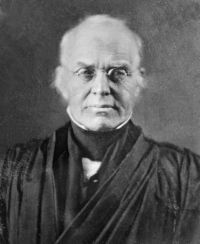 Joseph Story,
Commentaries on the Constitution of the United States
(1833)
Joseph Story,
Commentaries on the Constitution of the United States
(1833)
“ In Switzerland, where the union is very slight, it has been found necessary to provide, that each canton shall be obliged to allow a passage, to merchandise through its jurisdiction into other cantons without an augmentation of tolls. ”
the New comittee of Constitution, said “Sieyès-Thouret Comittee”, Report on the bases of proportional representation
“ When it is necessary to regenerate half of each communal administration, the primary assemblies shall be formed in the cantons to appoint their electors, at the rate of one for every hundred voters; and these electors shall proceed to the replacements, sending back to the communal administration as many members of each canton as will have left it. ”
Boyd Winchester,
The Swiss Republic
(1891)
“ But there is no efficient instrumentality for the enforcement of the decrees of the Federal Council against the Cantons in these cases. If a Canton adopts a measure which the Council on appeal holds to be unconstitutional, and it declines to conform to the Council’s order, the latter has no direct way of enforcing it. The two methods of coercing a refractory Canton, so far tried, have been,—to send a special agent to negotiate with the cantonal authorities, and should his efforts fail, to quarter troops and the expense of their maintenance upon the offending Canton, until it yields ”
Frederic Austin Ogg,
The Governments of Europe
“ In the event of disputes between cantons, the questions at issue are required to be submitted to the federal government for decision, and the individual canton must refrain absolutely from the use of violence, and even from military preparation. ”
Boyd Winchester,
The Swiss Republic
(1891)
“ Many of the Cantons changed from oligarchies to democracies, many rose from the rank of subjects to the rank of confederates; in all, their institutions rested on an ancient and immemorial groundwork of Communes; and whatever is new in them has grown naturally and consistently out of the old. ”
Boyd Winchester,
The Swiss Republic
(1891)
“ Then these grand and subdivisions have an entirely different significance, as applied to federal or cantonal questions; a Radical as to the one, may be a Conservative as to the other. The Radical and Conservative of the Canton of Vaud is by no means the same as the Radical and Conservative of the Cantons of Zurich and Aargau; the Radical of Geneva is very different from the Radical of St. Gallen. The two parties are not distinguished from each other by any systematic respect or disrespect for cantonal independence. ”
Related terms
Authors who wrote about “Five Cantons”
Boyd WinchesterFederal Administration of SwitzerlandFrederic Austin OggWilliam Augustus Brevoort CoolidgeJ. N. LarnedJ. W. SullivanVariousJohann Jakob Hottingerthe New comittee of Constitution…Arthur Charles Fox-DaviesWilliam Henry HurlbertJohn HallJoseph StoryNathaniel Hillyer EglestonJ. E. MayerProject Gutenberg Henry Rowe Schoolcraft
 J. M. Robertson
 Francis Parkman