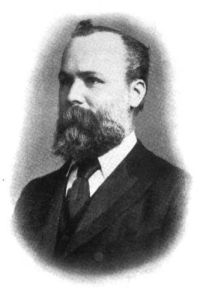
Friedrich Wilhelm Bessel

Definition and stakes

Arthur Berry A Short History of Astronomy

The theory of the “reduction” of observations (chapter X., § 218) was first systematised and very much improved by Friedrich Wilhelm Bessel (1784-1846) , who was for more than thirty years the director of the new Prussian observatory at Königsberg. His first great work was the reduction and publication of Bradley’s Greenwich observations (chapter X., § 218) . This undertaking involved an elaborate study of such disturbing causes as precession, aberration, and refraction, as well as of the errors of Bradley’s instruments.
Source: Gutenberg

Portrait of H. G. Wells H. G. Wells Tales of the Unexpected

And ever an envious applauding multitude poured after their successful fellow as he went upon his glorious career.
For that, it would seem, must be the life of these bodiless things of this world that is the shadow of our world. Ever they watch, coveting a way into a mortal body, in order that they may descend, as furies and frenzies, as violent lusts and mad, strange impulses, rejoicing in the body they have won. For Mr Bessel was not the only human soul in that place.
Source: Gutenberg

Portrait of Eugène Lagrange Eugène Lagrange Popular Science Monthly (1885)

Frederick William Bessel, one of the most eminent astronomers of the nineteenth century, had been destined by his father to become a merchant, and the young man, who had a strong distaste for Latin and considerable fondness for mathematics, engaged in his studies with relish, but did not particularly distinguish himself in them. When fifteen years of age, on the 1st of January, 1799, he began his apprenticeship to the merchant's career in a large commercial house of Bremen, with a good-will. No one, and himself least of all, would have dreamed then of his ever becoming celebrated.
Source: Wikisource

Get perspective with Kwize: daily news enlightened by great literature