Gaelic languages

Definition and stakes

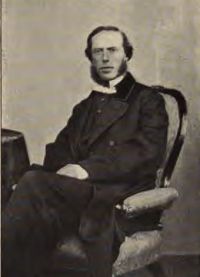
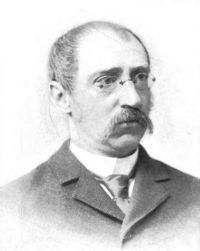
Portrait of Alexander MacBain Alexander MacBain,  An Etymological Dictionary of the Gaelic Language (1911)

“ The Gaelic languages—Irish, Manx, and Scottish Gaelic—have a much closer connection with one another than the Brittonic languages. Till the Reformation and, indeed, for a century or more thereafter, the Irish and Scottish Gaelic had a common literary language, though the spoken tongues had diverged considerably, a divergence which can be traced even in the oldest of our Gaelic documents—the Book of Deer. ”
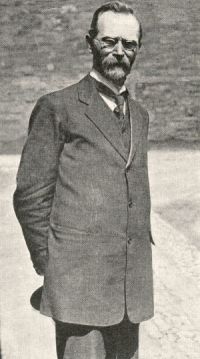
Source: Wikisource

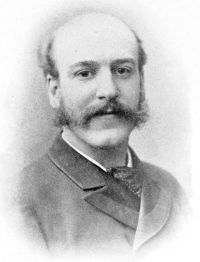
Portrait of Alexander MacBain Alexander MacBain,  An Etymological Dictionary of the Gaelic Language (1911)

“ Gaelic belongs to the Celtic group of languages, and the Celtic is itself a branch of the Indo-European or Aryan family of speech; for it has been found that the languages of Europe (with the exception of Turkish, Hungarian, Basque, and Ugro-Finnish) , and those of Asia from the Caucasus to Ceylon,1 resemble each other in grammar and vocabulary to such an extent that they must all be considered as descended from one parent or original tongue. This parent tongue is variously called the Aryan, Indo-European, Indo-Germanic, and even the Indo-Celtic language. ”
Source: Wikisource

Portrait of Eoin Mac Neill Eoin Mac Neill,  Phases of Irish History

“ The Gaels occupied Ireland as a conquering and dominant people. During the early centuries of their occupation, whatever language or languages had been spoken in Ireland before them completely disappeared as languages, leaving no doubt some traces behind in the names of places, etc., and probably also influencing to some degree the Gaelic language itself. But for a long time there was nothing like a complete fusion of the old and the new population. ”
Source: Gutenberg

Get perspective with Kwize: daily news enlightened by great literature