George Rodney, 1st Baron Rodney

Definition and stakes

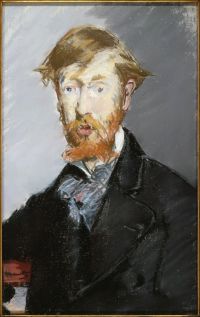
Portrait of George Moore George Moore,  The Untilled Field

“ In those days his only regret was that he had not the necessary threepence to go to the cafe. "One can't go to the cafe without threepence to pay for the harmless bock, and if one has threepence one can sit in the cafe discussing Carpeaux, Rodin, and the mysteries, until two in the morning, when one is at last ejected by an exhausted proprietor at the head of numerous waiters."
Rodney's resolutions were not broken; he had managed to live for nearly a year in Paris upon fifty pounds, and when he came to the end of his money he went to London in search of work.
”
Source: Gutenberg

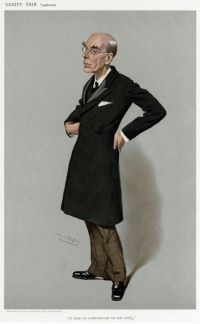
Arthur Thomas Malkin,  The Gallery of Portraits: with Memoirs…

“ The Admiralty sent an express, to endeavour to recall their unlucky step; but it was too late. Rodney landed at Bristol, and closed his career of service, September 21, 1782. He was received with enthusiasm, raised to the peerage by the title of Baron Rodney, and presented with an additional pension of £2000 per annum. From this time he lived chiefly in the country, and died May 23, 1792, in the seventy-fifth year of his age. He was twice married, and left a numerous family to inherit his well-earned honours and rewards. ”
Source: Gutenberg

Portrait of George Moore George Moore,  The Untilled Field

“ His father had never himself thought to draw, but he had always taken an interest in sculpture and painting, and he had said before Rodney was born that he would like to have a son a sculptor. And he waited for the little boy to show some signs of artistic aptitude. He pondered every scribble the boy made, and scribbles that any child at the same age could have done filled him with admiration. But when Rodney was fourteen he remodelled some leaves that had failed to please an important customer; and his father was overcome with joy, and felt that his hopes were about to be realised. ”
Source: Gutenberg

Get perspective with Kwize: daily news enlightened by great literature