“ The northern portion of the street is not remarkable for architectural beauty. The street consists chiefly of great square blocks of buildings interspersed with dull early nineteenth-century brick boxes. In Bell Yard there is an almost unbroken line of old houses on the south side, and at the end the half-embedded gilt bell over a public-house points to the name-derivation. On the east of Gracechurch Street a high arch of rusticated stone leads to Leadenhall market (see p. 160) . Gracechurch Buildings follow, and Bull’s Head Passage, leading to Skinner’s Place, is lined by open stalls. ”
Gracechurch Street
Definition and stakes
Quotes about “Gracechurch Street”
“ Reference to the parish occurs repeatedly between 1276 and 1349 (Calendar of Wills) . There are mentioned messuages, rents, tenements, shops, a brew-house, etc., in the parish. The street is mentioned separately later. In the fourteenth century there are dwelling-places, tenements, mansion-houses, brew-houses, bakehouses, and shops. But there are no signs of a fen in or about the street. It is suggested that as Gracechurch Street is the street of Grass, so Fenchurch Street is Foin-church, the street of Hay, both streets belonging to the market of hay, grass, and corn. ”
Source Book of London History, from the earliest times to 1800
“ Besides the standing watches all in bright harness, in every ward and street in this city and suburbs, there was also a marching watch that passed through the principal streets thereof, to wit, from the little conduit by Paul's gate to West Cheap, by the stocks through Cornhill by Leadenhall to Aldgate, then back down Fenchurch Street by Grace Church, about Grace church conduit and up Gracechurch Street into Cornhill, and through it into West Cheap again, and so broke up. ”
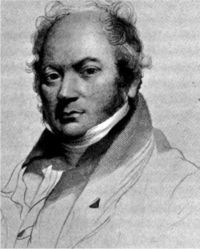
W. R. Lethaby, London Before the Conquest
“ A line from the bridge to the north gate must always have formed a great main street, and standing at the bottom of Bridge Street (Fish Street Hill) we may still gain some idea of what the entrance to the city by the Roman bridge was like. Mr. Price says of Gracechurch Street: “Recent investigations have shown ... that no structural remains of the Roman period can have occurred throughout its course; on either side of the street, debris of buildings with fragments of tessellated pavements have been seen, but nothing has existed along the actual line of road.” ”
The Agony Column of the "Times" 1800-1870
“ IF the Gentleman who met a LADY in Gracechurch-street, on the evening of the 9th of November last, and walked with her to the lower end of Bishopgate-street, and then waited till her return, and then accompanied her into the City, will be at the exact spot where he waited for her, at 8 o’clock on Wednesday and Thursday next, she will meet him, having something of importance to communicate. ”
“ Doxie of £50, for the better maintenance of the parson; Lady Elizabeth Newton £40, and many others whose names are not recorded.In modern Gracechurch Street, at the corner of Eastcheap, is a fine new building of the National Provident Institution for Mutual Life Assurance. The courts opening out of the street are lined with countless window reflectors and are very monotonous. The Russian Bank is fine and of great height; on the west there is a long line of 102brick and stucco buildings which can boast no style at all. The street is given over to merchants, solicitors, bankers, agents, etc. ”
Percy Fitzgerald, Picturesque London
“ There has been an enemy working underground during the past years—an ogre more wholesale and omnivorous than has yet appeared. This arises out of the burrowing of the underground lines in the City—the grand teredo, such as bored its way to the Mansion House Station from the Tower. It has been stated “that there has been no such general demolition since the days of the Great Fire. No less than 130 houses, some of them the oldest in London, and two of the City halls, have been pulled down in order to construct the new thoroughfare which continues Gracechurch Street to Tower Hill. ”
Robert Cortes Holliday, Walking-Stick Papers
“ People going and coming through the arches are silhouettes. Overhead it is like the grumbling of a thunder storm. Wagons going over the stones rattle tremendously, and they carry lanterns swung beneath to be lighted at night. The streets have fine names: there is Gold Street, and then Jacob Street. Frankfort Street widens out and becomes a generous thoroughfare, all in sunlight. There is a huge, gay hoarding to the right as you go down. ”
Francis Hackett,
The Invisible Censor
“ A little later there will be more leaves than blossoms, the men coming from work giving a duller tone. But one is permitted to believe for this period that Fifth Avenue has a personality, parti-colored, decorative, flashing, frivolous, composed of many styles and many types. The working world intersects it rudely at Forty-second Street, but scarcely infiltrates it. A qualification distinguishes those who turn up and down the Avenue. It is not leisure that distinguishes them, or money, but their sense that there is romance in the appearance of money and leisure. ”
Arthur Bartlett Maurice,
Fifth Avenue
“ Many more are the names that might be mentioned, for the street has ever been a magnet, and even those who toil in the attics of Bohemia find their way here, in the hours of leisure, to see and to be observed. Grub Street has assumed the garments of propriety, and shorn itself of its long hair, and in the prosperous, well-dressed throng that surges up and down the Fifth Avenue pavement, its denizens pass to and fro, no longer shyly, furtively, and conspicuously out of place, but with the easy assurance of those who are "to the manor born." ”
John Thomas Smith,
A Book for a Rainy Day; or, Recollections of the Events of the Years 1766-1833
“ It was a halfpenny toll-way through extensive nursery grounds” (Wine and Walnuts) . It is now commemorated in the name Hatch Row, Roupell Street, Lambeth, and I have found that Palmer Street is still called, locally, “up the Hatch,” though, of course, nothing in the shape of a Hatch has existed within living memory. “Hatches,” or gates, at which halfpennies were levied, were common on the outskirts of London. Nollekens told Smith that he remembered one in Charlotte Street, kept by a miller, and another between the Oxford Road (Oxford Street) and Grosvenor Square. ”
Thomas Miller, Picturesque Sketches of London…
“ George’s Church, in the Borough, into the high road which leads to the cast-iron bridge of Southwark, are no end of narrow courts, winding alleys, and ruined houses, which a bold-hearted man would hesitate to thread after dusk. Here stand numbers of houses which are unroofed and uninhabited. Years ago they were doomed to be pulled down, and it was resolved that a wide, open street should be built upon the space they now occupy: years may still roll away before they are removed. ”
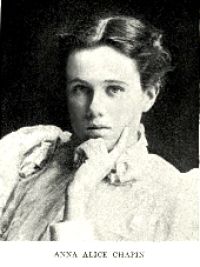
Anna Alice Chapin,
Greenwich Village
“ Sixth Avenue, indeed, has come to mean nothing more to them than a rustic bridge or a barbed-wire fence,—something to be gotten over speedily and forgotten. They even, by some alchemy of view point, seem to give it a rural air from Jefferson Market down to Fourth Street—these cool-looking, hatless young people who make their leisurely way down Washington Place or along Fourth Street. People pass them,—people in hats, coats and carrying bundles; but the Villagers do not notice them. They do not even look at them pityingly; they do not look at them at all. ”
“ Every city has its Fifth Avenue. That which we can not have as our own we strive to imitate. Animal and vegetable life simply reproduces itself; humanity does more than that, it imitates. Williams Street was the Fifth Avenue of Herculaneum. ”
Arthur Morrison,
Tales of mean streets — INTRODUCTION
(1894)
“ Foul slums there are in the East End, of course, as there are in the West; want and misery there are, as wherever a host is gathered together to fight for food. But they are not often spectacular in kind.Of this street there are about one hundred and fifty yards—on the same pattern all. It is not pretty to look at. A dingy little brick house twenty feet high, with three square holes to carry the windows, and an oblong hole to carry the door, is not a pleasing object; and each side of this street is formed by two or three score of such houses in a row, with one front wall in common. ”
Percy Fitzgerald, Picturesque London
“ The flagged square behind the Exchange seems like a mart—the busy hum, the perpetual, headlong va-et-vient, the general bustle and brightness, are all suggestive, and the bye streets, such as the old Thames Street, that skirts the river, the oddly-named Garlick Hill, and others, have all a strange, foreign effect, being narrow lanes, yet having fine old churches and towers rising to a great height. ”
Sir C. H. Reilly,
Some architectural problems of to-day
(1924)
“ It is not only the vast scale of the street as measured by its width, which seems enormous when one looks at the sea of traffic, but which seems narrow when one looks at the towering buildings, nor the beauty of those buildings or the delicacy of their detail that give Fifth Avenue its peculiar character and interest. Without the great masses of well-dressed men and women which crowd its wide pavements all day long it would seem dull and heavy. ”
Arthur Bartlett Maurice,
Fifth Avenue
“ To those who really understand them, every one of the great, vital streets of the world has a soul as well as a body. The social invader from the West, the merchant whose establishment still found profit in Grand Street, the banker from Broad Street, or the ship's chandler from South, the club awakening to the fact that its quarters on Broadway or in one of the side streets near Irving Place was too far downtown, or in size inadequate to its growing membership—those were the agencies that wrought the Avenue's material development. ”
Arthur Bartlett Maurice,
Fifth Avenue
“ The sharp rise to what was the old summit and to the modified hill of the present does not begin until Thirty-third Street is reached. But there is perceptible a grade of a kind as soon as the Avenue leaves the northern line of the Square. Today it is a slope in transition. Here and there the change has been wrought. A modern structure reaches superciliously skyward. Beside it and below it the buildings of yesterday give the impression of feeling acutely conscious of their impending doom. They know. Their race is almost run. ”
William Harrison Ainsworth,
Jack Sheppard: A Romance, Vol. 1…
“ Thames Street was wholly impassable. Men were going hither and thither with barrows, and ladders and ropes, removing the rubbish, and trying to support the tottering habitations. Grace-church Street was entirely deserted, except by a few stragglers, whose curiosity got the better of their fears; or who, like the carpenter, were compelled to proceed along it. The tiles lay a foot thick in the road. In some cases they were ground almost to powder; in others, driven deeply into the earth, as if discharged from a piece of ordnance. ”
Robert Herrick,
The Web of Life
“ Goose Island, the stock yards, the Bohemian district, the lumber yards, the factories,—all the aspects of the city monstrous by right, were miles away. But Halsted Street, with its picturesque mutations of poverty and its foreign air, was infinitely worthier than this. Sommers shuddered to think how many miles of Cottage Grove Avenue and its like Chicago contained,—not vicious, not squalid, merely desolate and unforgivably vulgar. If it were properly paved and cleaned, it would be bearable. But the selfish rich and the ignorant poor make bad housekeepers. ”
F. W. Robinson, Mattie:—A Stray (Vol 1 of 3)
“ People constantly breathing the same atmosphere may notice a change in the "surroundings," but to common observers, or prying people paying occasional visits to this place, Kent Street seems ever the same—an eye-sore to public gaze, a satire on parish cleanliness and care, a disgrace to parish authorities in general, and landlords and ground landlords in particular. ”
George W. M. Reynolds,
The Mysteries of London, v. 1/4
“ Between Shoreditch Church and Wentworth Street the most intense pangs of poverty, the most profligate morals, and the most odious crimes, rage with the fury of a pestilence.Entire streets that are nought but sinks of misery and vice,—dark courts, fœtid with puddles of black slimy water,—alleys, blocked up with heaps of filth, and nauseating with unwholesome odours, constitute, with but little variety, the vast district of which we are speaking. ”
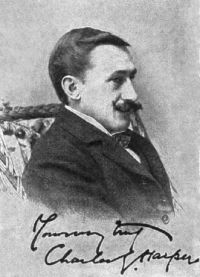
Charles G. Harper,
The Manchester and Glasgow Road…
“ The chief streets are of stone, are paved with stone, and have remarkably tall buildings, and so with the side streets: the sole difference being that while the principal thoroughfares contain the shops, every side street leading out of them is a more or less dirty slum, where dirty little bare-legged, ragged-tailed boys and girls play in the road or spit out of windows on the passing stranger. ”
P. T. Raymond, Bats in the Wall; or, The Mystery of Trinity Church-yard
“ Crossing Cherry street, Water and Front, passing directly through the heart of the densely populated Fourth Ward, long known as the home of the toughest of the "toughs" who infest the City of New York, it would be useless for us to pretend that Oliver street was anything else than just what it is—as bad as bad can be.Not that many excellent people cannot be found within its limits. ”
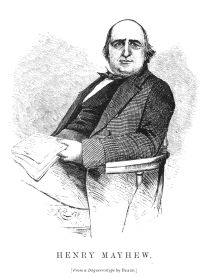
Henry Mayhew,
London Labour and the London Poor…
“ From the Obelisk at the junction, or approximate junction, of the Westminster, Waterloo, Blackfriars, Borough, and London-roads, in pretty well every direction to the banks of the Thames, are a mass of private-looking streets—as far as the absence of shops constitutes the privacy of a street—old and half-ruinous, or modern and trim, in all of which perhaps may be found street-sellers, and in some of which are pickpockets, thieves, and prostitutes. ”
George Augustus Sala,
Twice round the clock; or, The hours of the day and night in London
(1862)
“ I hate this incorrigible little thoroughfare; this New Street. It is full of bad smells, mangy little shops, obstructions, and bad characters. There is a yawning gin-palace at its south-western extremity. The odours of its eating-houses—especially of a seedy little French pension bourgeoise about half way up—are displeasing to my nostrils. The cigars vended in New Street are the worst in London, and the sweetstuff shops are mobbed—yes, mobbed—by children in torn pinafores who never have any pocket handkerchiefs. ”
Arthur Bartlett Maurice,
Fifth Avenue
“ Of all the blocks in the stretch of tradition that carries the Avenue up to Fourteenth Street, the richest in interest is, naturally, that which lies immediately north of the Square. Dividing this block in two, and running respectively east and west, are Washington Mews and MacDougall Alley. When Fifth Avenue was young and addicted to stately horse-drawn turnouts, it was in these half streets that were stabled the steeds and the carriages. ”
Arthur Bartlett Maurice,
Fifth Avenue
“ But for the purposes of fiction there has never been one just like the establishment that occupied a corner at the junction of the Avenue and Fourteenth Street. It was a more limited town in those days. ”
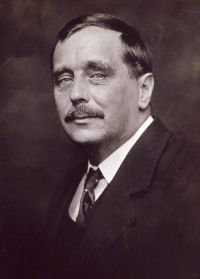
H. G. Wells,
Certain Personal Matters
“ The Margaret Street in question is an apparently derelict thoroughfare, opening into Great Portland Street. Immemorial dust is upon its pavements, and a profound silence broods over its vacant roadway. The blinds of its houses are mostly down, and, where the blackness of some window suggests a dark interior, no face appears to reassure us in our doubt of humanity within. ”
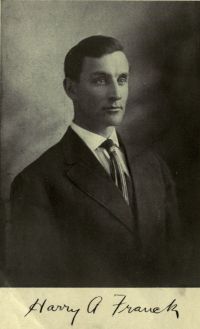
Harry Alverson Franck,
Roaming Through the West Indies
“ With the exception of a few bright yellow public buildings and a scattered block or two of new business houses, it is a negro slum, spreading for miles over a dusty plain. Scarcely a street has even the pretense of a pavement; the few sidewalks that exist are blocked by stairways, posts, and the trash of a disorderly population, or degenerate every few yards into stretches of loose stones and earth. The only building worth crossing the street to see is that domed structure sighted from the bay, the Catholic cathedral. ”
Emily Constance Baird Cook, Highways and Byways in London
“ The tower of All Hallows, a stranded fragment of antiquity, forms the centre piece of the garden court, where its effect is most curious and striking.The narrow old streets that lead north out of Cheapside, the "Chepe" of the middle ages, with their quaint old names, afford many pleasant rambles. In Wood Street, the old plane-tree, still standing, recalls Wordsworth's poem. Milk Street leads by the old church of St. Mary Aldermanbury, with the statue of Shakespeare in its little churchyard, to the still visible bastions of London Wall, and along the street of that name, to Cripplegate. ”