Gwendolen Harleth, a fictional character from George Eliot’s Daniel Deronda, embodies the tensions between personal ambition and societal expectation. As a contrast to the virtuous Mirah Lapidoth, she navigates moral uncertainty, motivated by beauty, pride, and financial need. Eliot presents her as a complex figure, shifting between independence and vulnerability, as seen in her troubled marriage to Grandcourt and her difficult ethical decisions.
Mathilde Blind contrasts her with Mirah, pointing out her “vivacity” and unpredictability, while Sidney Lanier emphasizes how Daniel Deronda’s moral clarity transforms her sense of purpose. These viewpoints collectively highlight Gwendolen’s role as a lens through which Eliot explores the limitations of gender, class, and ethics in 19th-century society.
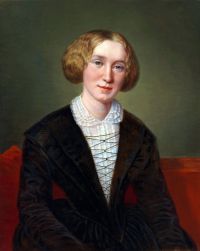 George Eliot,
Daniel Deronda
(1876)
George Eliot,
Daniel Deronda
(1876)