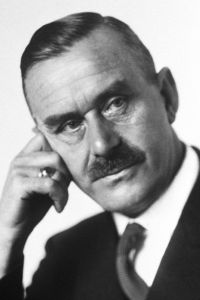
“ Klesmer was not yet a Liszt, understood to be adored by ladies of all European countries with the exception of Lapland: and even with that understanding it did not follow that he would make proposals to an heiress. No musician of honor would do so. Still less was it conceivable that Catherine would give him the slightest pretext for such daring. The large check that Mr. Arrowpoint was to draw in Klesmer’s name seemed to make him as safe an inmate as a footman. Where marriage is inconceivable, a girl’s sentiments are safe. ”
Klesmer
Definition and stakes
Quotes about “Klesmer”
George Eliot,
Daniel Deronda
(1876)
“ Klesmer made a low bow in silent irony. "The pretension is ridiculous. You had better give it up and leave the house at once," continued Mr Arrowpoint. He wished to do without mentioning the money. "I can give up nothing without reference to your daughter's wish," said Klesmer. "My engagement is to her." "It is useless to discuss the question," said Mrs Arrowpoint. "We shall never consent to the marriage. If Catherine disobeys us we shall disinherit her. You will not marry her fortune. It is right you should know that." ”
George Eliot,
Daniel Deronda
(1876)
“ Mr Bult felt this buffoonery rather offensive and Polish, but—Miss Arrowpoint being there—did not like to move away. "Herr Klesmer has cosmopolitan ideas." said Miss Arrowpoint, trying to make the best of the situation. "He looks forward to a fusion of races." "With all my heart," said Mr Bult, willing to be gracious. "I was sure he had too much talent to be a mere musician." "Ah, sir, you are under some mistake there," said Klesmer, firing up. "No man has too much talent to be a musician. Most men have too little. ”
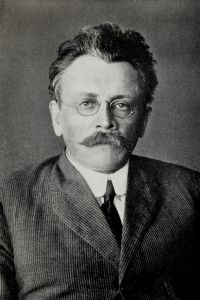
“ Catherine only went into the music-room and said, “Come.” She felt no need to prepare Klesmer. “Herr Klesmer,” said Mrs. Arrowpoint, with a rather contemptuous stateliness, “it is unnecessary to repeat what has passed between us and our daughter. Mr. Arrowpoint will tell you our resolution.” “Your marrying is out of the question,” said Mr. Arrowpoint, rather too heavily weighted with his task, and standing in an embarrassment unrelieved by a cigar. “It is a wild scheme altogether. A man has been called out for less.” ”
George Eliot,
Daniel Deronda
(1876)
“ Genius at first is little more than a great capacity for receiving discipline. Singing and acting, like the fine dexterity of the juggler with his cups and balls, require a shaping of the organs towards a finer and finer certainty of effect. Your muscles—your whole frame—must go like a watch, true, true, true, to a hair. That is the work of spring-time, before habits have been determined." "I did not pretend to genius," said Gwendolen, still feeling that she might somehow do what Klesmer wanted to represent as impossible. "I only supposed that I might have a little talent—enough to improve." ”
Abraham Cahan,
The Rise of David Levinsky
“ Would you walk from New York to Philadelphia if she wanted you to do so?""Why should she? What good would it do her?""But suppose she does want it?""How can I suppose such nonsense?" "Well, she might just want to see how much you love her.""A nice test, that.""Oh, well, she might just get that kind of notion. Women are liable to get any kind of notion, don't you know.""Well, if Madame Klesmer got that kind of notion I should tell her to walk to Philadelphia herself." ”
George Eliot,
Daniel Deronda
(1876)
“ We are not ingenious puppets, sir, who live in a box and look out on the world only when it is gaping for amusement. We help to rule the nations and make the age as much as any other public men. We count ourselves on level benches with legislators. And a man who speaks effectively through music is compelled to something more difficult than parliamentary eloquence." With the last word Klesmer wheeled from the piano and walked away. Miss Arrowpoint coloured, and Mr Bult observed with his usual phlegmatic solidity, "Your pianist does not think small beer of himself." ”
Francis William Lauderdale Adams,
A Child of the Age — Part III: Chapter II.
(1894)
“ They don't recognise more than half they see. There has only been one naturalist in Africa yet—Klesmer, I mean. Think of that! And he, poor devil, came to grief on the ubiquitous reef of poverty. I have often regretted I didn't know of him in time. But it's the old, old story! When they had muscle, they hadn't brains: and when they had brains, they hadn't muscle. These explorers (especially the French) are a queer lot. Du Camp's gorillas are ... well, let's only say exaggerations. And as for Louis ... But there, there! Starkie knows all about it. ”
George Eliot,
Daniel Deronda
(1876)
“ Well, at least one man who has seen women as plenty as flowers in May has lingered about you for your own sake. And since he is one whom you can never marry, you will believe him. That is an argument in favour of some other man. But don't give yourself for a meal to a minotaur like Bult. I shall go now and pack. I shall make my excuses to Mrs Arrowpoint." Klesmer rose as he ended, and walked quickly towards the door. "You must take this heap of manuscript, then," said Catherine, suddenly making a desperate effort. ”
Heinrich von Kleist,
Michael Kohlhaas
(1810)
“ But when, perceiving his surprise, she answered that no one would recognise him in his hunting dress, and also, at the very same moment, two hunting attendants, who had already satisfied their curiosity, came out of the house and said, that in consequence of an arrangement of the seneschals, neither the knight nor the horse-dealer knew of whom consisted the party assembled near Dahme, the elector, smiling, pressed his hat over his eyes, and said: “Folly, thou rulest the world, and thy throne is the mouth of a pretty woman.” ”
Georg Brandes,
Main Currents in Nineteenth Century Literature - 2…
“ Kleist was the most intractable character in the intellectual world of the Germany of that day; he had, moreover, too much heart, too strong feelings. After he had given up all hope of attaining to a knowledge of the truth, he tried to build upon the foundation of feeling. As author he was able to do it; his Michael Kohlhaas is based upon the feeling of justice, Käthchen von Heilbronn upon the feeling of absolute devotion. But the real world to which he himself belonged had no use for strong, unmixed feeling such as his. ”
Various, Graham's Magazine, Vol. XXXV, No…
“ When the office had been performed, and Adolph was settled quietly down upon his well beaten pillow, Klemm said, “It is now time for me to repair to my duties at head-quarters, and you would better compose yourself to sleep. Do you need the assistance of a chaplain as well as a nurse?”“To confess the truth,” said Adolph, “I believe I could about as well dress my wound myself, as to go over some of those troublesome prayers with which my boyhood was unutterably bored. I think, however, that a little sleep would be about as refreshing as prayers.” ”
1911 Encyclopædia Britannica, Volume 15… (1911)
“ In it he gives vent to his hatred of his country’s oppressors. This, together with the drama Prinz Friedrich von Homburg, the latter accounted Kleist’s best work, was first published by Ludwig Tieck in Kleists hinterlassene Schriften (1821) . Robert Guiskard, a drama conceived on a grand plan, was left a fragment. Kleist was also a master in the art of narrative, and of his Gesammelte Erzählungen (1810–1811) , Michael Kohlhaas, in which the famous Brandenburg horse dealer in Luther’s day (see Kohlhase) is immortalized, is one of the best German stories of its time. ”
Friedrich Hebbel,
Three plays by Frederic Hebbel
(1914)
“ No other could dispute with Hebbel but Kleist, who lacked, however, the power of self-facing, the only way to true self-effacement in art. In truth, Kleist had something of the prig in his composition. There is an avoidance of the ultimate in him which makes him shrill when intense and sentimental when human. Compare the tawdriness of Kleist’s Käthchen von Heildronn with Agnes Bernauer, the greatest of Hebbel’s prose dramas. In Maria Magdalena he had avoided portraying a conflict between the nobility and higher life ”
Ralph Adams Cram,
Black Spirits and White: A Book of Ghost Stories
“ Here the younger boy broke in,—he was named Otto von Kleist. I remember the name, for I had a music teacher once by that name. He abused the poor old man shamefully; told him that they were going to spend the night in Kropfsberg in spite of Count Albert and Peter Rosskopf, and that he might as well make the most of it and earn his money with cheerfulness. ”
Heinrich von Kleist,
Michael Kohlhaas
(1810)
“ Reasons of another kind, which we leave to the surmise of every one who knows the secrets of his own heart, might also have operated. He therefore went to the high-chancellor, without the guard, and having the farmer’s letters in his hand, stated that if his presence at the court could be dispensed with, as indeed seemed to be the case, he wished to leave the city and go to Brandenburg for eight days or a fortnight, promising to return within that time. ”
1911 Encyclopædia Britannica, Volume 15… (1911)
“ When during the short reign of Matthias the question of the imperial succession demanded prompt attention, the bishop, although quite as anxious as his opponents to retain the empire in the house of Habsburg and to preserve the dominance of the Roman Catholic Church, advised that this question should be shelved until some arrangement with the Protestant princes had been reached. This counsel was displeasing to the archduke Maximilian and to Ferdinand, afterwards the emperor Ferdinand II. who believed that Klesl was hostile to the candidature of the latter prince. ”
L. Mühlbach, Frederick the Great and His Family…
“ The Prussian warrior, the German poet, lay there naked, his own blood alone covered his wounded body, wrapped it in a purple mantle, worthy of the poet’s crown with which his countrymen had decked his brow. But Ewald von Kleist is no longer a poet or a hero—he is a poor, suffering, tortured child of earth; he lies on the damp ground, he pleads for a few rags to cover his wounds, into which the muddy water of the hole in which he lies is rushing. And now fate seems favorable. A Russian officer is riding by—he takes pity on the naked man with the gaping wounds ”
The German Classics of the Nineteenth and Twentieth Centuries…
“ They are largely, frankly, generously human, confessing the right of feeling as well as reason to direct the will. Never has there been a more sympathetic literary exposition of the soldierly character than this last tribute of a devoted patriot to his beloved Brandenburg.The narrative works of Kleist maintain the same high level as his dramas. Michael Kohlhaas is a good example of this excellent narrative art, for which Kleist found no models in German literature. Unity is a striking characteristic ”
The German Classics of the Nineteenth and Twentieth Centuries…
“ Within the year he was betrothed to a member of this informal class, Wilhelmina von Zenge, the daughter of an officer. The question of a career now crowded out his interest in study; in August, 1800, as a step toward the solution of this problem, Kleist returned to Berlin and secured a modest appointment in the customs department. ”
Heinrich von Kleist,
Michael Kohlhaas
(1810)
“ To the right of the elector stood the imperial advocate, Franz Müller, with a copy of the sentence in his hand, while on his left, with the decree of the Dresden Court chamber, was his own advocate, the jurist Anton Zäuner. In the midst of the half-open circle formed by the people, was a herald with a bundle of things and the two horses, now sleek and in good condition, beating the ground with their hoofs. For the Chancellor Henry had carried every point of the suit, which, in the name of his master, he had commenced at Dresden against Squire Wenzel von Tronka ”
The German Classics of the Nineteenth and Twentieth Centuries…
“ Two months of intense mental exertion in the seclusion of his island left Kleist exhausted, and he fell seriously ill; whereupon Ulrica, on receiving belated news of his plight, hastened to Bern to care for him. When a political revolution drove Ludwig Wieland from Bern, they followed the latter to Weimar, where the poet Wieland, the dean of the remarkable group of great authors gathered at Weimar, received Kleist kindly, and made him his guest at his country estate. ”
Various, The Atlantic Monthly, Volume 10…
“ Here is certainly a falling off from Luther's Ein feste Burg, but his spirit was in the fight; and the hymn is wonderfully improved when the great Swedish captain takes it to his death.Von Kleist (1715-1759) studied law at Königsberg, but later became an officer in the Prussian service. He wrote, in 1759, an ode to the Prussian army, was wounded at the Battle of Künersdorf, where Frederic the Great lost his army and received a ball in his snuff-box. His poetry is very poor stuff. The weight of the enemy crushes down the hills and makes the planet tremble; agony and eternal night impend ”
Various, Graham's Magazine, Vol. XXXV, No…
“ The parting of the friends that evening was truly affecting. Klemm was made to promise a visit to the village—“Though,” said he, “I may make an impression on Louise unfavorably to you.”“I do not fear that,” said Adolph.“Die vollige Liebe treibet die Furcht aus,” said Klemm. “A German quotation which I will show you in the original, or at least explain to you when we meet in your village.”Klemm took leave of Adolph and Ponto, the faithful dog, and proceeded on his journey. ”
Heinrich von Kleist,
Michael Kohlhaas
(1810)
“ The horse-dealer, who saw that he must give way to force, resolved, as he could not do otherwise, to comply with the request, so he unfastened the blacks, and conducted them to a stable which the castellan showed him, left a servant behind, gave him money, told him to take care of the blacks till his return, and doubting whether, on account of the advances made in breeding, there might not be such a law in Saxony, he continued his journey with the rest of his horses to Leipzig, where he wished to attend the fair. ”
Thomas Mann,
Buddenbrooks, volume 1 of 2
(1924)
“ I’ve just been to coffee at Madame Käselau’s, a neighbour of mine. They are pleasant people, and our left-hand neighbours, the Gussmanns (but there is a good deal of space between the houses) are sociable people too. We have two friends who are at the house a good deal, both of whom live out here: Doctor Klaasen, of whom I must tell you more later, and Kesselmeyer, the banker, Grünlich’s intimate friend. You don’t know what a funny old man he is. He has a stubbly white beard and thin black and white hair on his head, that looks like down and waves in the breeze. ”
Heinrich von Kleist,
Michael Kohlhaas
(1810)
“ Nevertheless all inquiries made in that direction proved fruitless, and, indeed, the intelligence did not appear correct, as the squire had no servant whose house was in Brandenburg or even on the road thither. Men from Dresden, who had been at Wilsdruf a few days after the conflagration of the Tronkenburg, said that about the time specified a boy had come there leading two horses by a halter, and that he had left the animals, as they were in a very wretched plight and unable to proceed further, in the cow-shed of a shepherd, who had wished to restore them to good condition. ”
Thomas Carlyle, History of Friedrich II of Prussia…
“ Kleist lay bleeding without help. A friend of his, Pfau [who told Kriele] , one of Finck's Generals, came riding that way: Kleist called to him; asked how the Battle went; uncommonly glad to hear we are still progressive. Pfau undertook, and tried his utmost, for a carriage to Kleist; did send one of Finck's own carriages; but after such delays that the Prussians were now yielding: poor Kleist's had become Russian ground, and the carriage could not get in. "Kleist lay helpless; no luck worse than his. In the evening, Cossacks came round him; stript him stark-naked ”
Various, Graham's Magazine, Vol. XXXV, No…
“ Klemm, that is the unkindest remark you have made to me yet, and smacking the least of German accent of any sentence you have uttered. How much your voice resembles Louise’s!”“Do I resemble her much in other respects?”“You are not as tall, and you are darker; beside, your shock of hair resembles her splendid head about as much as your guttural German does her pure French.”“Adolph,” said Klemm, in accents far more Germanic than those recently used, “would you seek to renew your relations with Louise if you were now permitted to return?” ”