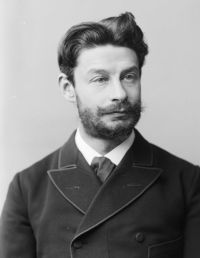
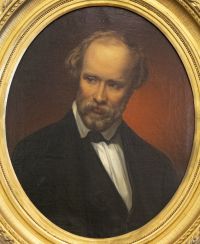
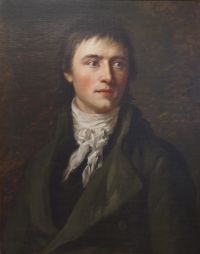
Friedrich von Kleist

Definition and stakes

1911 Encyclopædia Britannica, Volume 15… (1911)

In it he gives vent to his hatred of his country’s oppressors. This, together with the drama Prinz Friedrich von Homburg, the latter accounted Kleist’s best work, was first published by Ludwig Tieck in Kleists hinterlassene Schriften (1821) . Robert Guiskard, a drama conceived on a grand plan, was left a fragment. Kleist was also a master in the art of narrative, and of his Gesammelte Erzählungen (1810–1811) , Michael Kohlhaas, in which the famous Brandenburg horse dealer in Luther’s day (see Kohlhase) is immortalized, is one of the best German stories of its time.
Source: Wikisource

Portrait of Georg Brandes Georg Brandes Main Currents in Nineteenth Century Literature - 2…

Of all that the German Romanticists produced, little will endure—some masterly translations by A. W. Schlegel, a few of Tieck's productions, a handful of Hardenberg's and another of Eichendorff's lyrics, some of Friedrich Schlegel's essays, a few of Arnim's and Brentano's smaller works, a select number of Hoffmann's tales, and some very remarkable dramas and tales from the pen of that eccentric but real genius, Heinrich von Kleist. The rest of the life-work of the Romanticists has disappeared from the memory of the present generation.
Source: Gutenberg

Portrait of Friedrich Hebbel Friedrich Hebbel Three plays by Frederic Hebbel (1914)

No other could dispute with Hebbel but Kleist, who lacked, however, the power of self-facing, the only way to true self-effacement in art. In truth, Kleist had something of the prig in his composition. There is an avoidance of the ultimate in him which makes him shrill when intense and sentimental when human. Compare the tawdriness of Kleist’s Käthchen von Heildronn with Agnes Bernauer, the greatest of Hebbel’s prose dramas. In Maria Magdalena he had avoided portraying a conflict between the nobility and higher life
Source: Gutenberg

Get perspective with Kwize: daily news enlightened by great literature