“ In Syria and Mesopotamia, where communications are good and European penetration an established fact, there should not be much difficulty, but in Arabia proper the problem is a very prickly one.Beginning with Arabia Felix, which includes Yamen, the Aden protectorate, and the vague, sprawling province of Hadhramaut, we may be permitted to hope that nothing worse can happen in the Aden protectorate than has happened already; the remoter Hadhramaut has always looked after its own affairs and can continue to do so ”
Hadhramaut
Definition and stakes
The theme of “Hadhramaut” has been addressed by authors such as G. Wyman Bury and Franz Delitzsch. It is often associated with terms like Hadrian, Arabia, Jews, Damascus and Hadramaut.
Quotes about “Hadhramaut”
“ The province of Hadhramaut, politically, includes not only the vast valley of that name with its tributaries, but the whole of the western part of Southern Arabia outside the Aden protectorate from the Yamen border to the confines of Oman near longitude 55. Mokalla is the capital and principal port. Missionaries have been well received there by the enlightened ruler—a member of the Kaaiti house with the local title of Jemadar, inherited from an ancestor who soldiered in the Arab bodyguard of a former Nizam at Haiderabad. The interior is not suited to missionary enterprise. ”
 Franz Delitzsch,
Biblical Commentary Old Testament…
(1885)
Franz Delitzsch,
Biblical Commentary Old Testament…
(1885)
“ Hazarmaveth (i.e., forecourt of death) is the Arabian Hadhramaut in South-eastern Arabia on the Indian Ocean, whose name Jauhari is derived from the unhealthiness of the climate. Hadoram: the Ἀδραμῖται of Ptol. 6, 7, Atramitae of Plin. 6, 28, on the southern coast of Arabia. Uzal: one of the most important towns of Yemen, south-west of Mareb. Sheba: the Sabaeans, with the capital Saba or Mareb, Mariaba regia (Plin.) , whose connection with the Cushite (Gen 10:7) and Abrahamite Sabaeans (Gen 25:3) is quite in obscurity. ”
 Christiaan Snouck Hurgronje,
Mohammedanism
(1916)
Christiaan Snouck Hurgronje,
Mohammedanism
(1916)
“ Foreigners wisely avoid this miserable country, and if they did visit it, would not be hospitably received. Hunger forces many Hadramites to emigrate; throughout the centuries we find them in all the countries of Islâm, in the sacred cities of Western-Arabia, in Syria, Egypt, India, Indonesia, where they often occupy important positions. ”
Robert Alexander Wahab, 1911 Encyclopædia Britannica (1911)
“ They are divided into sections or families, each headed by a chief or abu (lit. father) , while the head of the tribe is called the mukaddam or sultan; the authority of the chief depends largely on his personality: he is the leader in peace and in war, but the tribesmen are not his subjects; he can only rule with their support. The most powerful tribe at present in Hadramut is the Kaiti, a branch of the Yāfa tribe whose settlements lie farther west. ”
J. Theodore Bent, Southern Arabia
“ As we halted at the well outside the town, whilst the various members of our caravan collected, we overheard a woman chide a man for drawing too much water from the well, to which he replied, 'We have to wash our town from the infidel this day.' Needless to say we gladly shook the dust of Shibahm off our feet, and returned to the flesh-pots of Al Koton with considerable satisfaction. Of a truth, religion and fanaticism are together so deeply engrained in the Hadhrami, that anything like friendly intercourse with the people is at present next to impossible. ”
J. Theodore Bent, Southern Arabia
“ They look with peculiar distrust on the introduction of external influence into their sacred country, and are the obstructionists of the Hadhramout, but at the same time their influence is decidedly towards law and order in a lawless land. They never carry arms.Lastly, we have the slave population of the Hadhramout, all of African origin, and the freed slaves who have married and settled in the country. Most of the tillers of the soil, personal servants, and the soldiers of the sultans are of this class. ”
David Baron, The Visions and Prophecies of Zechariah… (1918)
“ And this interpretation of Rabbi Benaiah is echoed also by other Jewish expositors. The explanations given by most Christian commentators have been quite as fanciful. Thus Hengstenberg (who devotes eight learned pages to it in his Christology) , Kliefoth, Keil, and others explain Hadrach to be " a symbolic epithet, descriptive of the Medo-Persian Empire, which is called sharp-soft, or strong-weak, on account of its inwardly divided character." * Gesenius, Bleek, and others have taken Hadrach as the name of some Syrian king who is supposed to have reigned in Damascus between Benhahad in. ”
Hebrew tales; selected and translated from the writings of the ancient Hebrew sages (1917)
“ But Hadrian perceiving him, called him, and demanded who he was. "An unfortunate Jew," was the answer. "And dare a miserable Jew have the insolence to pass the emperor without saluting him," exclaimed the tyrant; and ordered his head to be struck off. "Great king," said one of the courtiers, who happened to be present, "your conduct appears to me very strange. One person you doom to death for saluting you, and the other for not saluting you!" "Hold thy peace," said the tyrant; "Hadrian doth not want to be taught how to distress his enemies." ”
J. Theodore Bent, Southern Arabia
“ The sultan told us a famous plan they have in this country for making a fortune. Two Hadhrami set out for India together, a father and son, or two brothers. They collect enough money before starting to buy a very fine suit of clothes each, and to start trade in a small way. They then increase the business by credit, and when they have got enough of other people's money into their hands, one departs with it to the inaccessible Hadhramout, while the [116] other waits to hear of his safe arrival, and then he goes bankrupt and follows him. ”
John Ranicar Park, An Amicable Controversy with a Jewish Rabbi…
“ The heavy burden of the word of the Lord against the land of Hadrach and Damascus; his sending down, (that is, the Lord's) for the Lord's is the eye of man, (the eye of the seer who receives the vision,) and all the tribes of Israel (whom it immediately concerns) . Hamath also shall have a limit set to her; Tyre and Sidon also, though she be very wise— (worldly-wise) . For she hath built herself Tyre, a strong hold, and heaped up silver as the dust, and fine gold as the mire of the streets. ”
 A. H. Sayce,
Early Israel and the Surrounding Nations
A. H. Sayce,
Early Israel and the Surrounding Nations
“ The rulers of Hamath who made alliance with David bear Semitic names. The crown-prince came himself to Jerusalem, bringing with him costly vessels of gold and silver and bronze. His name was Hadoram, "Hadad is exalted;" but out of compliment to the Israelitish king, the name of Hadad was changed into that of the God of Israel, and he became known to history as Joram. A common enmity united Hamath and Israel. The war with Ammon had brought David into conflict with Zobah, an Aramaic kingdom which under Hadad-ezer was aiming at the conquest of the whole of Syria. ”
Philip Khuri Hitti, Syria: A Short History (1959)
“ More than a million Jews are estimated to have perished then, many of them in the amphitheatre battling one another or wild beasts. Judaea as a political state ceased to exist, and the Jews became a stateless, homeless people. Judaism decayed with its adherents, as its narrow national basis and certain features of its ritual rendered it unacceptable to other peoples. One last spark of life appeared in 132, when the Jewish banner of revolt was unfurled by a mysterious leader, Simon Bar Kokba. But Hadrian crushed the rebel- lion and turned Jerusalem into a Roman colony called Aelia Capitolina. ”
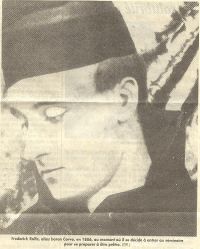 Frederick Rolfe,
Hadrian the Seventh
(1904)
Frederick Rolfe,
Hadrian the Seventh
(1904)
“ Islam could only and only would mate with Islam—as might have been foreseen. The rest of the continent of Europe ringed frontiers under arms. Each nation feared the other; and all feared France and Russia.Hadrian watched the diplomatic processes with interest. He knew that England was quite capable of taking care of Herself, with or without the Mussulman. He grasped the theory that Muhammedanism, arising six hundred years after Christ, justified the Wisdom of God in Judaism, proving that the Oriental mind could bear nothing more perfect; and He conceived a sort of sympathy with Islam. ”
J. Theodore Bent, Southern Arabia
“ Makalla, Sheher, Shibahm, Haura, Hagarein, all belong to them, and they are continually increasing, by purchase, the area of their influence in the collateral valleys, building substantial castles, and establishing one of the most powerful dynasties in this much-divided country. They get all their money from the Straits Settlements, for it has been the custom of the Hadhrami to leave their own sterile country to seek their fortunes abroad. ”
A Plain and Literal Translation of the Arabian Nights Entertainments…
“ They border upon the Homeritæ or men of Himyar, often mentioned in The Nights. Hazramaut is still practically unknown to us, despite the excursions of many travellers; and the hard nature of the people, the Swiss of Arabia, offers peculiar obstacles to exploration. 174. i.e. the prophet Hud generally identified (?) with Heber. He was commissioned (Koran, chapt. vii.) to preach Al-Islam to his tribe the Adites who worshipped four goddesses, Sákiyah (the rain-giver) , Rázikah (food-giver) , Háfizah (the saviouress) and Sálimah (who healed sickness) . ”
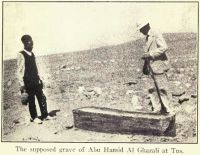 Samuel Marinus Zwemer,
Arabia: The Cradle of Islam
Samuel Marinus Zwemer,
Arabia: The Cradle of Islam
“ We must take at least a glimpse of the almost unknown region called Hadramaut. [26] This is a strip of territory stretching between the great desert and the sea from Aden eastward to Oman. Our knowledge of the interior of this region was almost a perfect blank until some light was thrown on it by the enterprising traveller A. Von Wrede in 1843. The coast is comparatively well known, at least as far as Makalla and Shehr. The land rises from the coast in a series of terraces to Jebel Hamra (5,284 feet) , which is connected on the northeast with Jebel Dahura, over 8,000 feet high. ”
The World's Greatest Books — Volume 11…
“ For the fourth time the Jewish people seemed on the brink of extermination. Nebuchadrezzar, Antiochus, Titus, and Hadrian had successively exerted their utmost power to extinguish their existence as a separate people. Yet in less than sixty years after the war under Hadrian, before the close of the second century after Christ, the Jews present the extraordinary spectacle of two separate and regularly organised communities--one under the Patriarch of Tiberias, comprehending all of Isrælitish descent who inhabited the Roman Empire ”
A. S. Rappoport, History of Egypt From 330 B.C. To the Present Time…
“ But there were other and stronger reasons for Hadrian’s classing the Christians with the Egyptian astrologers. A Christian heresy was then rising into notice in Egypt in that very form, taking its opinions from the philosophy on which it was engrafted. Before Christianity was preached in Alexandria, there were already three religions or forms of philosophy belonging to the three races of men who peopled that busy city; first, the Greek philosophy; which was chiefly platonism; secondly, the mysticism of the Egyptians; and lastly, the religion of the Jews. ”
Thomas Kirkup and John Henry Freese, 1911 Encyclopædia Britannica, Volume 12… (1911)
“ Hadrian’s first important act was to abandon as untenable the conquests of Trajan beyond the Euphrates (Assyria, Mesopotamia and Armenia) , a recurrence to the traditional policy of Augustus. The provinces were unsettled, the barbarians on the borders restless and menacing, and Hadrian wisely judged that the old limits of Augustus afforded the most defensible frontier. Mesopotamia and Assyria were given back to the Parthians, and the Armenians were allowed a king of their own. ”
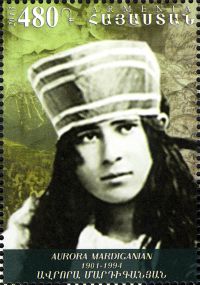 Aurora Mardiganian,
Ravished Armenia
Aurora Mardiganian,
Ravished Armenia
“ Only devout Moslems who have made the pilgrimage to Mecca may be called “Hadji.” Hadji Ghafour was looked up to as one of the most religious of men.In the house of Hadji Ghafour we were crowded into a large room, with bare stone walls, where camels and dromedaries were often quartered over night.Hadji Ghafour came into the room, accompanied by soldiers. We of the apostate party had been put into one corner with Kurds to watch us. Hadji Ghafour gave an order to his servants and they separated the most pleasing girls and younger women from the others. ”
J. Theodore Bent, Southern Arabia
“ They never live in tents, as do the Bedouin of Northern Arabia; the richer ones have quite large houses, whilst the poorer ones—those in Shabwa and the Wadi Adim, for instance—dwell in caves.Secondly, we have the Arabs proper, a decidedly later importation into the country than the Bedouin. They live in and cultivate the lands around the towns; many of them carry on trade and go to India and the Straits Settlements, and some of them are very wealthy. They also are divided into tribes. The chief of those dwelling in the Hadhramout are the Yafei, Kattiri, Minhali, Amri, and Tamimi. ”
Various, Encyclopaedia Britannica, 11th Edition…
“ There is, however, a large number of 800 Seyyids or descendants of the Prophet, and of townsmen of northern origin, besides a considerable class of African or mixed descent. Van den Berg estimates the total population of Hadramut (excluding the Mahra and Gāra) at 150,000, of which he locates 50,000 in the valley between Shibām and Tarim, 25,000 in the W. Duwān and its tributaries, and 25,000 in Mukalla, Shihr and the coast villages, leaving 50,000 for the non-agricultural population scattered over the rest of the country, probably an excessive estimate. ”
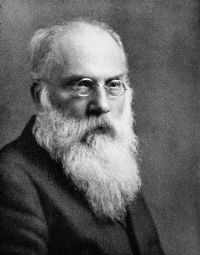 Gotthard Deutsch,
The history of the Jews
(1910)
Gotthard Deutsch,
The history of the Jews
(1910)
“ Over one of the gates of the city Hadrian had the head of a swine placed, and the Jews were forbidden entrance into the city. A great many Jews were killed in battle and many prisoners, including the most prominent spiritual leaders of the rebellion, such as Rabbi Akiba, executed. A mediæval legend speaks of ten martyrs, and gives a list which, however, comprises men who lived in different ages.With the death of Hadrian, and the succession to [23] the throne of Marcus Antoninus Pius (136-161) a change for the better took place. ”
Hebrew tales; selected and translated from the writings of the ancient Hebrew sages (1917)
“ The Emperor Hadrian passing near Tiberias in Galilee, observed an old man digging a large trench in order to plant some fig trees. "Hadst thou properly employed the morning of thy life," said Hadrian, "thou needest not have worked so hard in the evening of thy days." "I have well employed my early days, nor will I neglect the evening of my life; and let God do what he thinks best," replied the man. "How old mayest thou be, good man?" asked the emperor. "A hundred years," was the reply. "What," exclaimed Hadrian, "a hundred years old art thou, and still plantest trees! ”
J. Theodore Bent, Southern Arabia
“ With these he climbed the stem of the female palm, and with a knife cut open the bark which encircles the female spathe, and as he shook the male pollen over it he chanted in a low voice, 'May God make you grow and be fruitful.' No portion of the palm is wasted in the Hadhramout: with the leaves they thatch huts and make fences, the date stones are ground into powder as food for cattle, and they eat the nutty part which grows at the bottom of the spathes, and which they called kourzan. ”
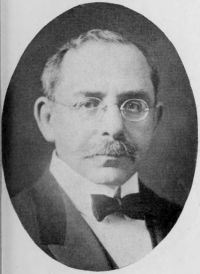 Maurice H. Harris,
A Thousand Years of Jewish History
Maurice H. Harris,
A Thousand Years of Jewish History
“ The discouraged emperor gladly met many of his enemies half way. Parthia was restored to the control of its own princes. In Judea proper a cruel general, Quietus, was checked in his terrible purpose of exterminating the Jews and was ultimately executed.Hadrian's "Promise."To win peace and adherents, Hadrian was willing to make many fair promises at the opening of his reign that he had no serious intention of fulfiling. One of these was an offer to the Jews to rebuild their Temple, which they had exacted as the condition of laying down their arms. ”
Hebrew tales; selected and translated from the writings of the ancient Hebrew sages (1917)
“ Hadrian, gratified to see so extraordinary an instance of longevity, accompanied by the full use of manly faculties and honest exertion, desired the old man to be seated, and ordering the basket to be emptied of the fruit, and to be filled with gold, gave it him as a present. Some courtiers who witnessed this uncommon scene, exclaimed, "Is it possible that our great emperor should show so much honor to a miserable Jew!" "Why should I not honor him whom God has honored?" ”
Samuel Marinus Zwemer,
Arabia: The Cradle of Islam
“ Concerning the chief town of the interior of Hadramaut Mr. Bent writes as follows:“Then he sent us to reside for five more days in his capital of Shibam, which is twelve miles distant from Al Katan, and is one of the principal towns in the Hadramaut valley. It is built on rising ground in the centre of the narrowest point of the valley, so that no one can pass between it and the cliffs of the valley out of gunshot of the walls. This rising ground has doubtless been produced by many generations of towns built of sun-dried bricks, for it is the best strategical point in the neighborhood. ”
