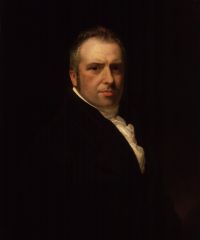
Henri de Saint-Simon

Definition and stakes

Aleksandr Herzen,  The Memoirs of Alexander Herzen… (1923)

“ Claude Henri, Comte de Saint-Simon (1760-1825) , founded at Paris a society which was called by his name. His views were socialistic.
Still youth must assert itself somehow, and therefore most young Frenchmen go through an “artistic” period: that is, those who have no money spend their time in humble cafés of the Latin quarter with humble grisettes, and those who have money resort to large cafés and more expensive ladies. They have no “Schiller” stage
”
Source: Gutenberg

duc de Louis de Rouvroy Saint-Simon,  Memoirs of Louis XIV and His Court and of the Regency…

“ He was made Marshal of France on the 21st of February, 1676, not before he had fairly won that distinction. The remainder of his career showed his capacity in many ways, and acquired for him the esteem of all. His family were affected beyond measure at his loss. That house was in truth terrible to see. Never was man so tenderly or so universally regretted, or so worthy of being so. Besides my own grief, I had to sustain that of Madame de Saint-Simon, whom many times I thought I should lose. Nothing was comparable to the attachment she had for her father, or the tenderness he had for her ”
Source: Gutenberg

Portrait of George Saintsbury George Saintsbury,  A Short History of French Literature

“ It is sufficient to say that it is a great mistake to regard Saint Simon as a mere selfish aristocrat in the cant sense. He would have had the kingdom justly and wisely governed for the benefit of the whole nation, but he regarded the nobility, and, above all, the peers, as the pre-destined instruments of government. 'Much for the people, but nothing by the people,' was his political motto.
The importance of Saint Simon in literature is, however, entirely independent of his standpoint as a politician, though that standpoint was not without influence on his literary characteristics.
”
Source: Gutenberg

Get perspective with Kwize: daily news enlightened by great literature