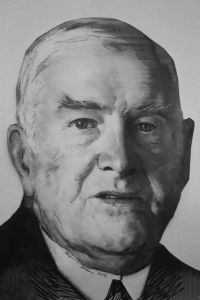
“ KNOX, HENRY, a revolutionary general, was born in Boston, in 1750, and after receiving a common school education, commenced business as a bookseller, in his native town. Before the commencement of hostilities, he discovered an uncommon zeal in the cause of liberty. When the corps of artillery, in 1776, was increased to three regiments, the command was given to Knox, with the rank of brigadier-general. He distinguished himself by his courage at the battles of Trenton, Princeton, Germantown, and Monmouth, and contributed greatly to the capture of Cornwallis. ”
Henry Knox
Definition and stakes
Henry Knox (1750–1806) was an American military leader, politician, and Founding Father, celebrated for his role as chief artillery officer in George Washington's campaigns during the Revolutionary War. His strategic movement of artillery from Fort Ticonderoga to Boston in 1776 proved crucial in securing American independence. As the first Secretary of War, he shaped early U.S.
military policy and promoted federal authority over Indigenous nations. Historians such as William M. Taylor and the Encyclopædia Britannica highlight his dual legacy as a bookseller turned general, emphasizing his contributions to both military supply operations and the nation's foundational institutions. His influence continues in historical narratives and the enduring symbols of American military heritage.
Quotes about “Henry Knox”
“ Andrews, at the time of the death of Henry VIII., Knox, who had just then entered upon his ministry, may have been beholden to his friend for bringing his name to the favourable notice of the English Reformers. But however that may have been, we come upon authentic and reliable information, when we find in the register of the Privy Council, under date April 7th, 1549, an entry authorizing the payment of five pounds "to {30} John Knox, preacher, by way of reward." ”
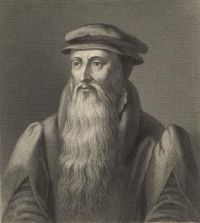 John Knox,
The History of the Reformation of Religion in Scotland
“ Henry was enemy to all that unfeignedly professed the Lord Jesus, but chiefly to John Knox, for the liberty of his tongue; for he had affirmed, as ever still he doth affirm, that a bishop that receives profit, and feeds not the flock by his own [290] labours, is both a thief and a murderer. The said Mr. Henry, thinking himself happy to have found so good occasion to trouble John Knox, whose life he hated, posted the said letter, with his counsel, to the Queen, who then lay in Stirling. ”