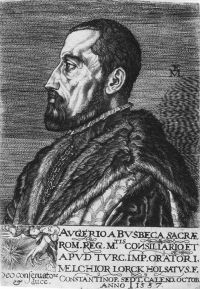
Henry de Condé

Definition and stakes

Frances Minto Dickinson Elliot,  Old Court Life in France, vol. 1…

“ The more bitterly they quarrelled, the more deep and dangerous became Condé’s enmity to Henry. Disloyalty was the tradition of his race, rebellious practices with Spain the habit of his house. We have seen how a Condé was ready to usurp the throne under pretence of a Regency, during the conflict with the Huguenots at Amboise. His son, “the great Condé,” is by-and-by to head the standard of revolt, and at the head of Spanish troops to bring France to the brink of ruin. ”
Source: Gutenberg

1911 Encyclopædia Britannica, Volume 6… (1911)

“ In 1800 Condé arrived in England, where he resided for several years. On the restoration of Louis XVIII. he returned to France. He died in Paris in 1818. He wrote Essai sur la vie du grand Condé (1798) .
Louis Henry Joseph, duke of Bourbon (1756–1830) , son of the last named, was the last prince of Condé. Several of the earlier events of his life, especially his marriage with the princess Louise of Orleans, and the duel that the comte d’Artois provoked by raising the veil of the princess at a masked ball, caused much scandal. At the Revolution he fought with the army of the emigrés in Liége.
”
Source: Wikisource

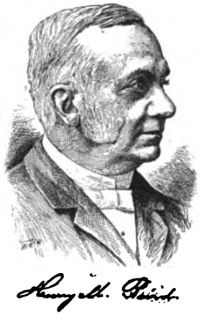
Portrait of Henry Martyn Baird Henry Martyn Baird,  History of the Rise of the Huguenots…

“ To the Duke of Guise, who had married her daughter, Anne d'Este, she administered a severe rebuke. "Had I been present," she said, "I would have prevented this ill-advised step. It is no trifling matter to treat a prince of the blood in such a manner. The wound is one that will long bleed; for no man has ever yet attacked the blood of France but he has had reason to regret it." [943]
Condé's courage.
”
Source: Gutenberg

Get perspective with Kwize: daily news enlightened by great literature